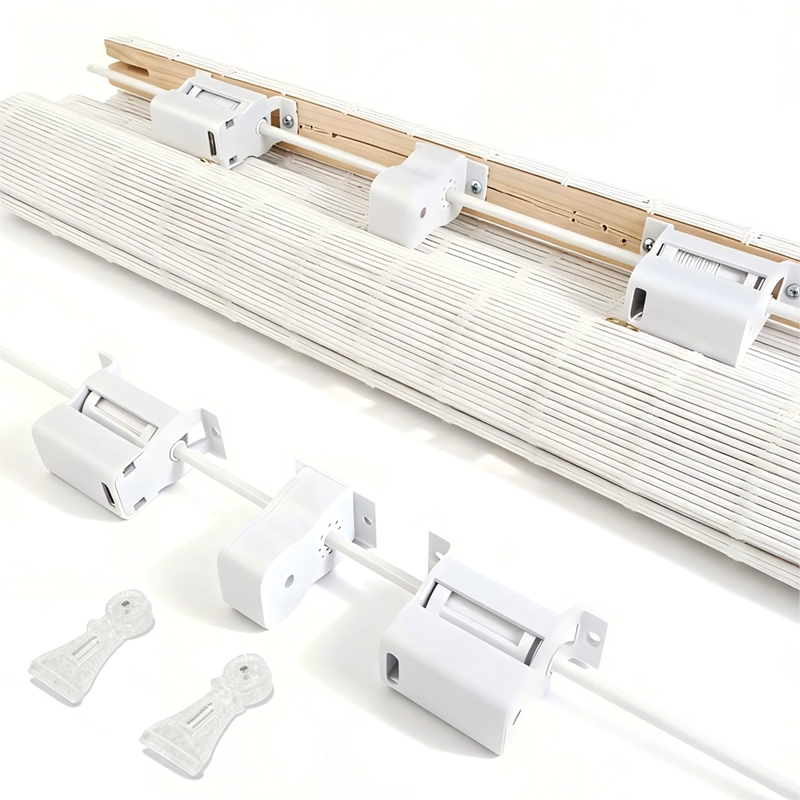
From Codes to Comfort: How to Talk About Child Safe Blinds (and the Tech Inside) to U.S. Buyers

Quick Summary — For Product & Compliance Teams
American homeowners don’t read standards, they feel comfort. Your team, however, lives with
codes, torque curves, and test reports. This article shows how to bridge that gap:
translating child-safety regulations and internal engineering into simple promises (“no loose cords”,
“stays where you set it”) and visuals that U.S. buyers understand.
and shows how modern cordless spring mechanisms and spring motors make those promises technically realistic.
Key Takeaways — From Standard Text to Everyday Comfort
- Homeowners buy comfort and peace of mind, not clause numbers.
- Your messaging should compress standards into 3–4 clear homeowner promises.
- The internal cordless spring mechanism and brake must actually deliver those promises.
- A good translation layer lets marketing, engineering, and installers speak the same language.
1. Recognize the Gap Between Regulations and Real Life

Standards and regulations define what “child safe” must mean on paper. Homeowners, however, experience it as
something much simpler:
- “No cords hanging where my toddler can reach.”
- “The blind doesn’t snap up if my child lets go.”
- “I’m not constantly adjusting it or worrying about it.”
If you talk only in regulation language, you lose them. If you ignore the technical side, your marketing team
can over-promise. The goal is to build a translation layer between formal requirements
and everyday comfort.
2. Translate Standards into a Small Set of Simple Promises
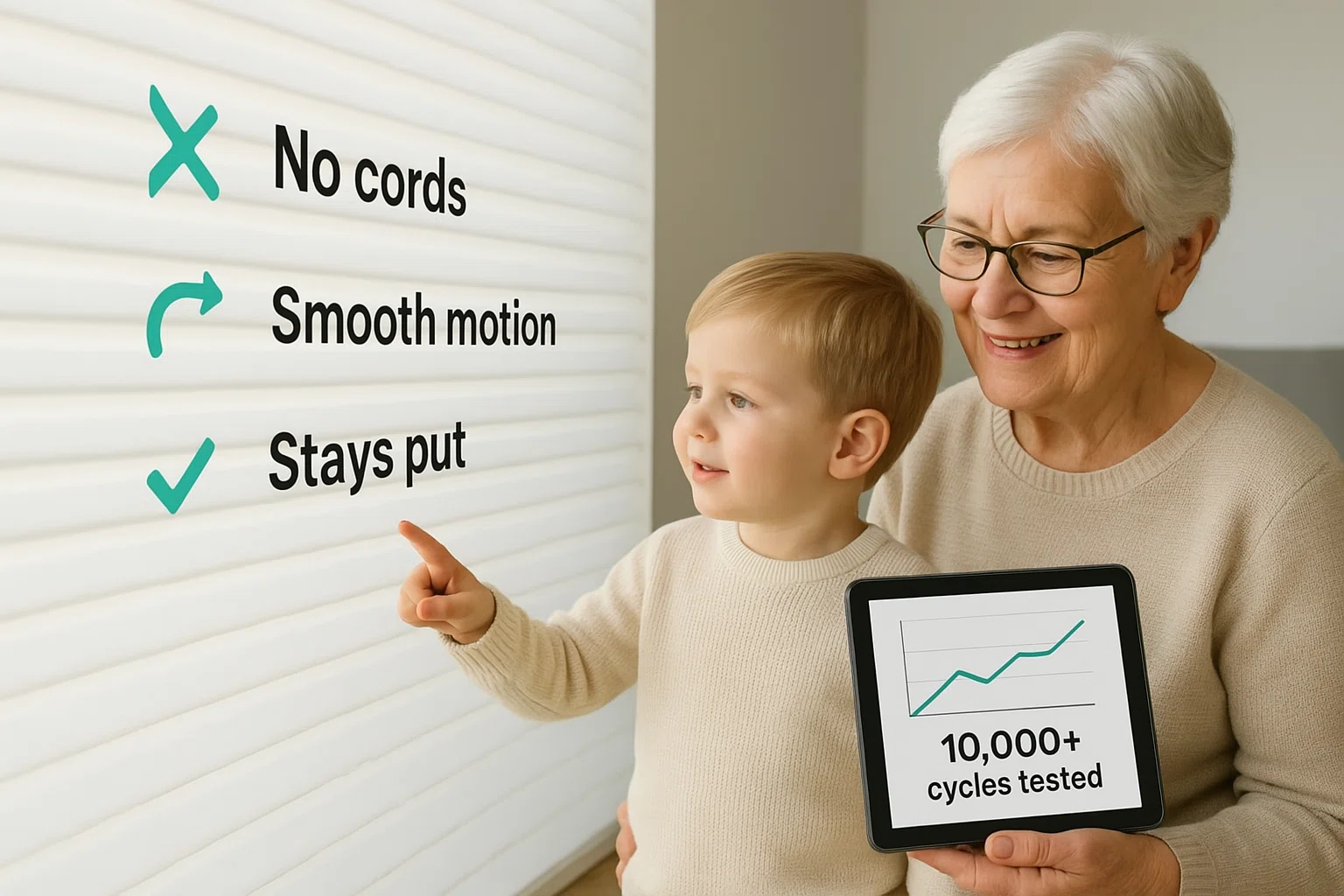
Instead of quoting long regulation titles, build a short list of homeowner-facing promises backed by your
engineering and test data. For child safe blinds, three core promises usually cover 90% of concerns:
- No reachable lift cords:
“This blind uses a cordless lift system, so there are no loose pull cords for kids or pets
to get tangled in.” - Controlled motion:
“The internal spring and brake are tuned so the blind moves smoothly instead of snapping up.” - Stable position:
“You can set the blind at any height and it stays there without drifting.”
Behind each line, your component supplier should be able to show:
- Design limits (weight, width, fabric types) for each cordless spring or spring-motor model.
- Torque bands and constant-force spring profiles over the full stroke.
- Cycle tests and hold-at-position measurements under realistic loads.
Here, the focus is making sure those messages never drift outside the trusted technical envelope.
3. Turn Technical Features into Plain-Language Storytelling
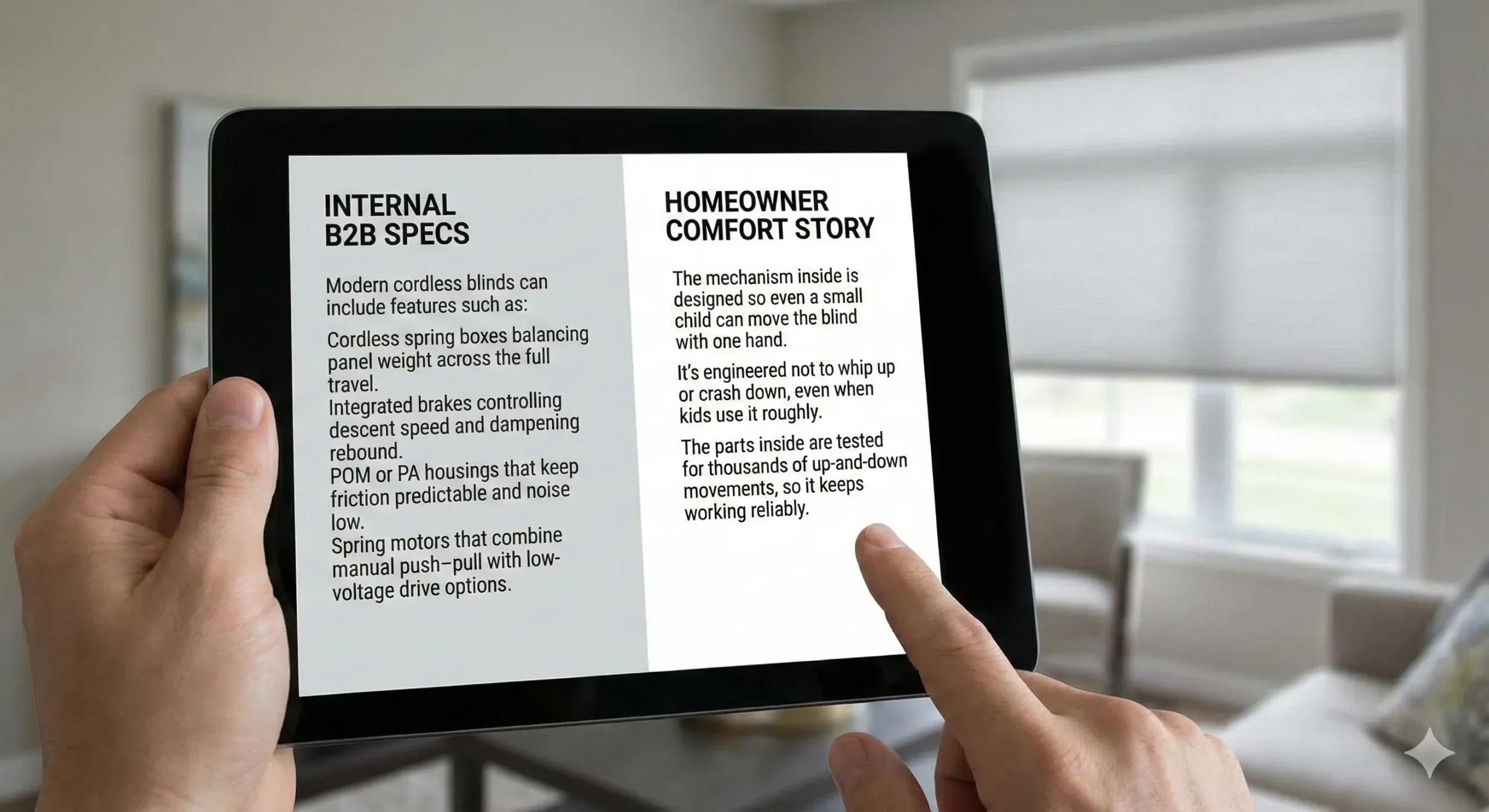
Modern cordless blinds can include features such as:
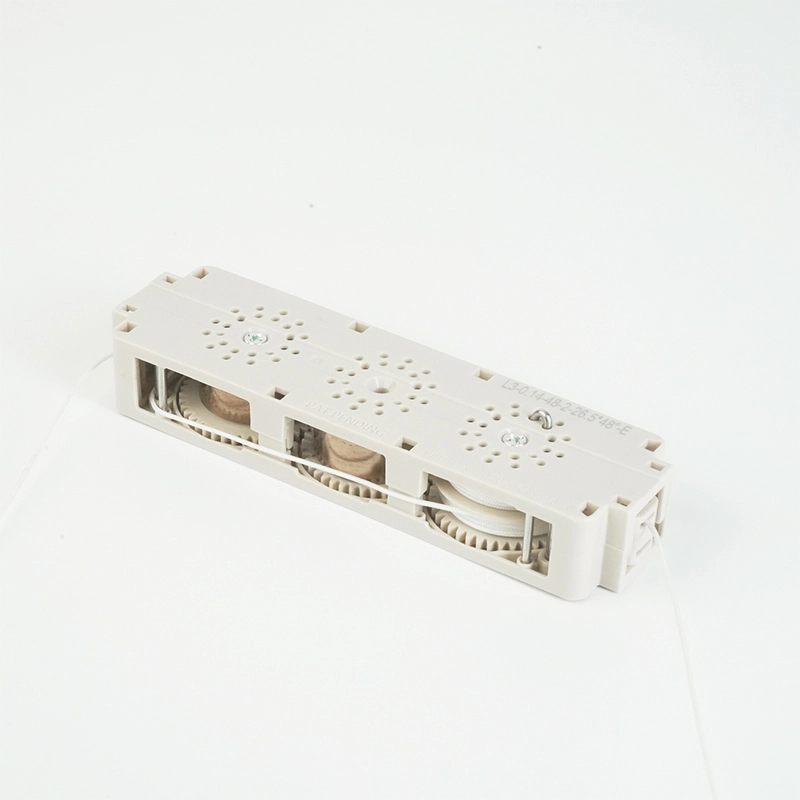
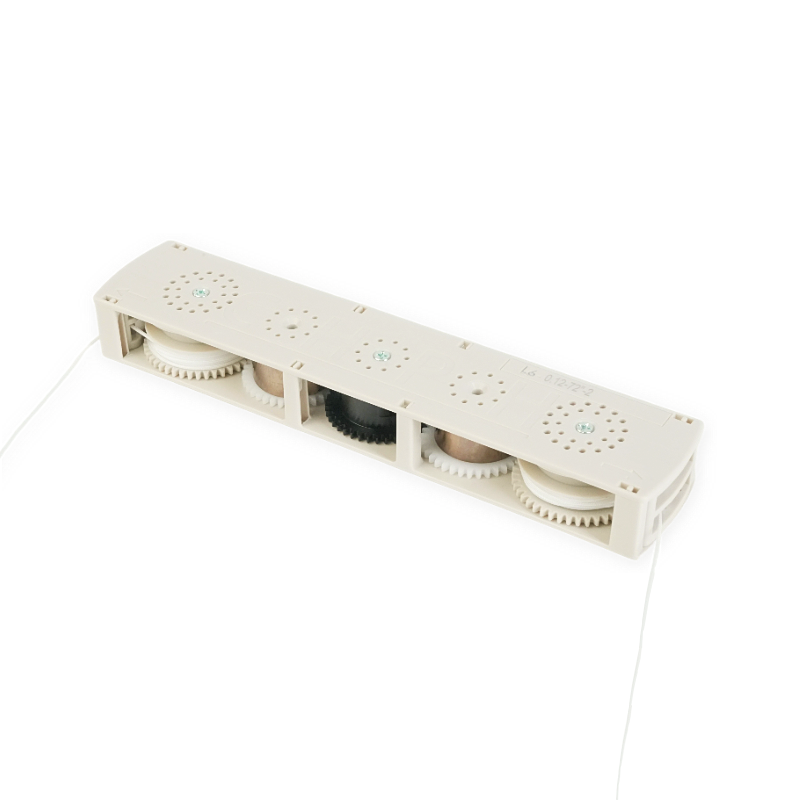
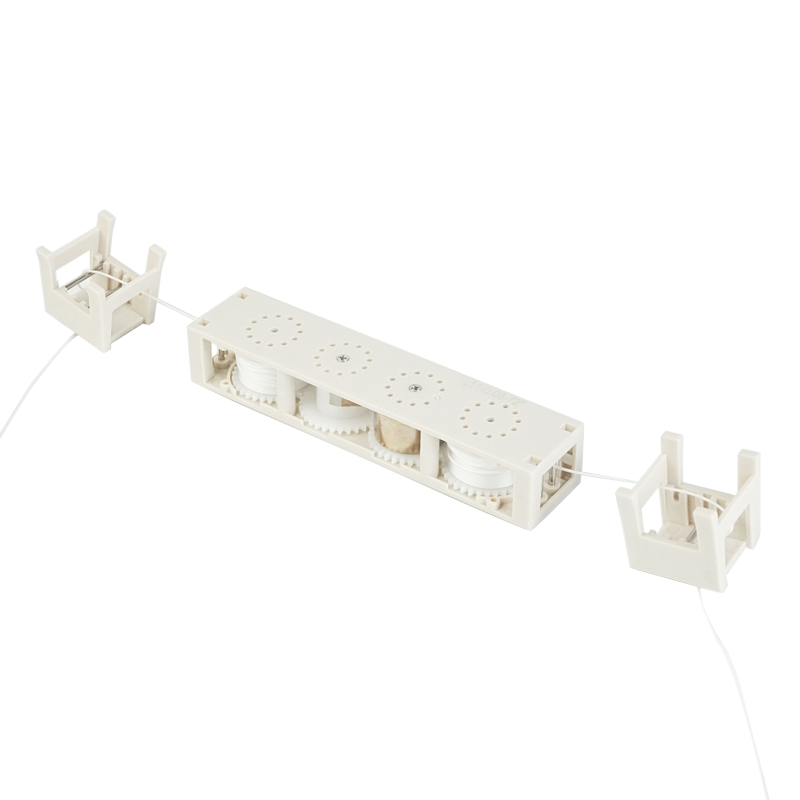
- Cordless spring boxes balancing panel weight across the full travel.
- Integrated brakes controlling descent speed and dampening rebound.
- POM or PA housings that keep friction predictable and noise low.
- Spring motors that combine manual push–pull with low-voltage drive options.
To a homeowner, that might sound like a foreign language. Rewrite it into sentences they can instantly feel:
- “The mechanism inside is designed so even a small child can move the blind with one hand.”
- “It’s engineered not to whip up or crash down, even when kids use it roughly.”
- “The parts inside are tested for thousands of up-and-down movements, so it keeps working reliably.”
The technical terms stay in your internal docs and B2B materials; the homeowner sees the comfort story.
Your job is to make sure one truly supports the other.
4. Use Visuals That Show the Difference Without Overwhelming
Visual aids can make your tech story much easier to grasp, especially for online buyers who skim:
- Side-by-side diagrams of a corded blind vs. a cordless blind with a spring mechanism,
clearly showing the absence of external cords. - Simple icons for “no cords”, “smooth motion”, and “stays put”, repeated across pages,
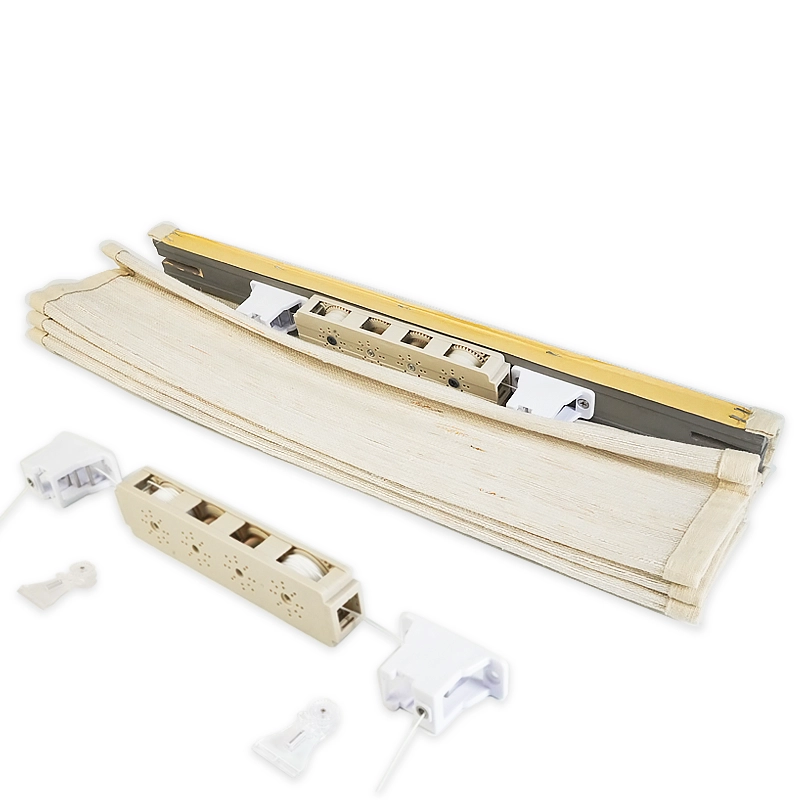
packaging, and POS materials. - Cutaway photos of the headrail, with colored highlights over the spring and brake,
helping retail staff explain what’s different inside.
Keep the diagrams clean and labeled in everyday words. You can still mention
“spring-balanced cordless mechanism” or “constant-force spring motor”,
but make sure the visual tells the story even if the text is only skimmed.
5. Train Retail & Online Support Teams on the Translation Layer
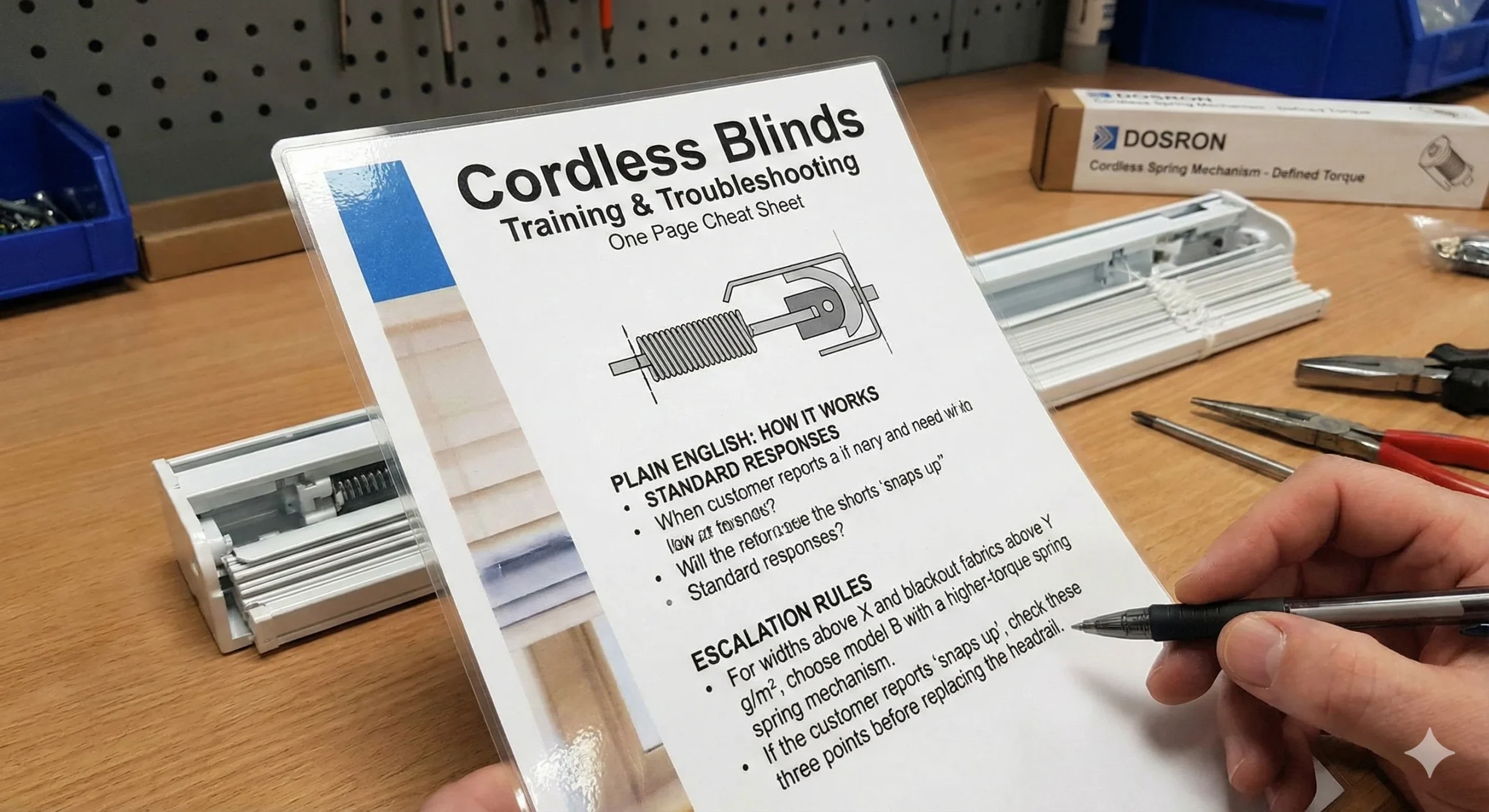
Many complaints start with miscommunication, not hardware failure. Your internal and external teams need:
- A one-page cheat sheet explaining how the mechanism works in plain English,
with a simple diagram. - Standard responses for questions like “Is this safe for my toddler’s room?”
or “What if my blind feels too tight?”. - Escalation rules for cases where an issue might be due to installation
or exceeding the product’s design window.
For example, your cheat sheet could say:
- “For widths above X and blackout fabrics above Y g/m², choose model B with a higher-torque spring mechanism.”
- “If the customer reports ‘snaps up’, check these three points before replacing the headrail.”
Under the hood, this is powered by stable component platforms (e.g., DOSRON’s
cordless spring mechanisms with defined torque levels), but your teams only need the clear,
human version of the rules.
6. Keep the Engineering Story Ready for Buyers Who Ask
Some U.S. buyers — especially architects, designers, or technically minded parents — will ask deeper questions:
- “How exactly is this safer than a corded blind?”
- “What happens if the spring wears out?”
- “Is there data behind your claims?”
Have an accessible “behind the scenes” section on your site or a downloadable PDF that:
- Shows a simplified torque curve explaining constant or progressive force control.
- Summarizes cycle testing (e.g., “tested to ≥10,000 cycles at rated load”).
- Explains how your spring boxes, brakes, and housings are designed to keep performance
within a safe window over time.
so technical buyers can see how the mechanism is packaged, positioned, and specified in your independent site’s
product catalogue.
You don’t need to publish every detail, but you should have a coherent story that matches what your
component supplier can support — and that your sales and marketing teams can tell without improvising.
FAQ: Talking About Codes and Tech Without Losing the Buyer
1. Should we mention specific standards to homeowners?
You can, but briefly. A short line like
“Designed to support modern U.S. cordless safety requirements”
is enough for most buyers. If they want details, link to a dedicated safety page or PDF that explains
standards in plain language.
2. How technical should our product pages be?
Use plain language on top and optional “learn more” layers underneath.
The first view should talk about comfort and safety. The deeper layers can show diagrams, specs,
and test highlights for those who are interested — or point them to your more detailed engineering articles.
3. What if marketing wants to promise more than engineering is comfortable with?
That’s a red flag. Work with your component partner to define hard boundaries for claims based on
spring torque, load ranges, and cycle testing. Make those boundaries non-negotiable
in your brand guidelines, so no campaign accidentally oversells what the mechanisms can safely do.
4. How can a supplier help with this translation work?
Ask for:
- Cutaway samples and simple diagrams that can be used in sales decks and web pages.
- Summarized test data with graphics your designers can adapt for consumer-friendly visuals.
- Joint training sessions for your sales, e-commerce, and support teams.
Suppliers building cordless spring and spring-motor platforms for multiple brands
often already have this material prepared or can help you customize it to your story.
5. Do U.S. buyers really care about the internal mechanism?
Most don’t, until something goes wrong. The goal is to avoid surprises by aligning
your promises with what the mechanism can reliably deliver. When everything feels as expected,
homeowners simply enjoy the comfort, trust your “child safe” label, and make positive recommendations.
Field Insight — Build Your Own “Translation Layer”
To move from codes to comfort without disconnects, build a simple but robust translation layer in your organization:
- Input: Standards, internal design limits, and component specs from your cordless spring mechanism and spring motor platforms (torque bands, load ranges, cycle tests).
- Processing: Cross-functional workshops between engineering, compliance, and marketing to agree on what can be promised and how it should be phrased for U.S. homeowners.
- Output: Plain-language promises, icons, diagrams, installer scripts, and support templates that buyers can understand in seconds.
- Feedback: Capture questions from installers, retailers, and customer service, then refine both your engineering FAQs and consumer-facing explanations accordingly.
Once this translation layer is in place, launching new child safe lines becomes faster and safer —the hardware and the story are already aligned, and every new product reinforces your position as a trusted partner for child safe cordless blinds in the U.S. market.