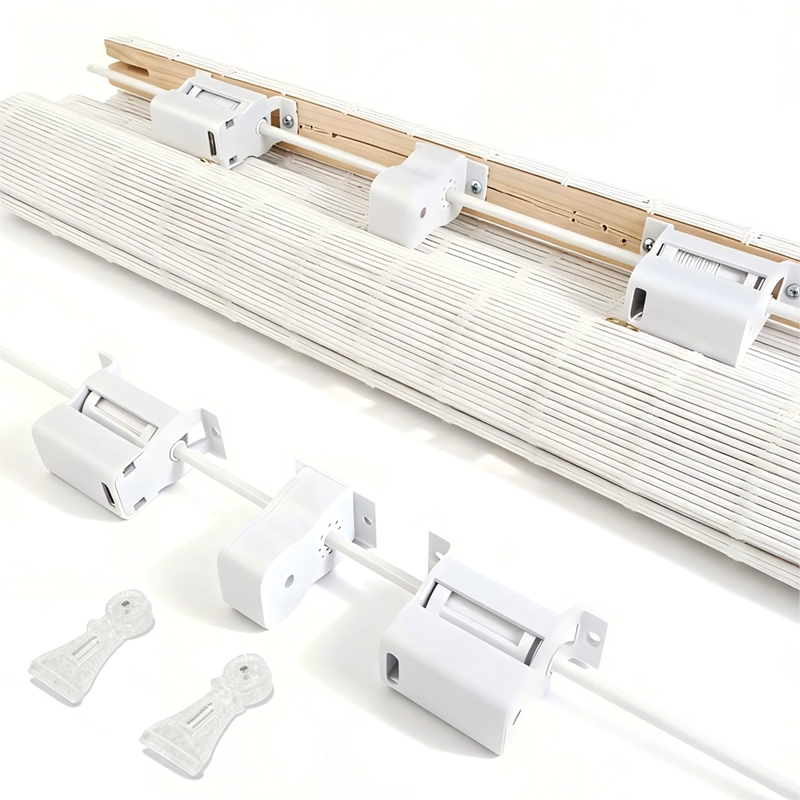
How Modular Spring Mechanisms Adapt to Regional Compliance, Climate, and Load Variations in Global Window Covering Markets
 |
 |
A cordless system is not universal by default.
It must be engineered to survive different laws, climates, and fabric loads — without redesigning the entire architecture.
Quick Summary
Modular constant-force spring mechanisms allow cordless roller shades, zebra blinds, honeycomb shades, and venetian blinds to adapt across global markets.
Instead of redesigning the full system for each country, engineers adjust spring force bands, material selection, surface treatment, and brake matching to comply with regional regulations, environmental conditions, and fabric load variations.
- Compliance Adaptation: ANSI/WCMA, CPSC 16 CFR 1260, EN13120, AS/NZS standards
- Climate Engineering: Temperature drift, humidity corrosion, material modulus shift
- Load Matching: Regional fabric density and width-driven torque amplification
- Modular Benefit: Same architecture, different calibrated force modules
1. Regional Compliance Is an Engineering Constraint — Not a Label
Cordless architecture is mandatory in many developed markets. However, compliance requirements differ in structural details, durability expectations, and operational force limits.
| Region | Key Standard | Core Requirement | Impact on Spring Design |
|---|---|---|---|
| United States | ANSI/WCMA A100.1 / CPSC 16 CFR 1260 | No exposed cords, controlled lift force | Stable upward return, controlled descent speed |
| European Union | EN13120 | Child safety + durability cycles | Fatigue life ≥ 100,000 cycles |
| Australia / New Zealand | AS/NZS 60335.2.97 | Safety in powered & hybrid systems | Spring-motor torque compatibility |
- Force band calibration (±5% stability)
- Brake damping coefficient (0.8–1.5 N·s/m)
- Safety redundancy structures
- Material fatigue margin (≤70% elastic limit)
Compliance is therefore not a certification step — it is embedded in force stability.
2. Climate Variations Change Mechanical Behavior
A spring calibrated in a 23°C dry environment does not behave identically in Arizona summer or Nordic winter.
Material modulus and friction coefficients shift with temperature and humidity.
2.1 Temperature Drift
| Temperature | Material Effect | Engineering Adjustment |
|---|---|---|
| -20°C | Increased brittleness | Lower stress ratio, larger safety margin |
| 25°C | Nominal behavior | Standard calibration |
| 60°C | Elastic modulus decreases ~8–12% | Pre-adjusted force compensation |
2.2 Humidity & Corrosion
- Bathroom applications require 304 or 316 stainless steel
- Salt spray environments require ≥500 hour corrosion resistance
- Dacromet or PTFE coating reduces friction variation
Modular architecture allows climate-specific material swaps without redesigning reels, brackets, or headrails.
3. Load Variability Across Markets
Fabric density, blind width, and bottom bar weight vary by region.
North America favors wide roller shades.
Europe prefers compact window dimensions.
Commercial projects in Asia often require heavier blackout fabrics.
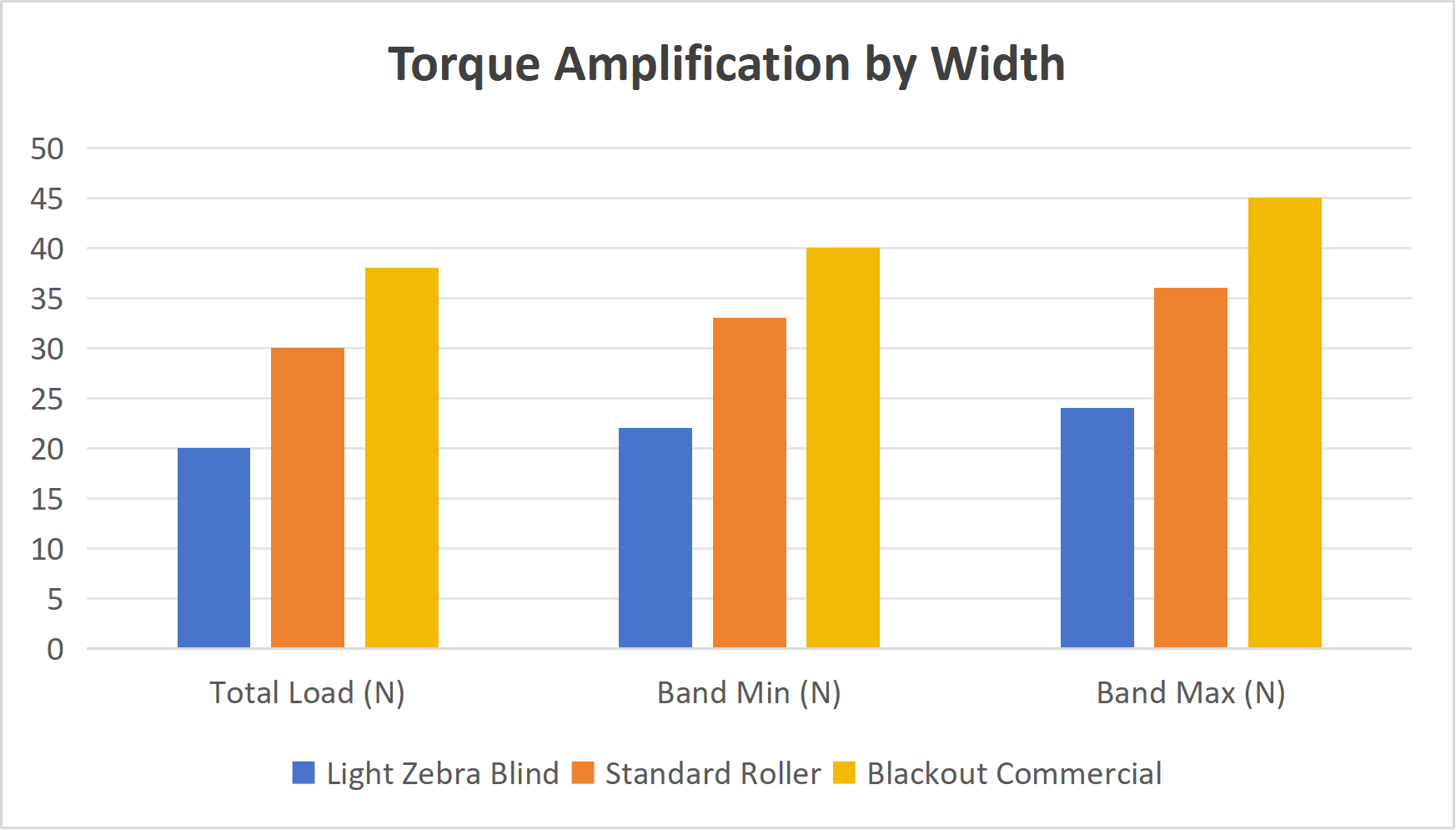
3.1 Torque Amplification by Width
Torque demand increases with roll diameter growth.
A 1.8m wide blackout shade may require 35–45N lift force.
A 1.0m zebra blind may require 18–25N.
| Blind Type | Width | Total Load | Recommended Force Band |
|---|---|---|---|
| Light Zebra Blind | 1.0m | ~20N | 22–24N |
| Standard Roller | 1.5m | ~30N | 33–36N |
| Blackout Commercial | 1.8m | ~38N | 40–45N |
- Spring strip thickness (t³ relationship)
- Effective coil number
- Preload calibration
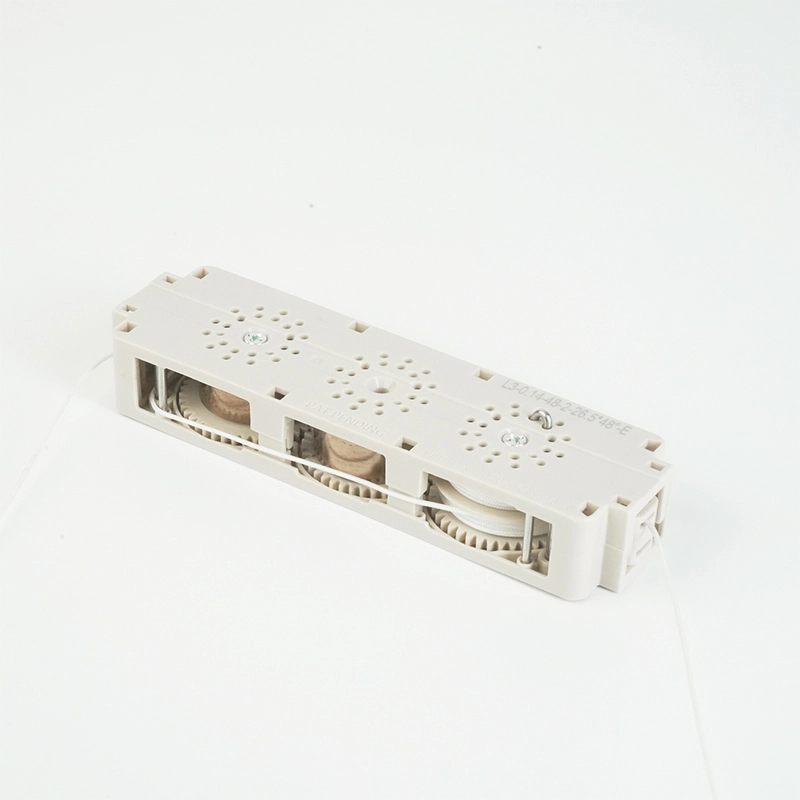
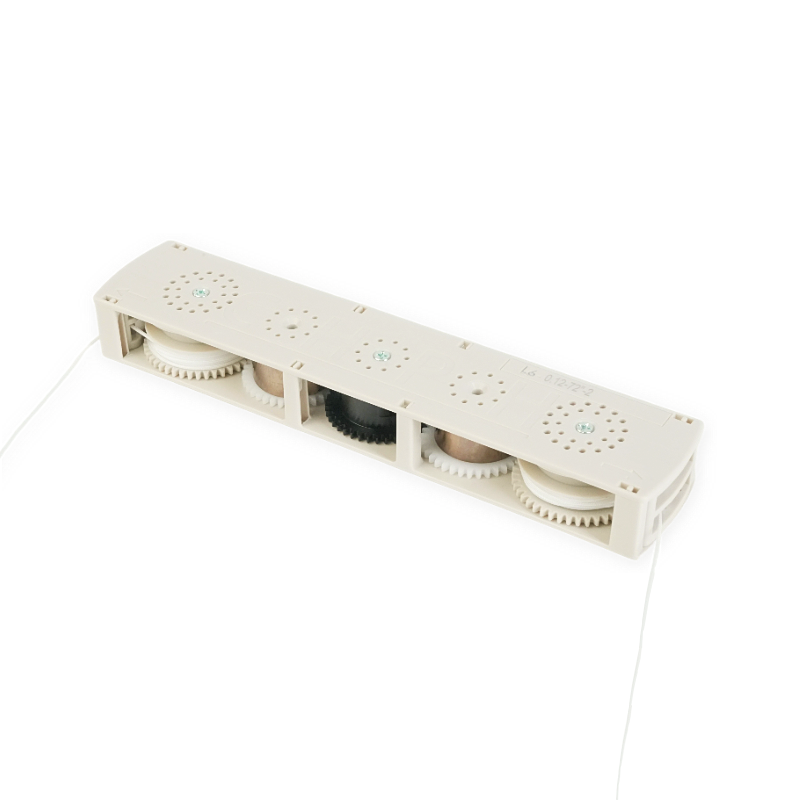
The platform remains identical.The force module changes.
4. Why Modular Architecture Wins Globally
Without modularity, every market requires:
- New tooling
- New SKU
- New fatigue validation
- New compliance testing
With modular constant-force architecture:
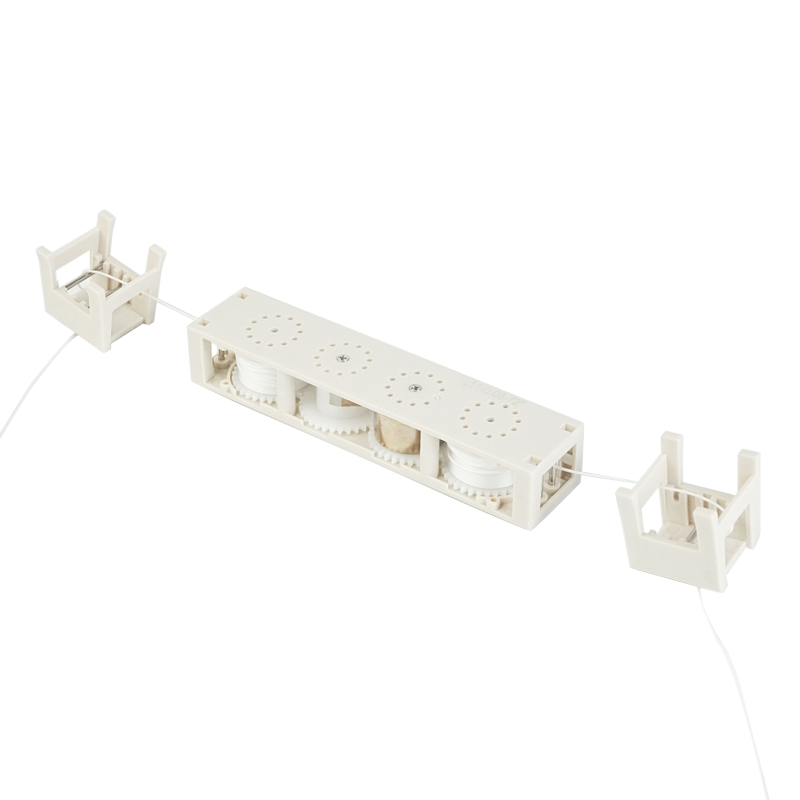
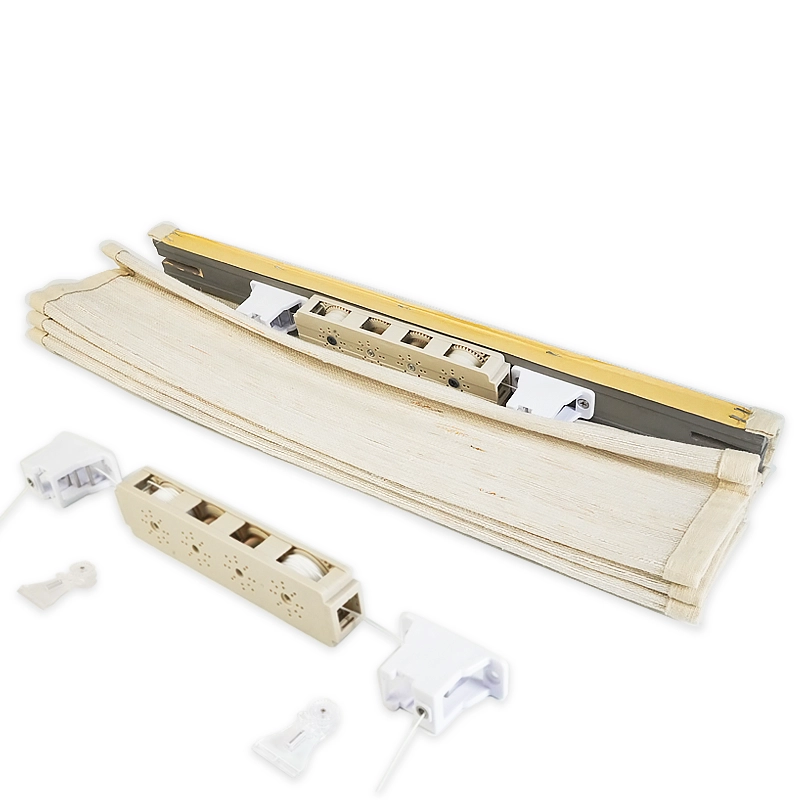
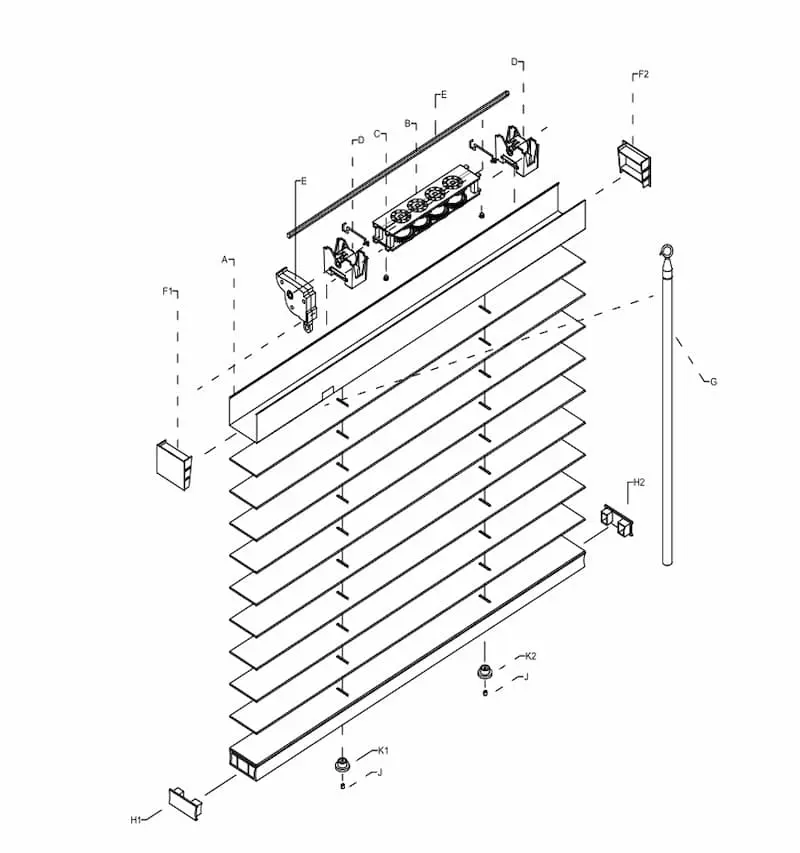
- Headrail stays constant
- Brake housing remains unchanged
- Motor integration interface remains stable
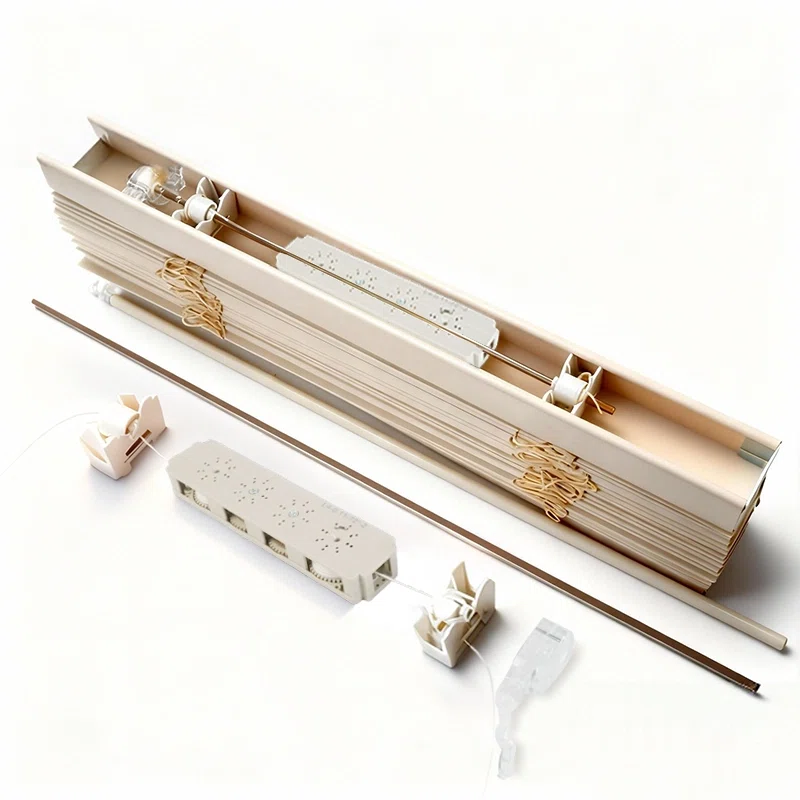
- Only spring cartridge changes
This reduces SKU complexity while increasing adaptability.
5. Engineering FAQ
Engineering FAQ: Global Performance of Cordless Spring Systems
Q1: Can one spring specification serve all global markets?
No. A single spring specification rarely performs optimally across all regions.
Environmental temperature, humidity levels, fabric density, and regulatory safety margins differ significantly between markets. For example, roller shades installed in Northern Europe experience lower ambient temperatures than those used in Southeast Asia, which affects spring elasticity and friction behavior.
As a result, force calibration must be adapted regionally, typically within a ±5% force band, to ensure smooth lifting and consistent stopping performance.
Modern cordless systems therefore rely on modular spring configurations rather than a universal design.
Q2: Does a higher safety margin reduce performance?
It can if implemented incorrectly.
Oversized springs create excessive lifting force, which increases pull-down resistance and causes sudden rebound during release.
However, when properly engineered, a modular spring system can maintain safety margins while keeping force variation within ±5%, preserving smooth operation and user comfort.
This balance between safety compliance and mechanical smoothness is the core of modern cordless blind engineering.
Q3: Why do failures often appear after export shipment?
Because environmental conditions change after installation.
A system tested at 22°C factory conditions may behave differently in real-world environments such as:
-
5°C winter installations in Canada
-
40°C indoor sun exposure in the Middle East
-
High humidity in coastal climates
Temperature affects spring modulus and friction surfaces, which can shift the effective force band and reveal issues that were not visible during factory validation.
Q4: Is brake friction enough to compensate load mismatch?
No. Brake friction only masks imbalance temporarily.
If the spring force is poorly matched to the blind weight, friction components will experience accelerated wear. Over time this leads to:
-
drifting stop positions
-
uneven lifting
-
noisy operation
The correct engineering approach is force-band stability first, friction second.
The brake should control motion, not compensate for incorrect spring sizing.
Q5: What is the minimum durability validation?
A reliable cordless spring system should pass 100,000 full travel cycles.
This testing must simulate real operational conditions, including:
-
temperature variations
-
repeated full-height travel
-
load variations from different fabrics
Long-cycle durability testing verifies that force attenuation stays within acceptable limits and confirms the system can survive more than a decade of daily use.
Q6: Why is constant-force spring design preferred in cordless blinds?
Constant-force spiral springs maintain nearly linear force output during extension, typically within ±5%.
This stability ensures that lifting force remains predictable throughout the entire travel range, preventing:
-
heavy pull at the bottom
-
weak lifting near the top
Compared with conventional torsion springs, constant-force designs provide more consistent user experience and longer service life.
Q7: How does fabric weight influence spring selection?
Fabric density directly determines the required balancing force.
Engineers calculate spring force using parameters such as:
-
fabric weight per square meter
-
blind width and drop height
-
bottom bar mass
If the spring force is too low, the blind cannot rise properly.
If too high, the blind becomes difficult to pull down.
The optimal design keeps spring output about 5–10% higher than the total load.
Q8: Why is early-cycle stabilization important?
A newly assembled cordless system often behaves differently during the first several hundred cycles.
During this period:
-
friction surfaces polish
-
spring pre-load stabilizes
-
internal interfaces settle into repeatable behavior
This “bedding-in” phase is why many engineering teams validate compatibility after 500–1,000 cycles, not immediately after assembly.
Q9: How do regional compliance standards influence spring design?
Safety regulations such as:
-
ANSI/WCMA A100.1 (United States)
-
EN 13120 (Europe)
-
CPSC 16 CFR 1260 (U.S. child safety rule)
require cordless window coverings to eliminate hazardous cords and ensure controlled operation.
To meet these requirements, spring systems must maintain stable force output and predictable stopping behavior, preventing sudden movement or uncontrolled retraction.
Compliance therefore directly influences spring torque calibration and braking design.
Q10: What engineering parameters most affect long-term stability?
Several mechanical tolerances strongly influence system durability:
| Parameter | Typical Engineering Target | Impact |
|---|---|---|
| Spring-to-shaft coaxiality | ≤0.1 mm | Prevents vibration and noise |
| Coil spacing tolerance | ≤0.05 mm | Maintains stable torque curve |
| Strip thickness tolerance | ±0.01 mm | Controls force output accuracy |
| Fatigue life | ≥100,000 cycles | Ensures long-term reliability |
Field Insight
Global window covering brands do not compete on components.
They compete on predictability across markets.
A modular spring mechanism transforms regulatory diversity and climate uncertainty into configurable engineering parameters — not redesign risks.
When compliance, climate, and load variability are engineered into the force band,
the same architecture can serve Seattle, Berlin, Sydney, and Dubai — without structural redesign.