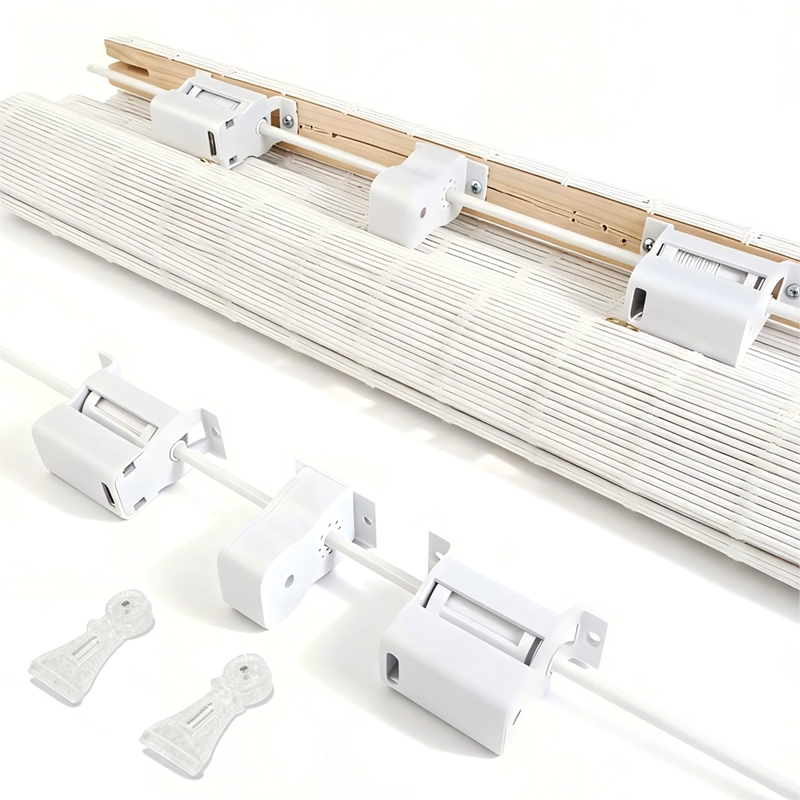
Why It Determines Stability, Safety, and Premium Performance
Component Compatibility in Cordless Window Covering Systems
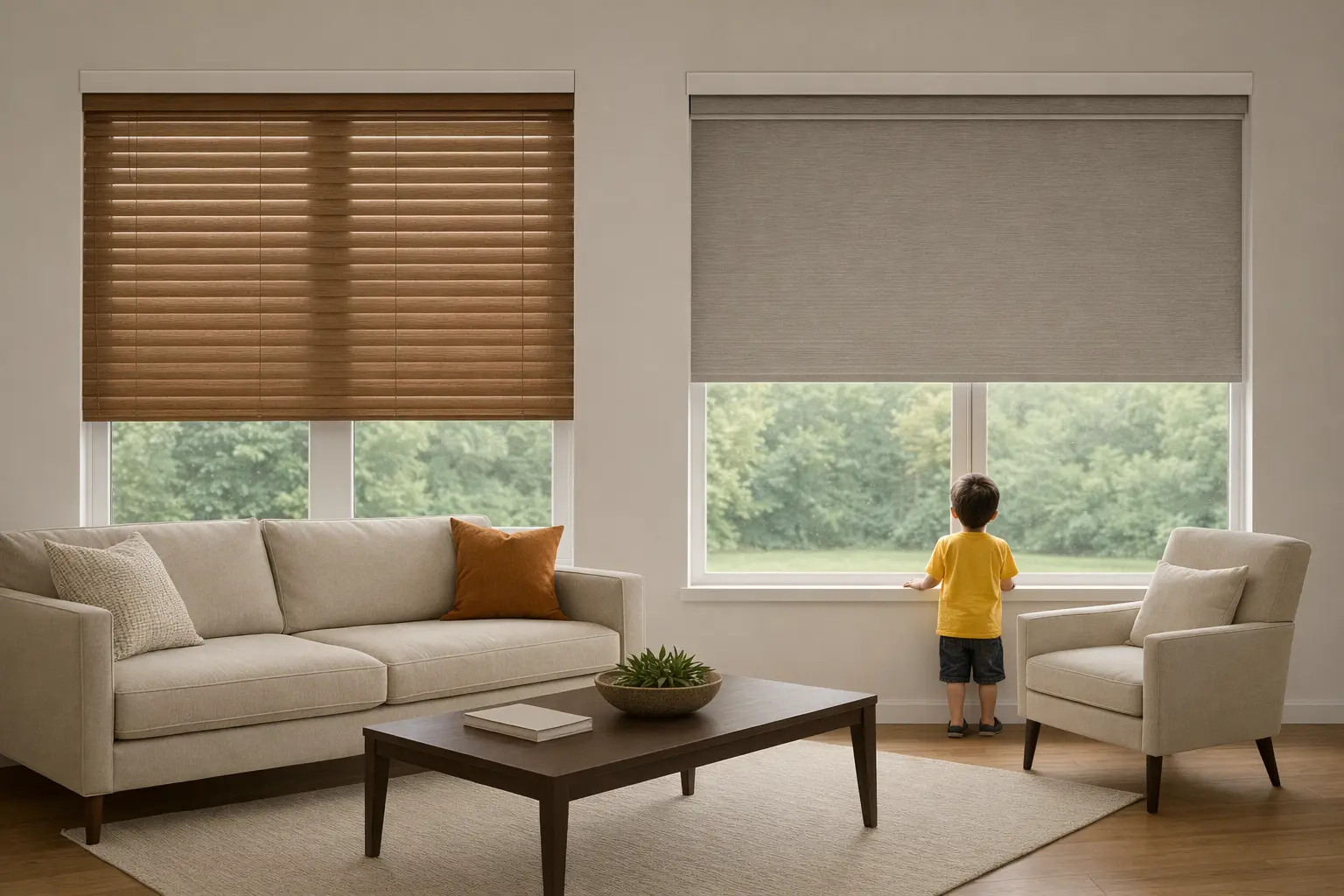
In 2026, “premium” is no longer defined by fabric texture or color accuracy.
It’s defined by whether a cordless window covering system stays stable, quiet, and predictable after thousands of cycles.
Component Compatibility in Cordless Window Covering Systems | Stability & Safety Engineering
Quick Summary
Component compatibility is the hidden engineering lever behind cordless window covering system performance.
When the spring, brake, shaft, reel, and housing are not engineered as a governed set, the system may feel smooth at first but later develops drift, chatter (stick-slip), high pull force, and noise.
This article explains how torque band matching, braking authority, alignment, and material behavior over cycles determine stability and safety in premium cordless roller shade and blind mechanisms.
What Is Component Compatibility in a Cordless Window Covering System?
In engineering terms, component compatibility means:
all internal parts operate within a shared performance envelope across the full travel stroke, after bedding-in, and under realistic temperature and cycle conditions.
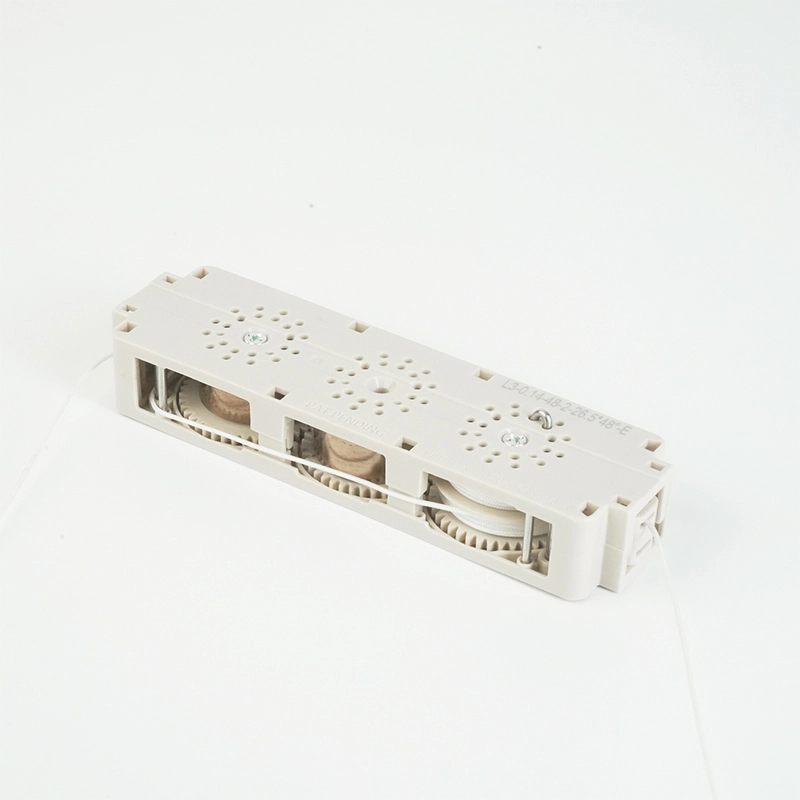
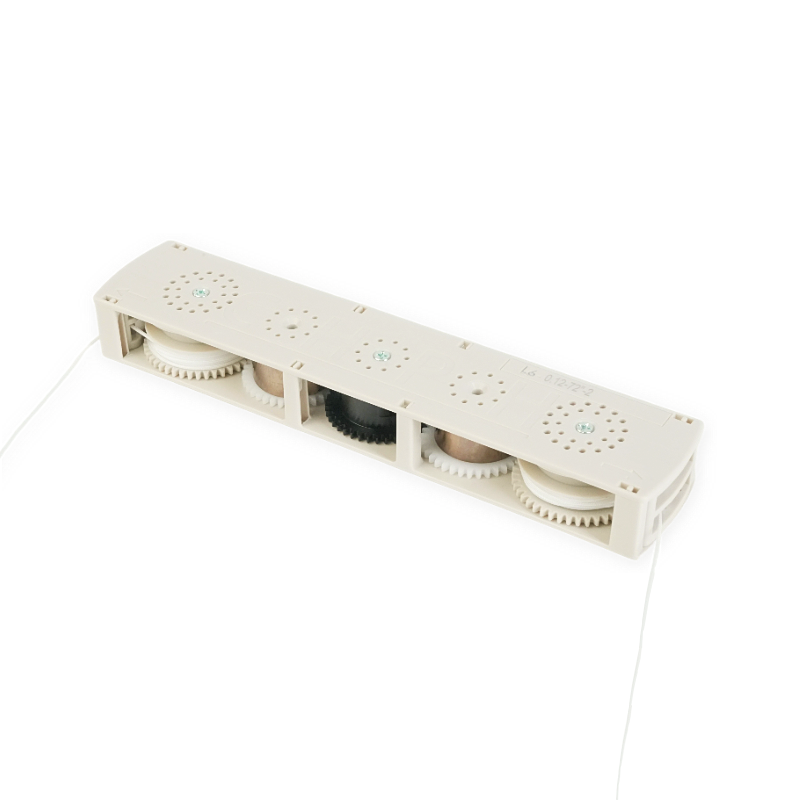
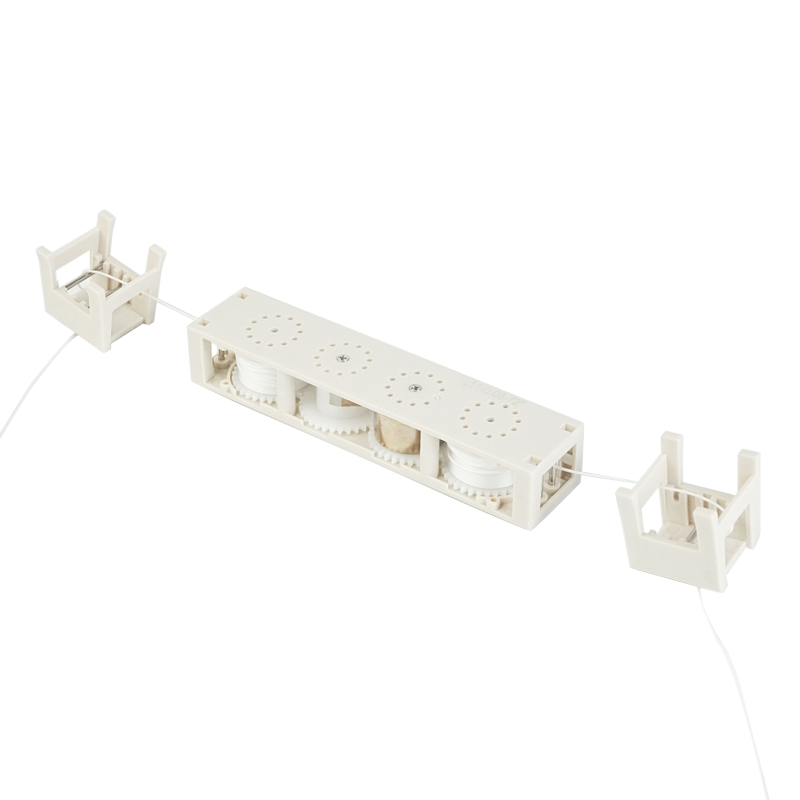
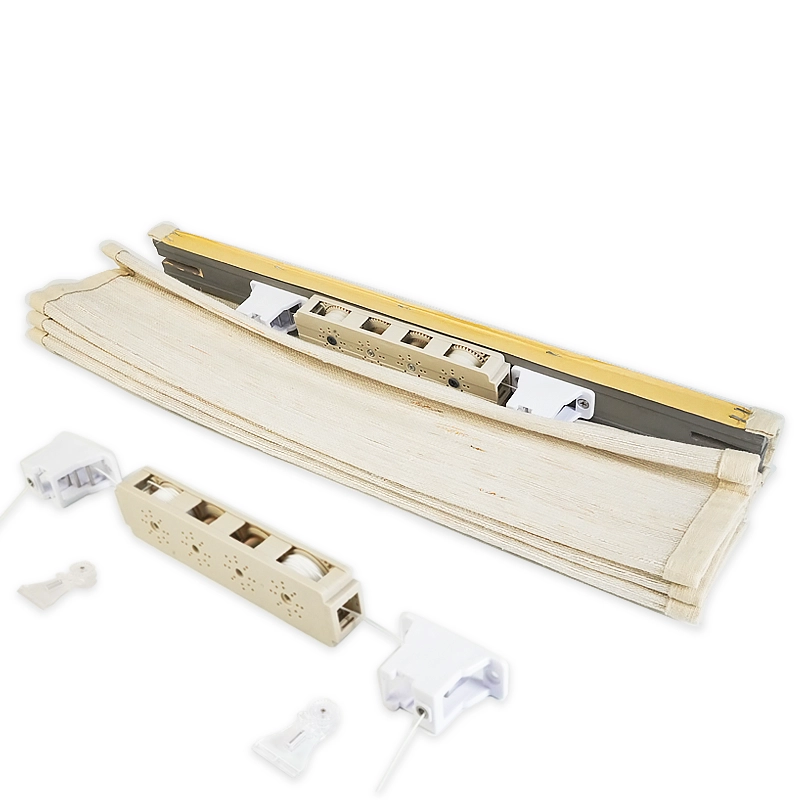
In a typical cordless window covering system, compatibility is not just about “fit.”
It is about whether:
- The spring output stays within a usable torque/force band
- The brake provides sufficient braking authority without causing stick-slip
- The shaft, reel, and housing stay aligned to avoid eccentric friction and noise
- Materials and surface treatments remain stable after early-cycle run-in
If those relationships are not managed, “good parts” still build a bad system.
| What Buyers See | What Engineers Must Govern | Typical Failure If Not Compatible |
|---|---|---|
| Smooth pull today | Force band overlap across full stroke | Drift after bedding-in |
| Quiet demo sample | Alignment + friction stability after cycles | Noise spikes / chatter later |
| “Premium” materials | Interface material behavior over temperature | Stick-slip oscillation |
Why Component Compatibility Determines Cordless Window Covering Stability
Stability in cordless systems is not a single metric.
It is the result of three continuous requirements:
- Hold stability: stays at any position without drifting
- Motion predictability: controlled speed and consistent feel across travel
- Lifecycle consistency: behavior remains stable after thousands of cycles
Most instability appears when the system reaches its full operating envelope:
top zone, bottom zone, repeated cycling, and real temperature exposure.
| Travel Zone | What Changes Physically | Compatibility Requirement |
|---|---|---|
| Top zone | Low roll diameter, low friction margin | Brake must prevent impact and rebound |
| Mid travel | Most forgiving geometry | Do not “validate” system only here |
| Bottom zone | High roll diameter, higher torque demand | Spring must keep usable margin (typically +5–10%) |
A system can feel smooth at mid travel while being fundamentally incompatible at the extremes.
That is why “smooth” is a dangerous validation metric.
How Torque Band Matching Works in Cordless Roller Shade Mechanisms
For many cordless roller shade mechanisms, the spring is a spiral torsion spring (constant-force or balanced-output designs).
Its output depends on material modulus, strip width, strip thickness (strong cubic influence), average radius, and effective coil count. :contentReference[oaicite:0]{index=0}
In practice, the system must be engineered so the spring’s usable output band overlaps with:
- Real load (fabric + bottom rail + hardware)
- Variable torque requirement caused by roll diameter changes
- Brake’s controllable resistance band
If the overlap is poor, you see classic symptoms:
- Spring weaker than load: sluggish rise, jamming, poor “return”
- Spring much stronger than load: high pull force, fast rebound, impact noise
- Torque ripple: inconsistent feel, micro-oscillation, audible chatter
| Mismatch Type | Typical Symptom | What “Fixing” Usually Gets Wrong |
|---|---|---|
| Weak spring band | Sluggish bottom zone | Over-tighten brake (worsens pull force) |
| Over-strong spring band | Fast rise / impact | Add friction (creates stick-slip risk) |
| Unstable band after cycles | Drift after weeks | Only test “fresh” samples |
Why Brake Compatibility Matters: Braking Authority vs Stick-Slip Risk
In a cordless window shade system, braking is not just “hold.”
Braking must provide controlled resistance without generating stick-slip oscillation.
Compatibility requires the brake’s working band to overlap with the spring’s force band:
- Enough authority to prevent drift and rebound
- Not so aggressive that friction becomes discontinuous (stick-slip)
- Stable behavior as surfaces polish, glaze, or age
When brake friction is used to compensate for a poorly matched spring, you often trade one problem for another:
- Drift reduces short-term
- Pull force rises
- Noise and chatter become more likely
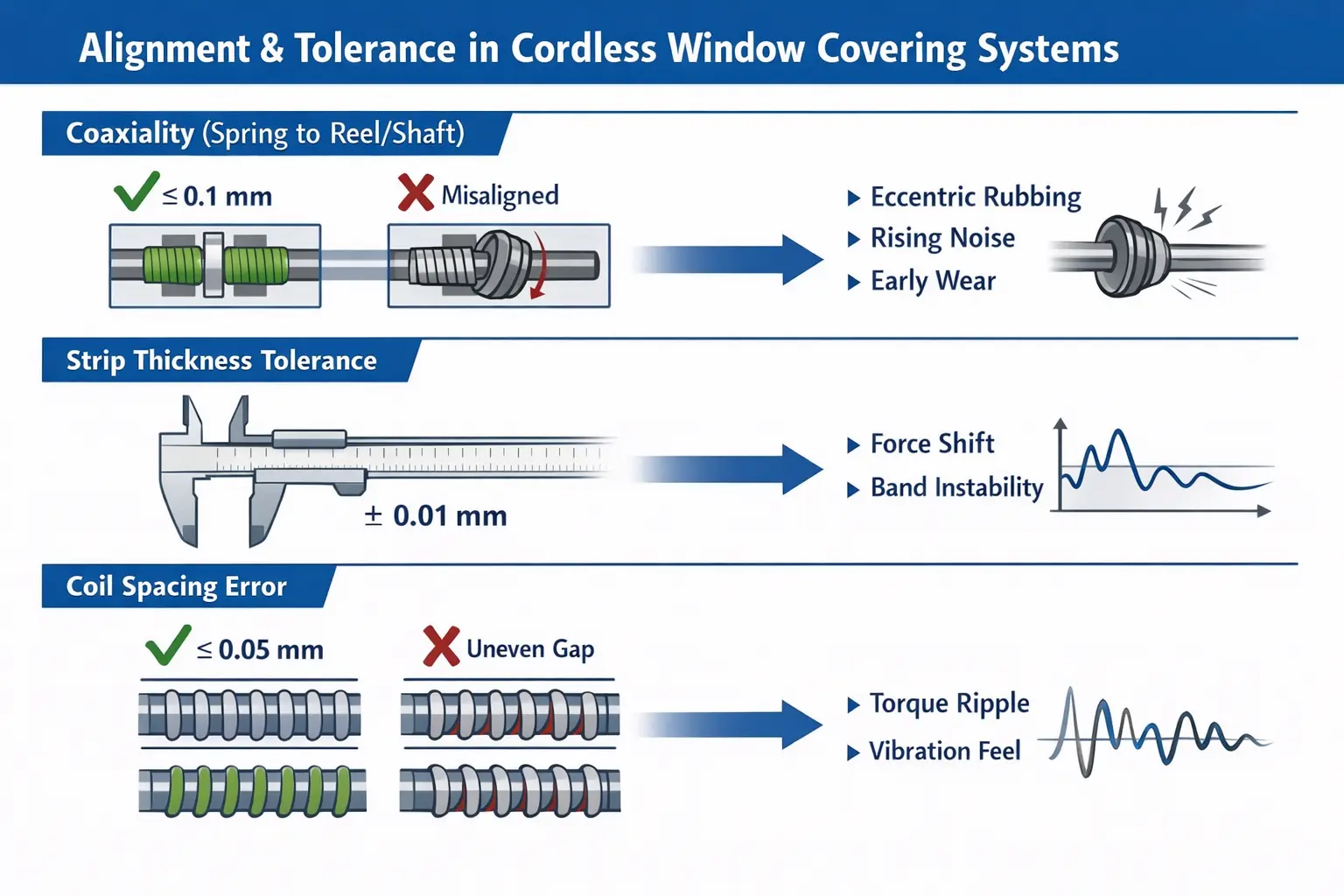
Why Alignment and Tolerance Control Affect Noise in Cordless Window Coverings
Many “mystery noises” in cordless window coverings are not from the spring itself.
They come from eccentric operation created by small alignment errors.
In spiral torsion spring mechanisms, coaxiality and concentricity errors drive uneven contact pressure, which amplifies friction noise and accelerates wear. :contentReference[oaicite:1]{index=1}
| Parameter | Engineering Target | Impact When Exceeded |
|---|---|---|
| Coaxiality (spring to reel/shaft) | ≤ 0.1 mm | Eccentric rubbing, rising noise, early wear |
| Strip thickness tolerance | ±0.01 mm | Force shift, band instability |
| Coil spacing error | ≤ 0.05 mm | Torque ripple, vibration feel |
Premium noise performance is built by alignment discipline, not by hiding noise with heavier fabrics.
Early-Cycle Reality: Why Compatibility Must Be Validated After Bedding-In
A cordless window covering system is not “stable” the day it leaves the factory.
It becomes stable after:
- Spring pre-load settles
- Friction surfaces polish
- Material interfaces reach repeatable behavior
This is why many failures appear weeks after installation, not on day one.
A practical compatibility validation window includes:
| Validation Item | Recommended Target | Why It Matters |
|---|---|---|
| Conditioning cycles | 500–1,000 cycles | Stabilizes early friction and preload effects |
| Temperature check | 23°C and 50–60°C | Separates geometry issues from material behavior |
| Full travel checkpoints | Top / Mid / Bottom | Finds extreme-zone instability |
Compatibility Targets: What “Premium Performance” Looks Like in Numbers
If you want a cordless system that feels elite in real homes, it needs measurable targets.
Below are commonly used engineering-level indicators for stable, controlled operation:
| Performance Metric | Target Range | System Meaning |
|---|---|---|
| Downward pull force | ≤ 30 N | Usable for broad user groups |
| Release / rise speed | 0.1–0.2 m/s | Avoids impact, feels controlled |
| Noise level (quiet room) | ≤ 35 dB | Premium acoustic comfort |
| Fatigue life | ≥ 100,000 cycles | Long-term reliability expectation |
| Force band fluctuation | ≤ ±5% | Predictable feel across travel |
Numbers don’t make a product premium.
But premium products always have numbers behind them.
How OEM Buyers Can Evaluate Component Compatibility Before Scaling
If you are an OEM, brand, or project integrator, compatibility risk is a cost risk:
- Returns and warranty claims after installation
- Noise complaints (hard to reproduce in the lab)
- Inconsistent feel across production batches
- Compliance and safety confidence issues
A practical evaluation approach:
- Measure force band over full travel, not only mid-stroke
- Run 500–1,000 conditioning cycles before judgment
- Test top and bottom zones as separate acceptance gates
- Vary temperature to expose material-driven drift
- Check alignment with measurable coaxiality targets
Compatibility is the difference between a sample that sells and a product line that survives.
FAQ: Component Compatibility in Cordless Window Covering Systems
1) What causes cordless roller shades to drift over time?
Most drift is caused by poor overlap between the spring force band and braking authority, especially after bedding-in changes friction behavior.
2) How do you match spring force to the shade load?
Match the spring’s usable output band to real load (fabric + bottom rail + hardware) with a practical margin, then verify across top/mid/bottom zones.
3) Why do some systems feel smooth but fail later?
Because smoothness is often validated at mid travel, while failures emerge at travel extremes and after early-cycle stabilization (0–1,000 cycles).
4) Can stronger braking fix an incompatible spring?
Only temporarily. Higher friction may reduce drift short-term, but can increase pull force and stick-slip noise risk.
5) What is torque band matching?
It is the engineering process of ensuring spring output stays within a usable band that overlaps with load demand and brake control across the full stroke.
6) Why does alignment matter so much in cordless window coverings?
Small coaxiality errors create eccentric friction and vibration, which increases noise and accelerates wear even when parts are “within tolerance.”
7) What validation cycles are recommended before mass production?
At least 500–1,000 conditioning cycles plus full-travel checkpoints (top/mid/bottom), ideally across normal and elevated temperature conditions.
8) What are the most common compatibility-related noise sources?
Eccentric rubbing from alignment deviation, friction discontinuity (stick-slip), and torque ripple from unstable force bands.
9) How can OEM buyers reduce compatibility risk?
Ask for force-band curves, cycle-based validation data, and full-travel acceptance criteria rather than relying on short-stroke feel checks.
10) Which components must be engineered together as a system?
Spring, brake, shaft, reel, housing, and all interfaces where friction, alignment, and torque transfer occur.
Field Insight
If your supplier only talks about “good parts,” you may still end up with an incompatible system.
Elite cordless window coverings are built by governing force relationships: torque band overlap, braking authority, alignment discipline, and cycle-stable material behavior.
Conclusion: Compatibility Is the Architecture Behind Premium Cordless Performance
Component compatibility is the engineering foundation of premium cordless window covering systems.
It determines whether a product stays stable, quiet, and predictable after real-world cycling.
If you want fewer returns, stronger compliance confidence, and a truly premium user experience, treat compatibility as a system-level requirement:
- Torque band matching across full travel
- Brake authority without stick-slip
- Alignment and tolerance control
- Validation after bedding-in (500–1,000 cycles)
A premium window covering is not “assembled from premium parts.”
It is engineered as a governed system.