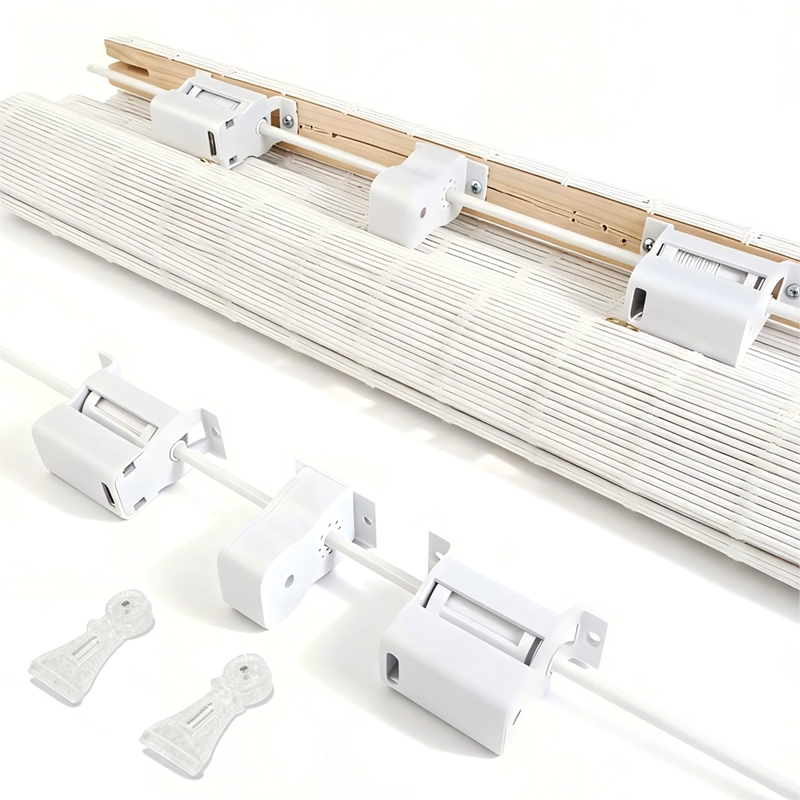
Quick Summary — A 5-Minute Children Safety Check for Your Windows
When we talk about Children Safety at home, most parents think of table corners, sockets and cabinets.
But one of the most overlooked risks is still hanging quietly in many rooms: window coverings.
This guide helps you:
- Identify which safety type your current blinds or curtains belong to
- Understand how each type affects Children Safety
- Decide when it is time to upgrade to Cordless Blinds with a safe internal spring mechanism
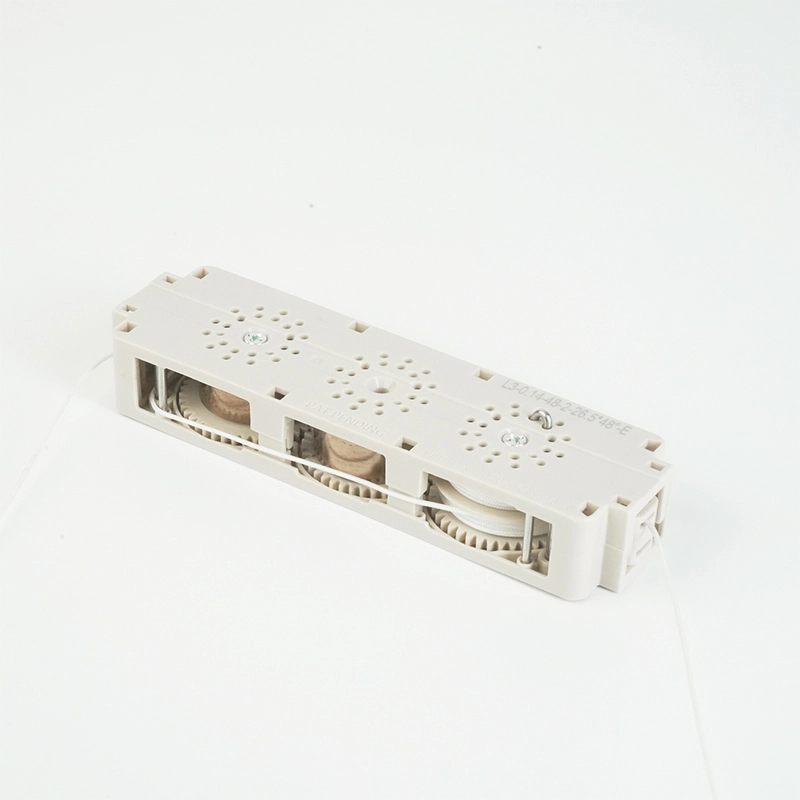
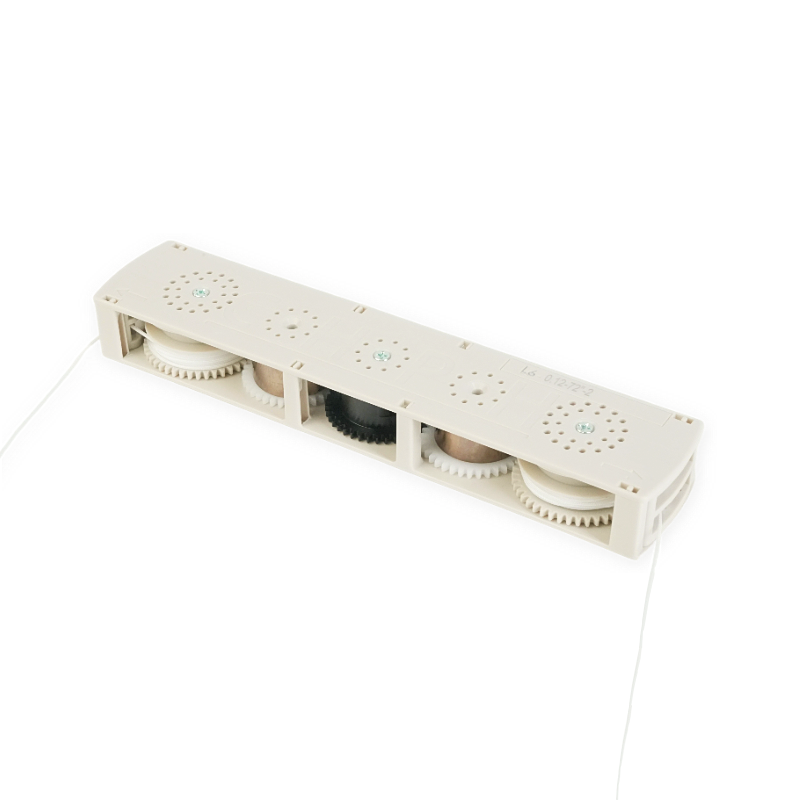
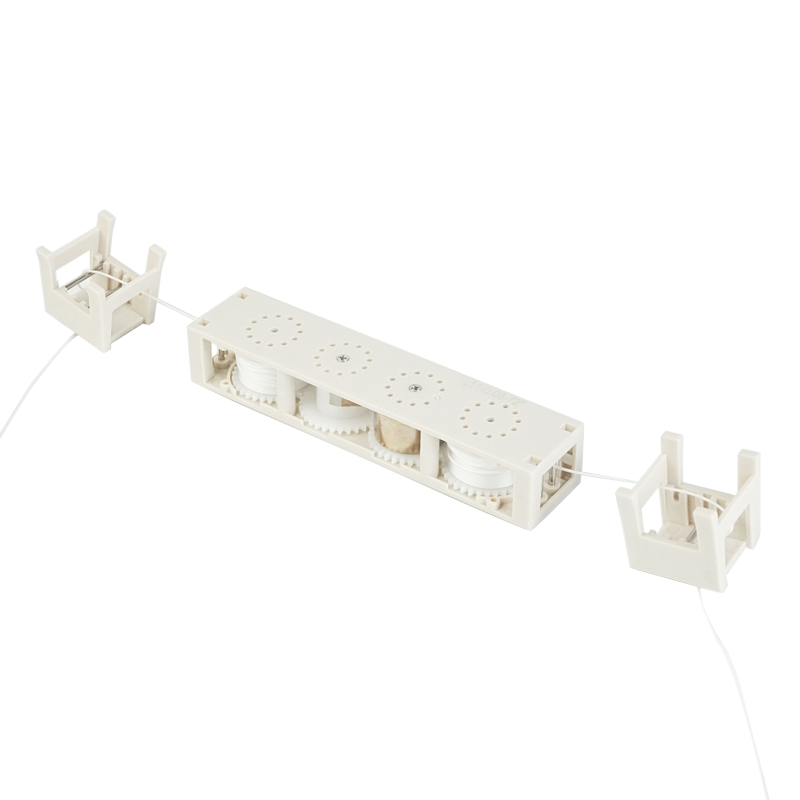
Behind many modern cordless solutions is a hidden Cordless Spring Mechanism that keeps movement smooth while removing cords and loops from a child’s reach. Strengthening Children Safety often starts by changing what children can touch, pull and climb around the window.
Why Window Coverings Matter for Children Safety as Much as Table Corners
As parents and caregivers, we constantly think about Children Safety:
- We pad sharp edges.
- We lock cleaning products away.
- We install covers on electrical outlets.
Yet the window area — with its cords, chains and climbable furniture — can quietly undermine all these efforts. Different homes use different window sizes, fabrics and lifting systems, so the level of risk and the right fix are not identical.
In this article, we use three typical categories of window coverings so you can quickly:
- Match your home to a safety type
- Apply immediate risk-reduction steps
- Understand why many families now see Cordless Blinds as a core part of their Children Safety strategy
The goal is simple: let the design of your blinds support Children Safety, instead of relying only on constant supervision.
Type A: Traditional Corded Blinds — Highest Risk for Children Safety
 |
 |
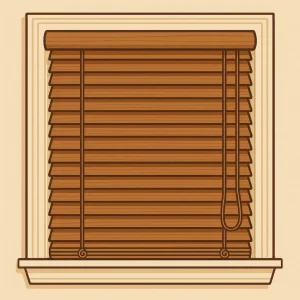
Typical appearance
These products are often Venetian blinds, roller blinds or fabric shades with one or more long pull cords.
The cords may hang freely or form a closed loop used to raise and lower the blind.
Risk Analysis
For Children Safety, this is the highest-risk category:
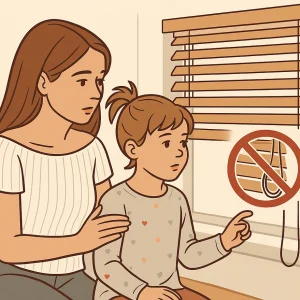
- Long cords can form a sliding loop around a child’s neck.
- Toddlers see cords as toys and may swing, wrap or wear them like a necklace.
- In a moment of panic, the loop can tighten fast, and a few minutes can lead to a serious or even fatal accident.
Because of these incidents, consumer safety authorities worldwide have repeatedly issued warnings, guidelines and product recalls for certain corded blinds.
Short-Term Fixes (Symptom Control)
If replacing the blinds today is not possible, you should still act immediately to improve Children Safety:
- Install and always use cord cleats or safety devices
- Fix the cleat or safety device high on the wall, ideally at least 1.5 m above the floor.
- Wrap and secure the cord tightly so there is no loop within a child’s reach.
- Simply wrapping the cord around itself, without a firm anchor point, is not enough.
- Build a non-negotiable habit
- After every single operation of the blind, re-secure the cord.
- Treat this like locking your front door — part of your daily Children Safety routine.
These actions reduce risk, but they still depend on memory and discipline, which is why they are a temporary answer.
Long-Term Solution: Cordless Blinds for Safer Children Safety by Design
To remove the strangulation loop entirely, you must remove the external cord.
Modern Cordless Blinds replace visible cords with:
- Push-up / pull-down bottom rails
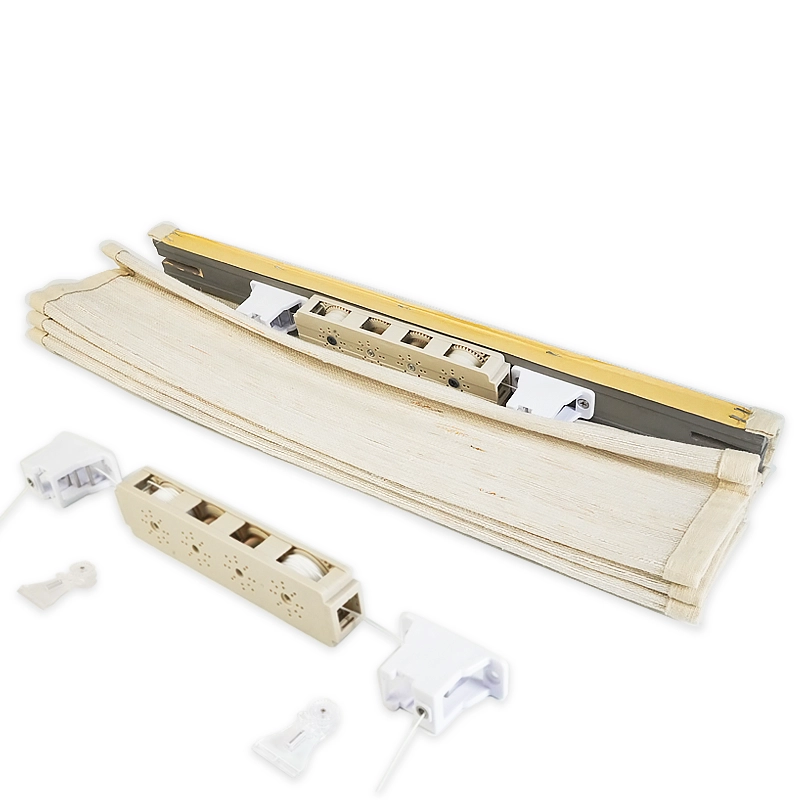
- Sealed spring modules or motors inside the headrail
- Enclosed tilt wands or side handles
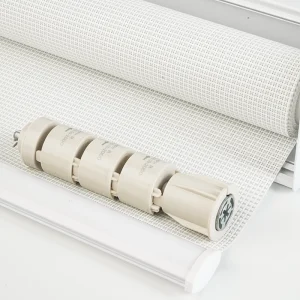
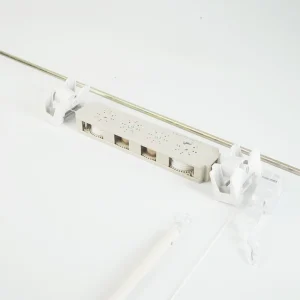
Inside the headrail, a Cordless Spring Box or Cordless Spring Mechanism quietly balances the blind’s weight, so it moves smoothly and stays at the chosen height. By hiding the working parts, you reduce exposed hazards and support Children Safety through design, not just rules.
Type B: Chain-Operated Blinds — Medium Risk, Still a Children Safety Concern
 |
 |
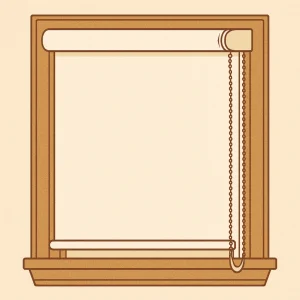
Typical appearance
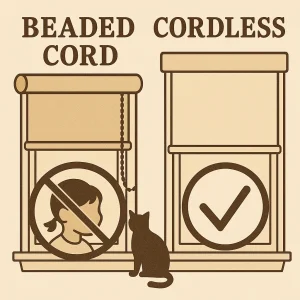
These are common roller blinds and Roman shades with a continuous bead chain loop on one side, made of plastic or metal.
Risk Analysis
From a Children Safety viewpoint, the risks are twofold:
- Loop and entanglement risk
- A long bead chain can still wrap around a child’s neck.
- When the lower tension device fails or is never installed, the chain hangs loose and can form a dangerous loop.
- Choking hazard from broken beads
- Ageing or low-quality chains can crack or break.
- Small beads that fall off are attractive to babies who explore the world by putting objects into their mouths, raising the risk of choking.
Short-Term Fixes (Symptom Control)
- Verify the tension device or chain anchor
- Gently pull the bottom fixing point of the chain.
- For proper Children Safety, it should hold the chain firmly, preventing it from forming a large, slack loop.
- Shorten and secure the chain
- If the chain hangs low, wrap it and secure it with a safety cleat or clip at a high point.
- Avoid any section of chain forming a loop at child height.
- Inspect regularly
- Look for cracks, discoloration, missing beads or sharp edges.
- If the chain slips out of the tension device or shows damage, stop using the blind until it is fixed or replaced.
Long-Term Solution: Move from Chains to Cordless for Better Children Safety
Even with flawless installation, a chain system still depends on multiple parts and ongoing discipline, which introduces Children Safety uncertainty.
Upgrading to Cordless Blinds shifts the work from an exposed loop to a hidden mechanism:
- The blind is moved by an internal Cordless Spring Mechanism, not by an external chain.
- The chain loop disappears, removing a major risk from the Children Safety equation.
- The window looks cleaner and more modern, which many families appreciate as a bonus.
You can still keep the fabric style you like — many cordless systems are designed as drop-in replacements for popular roller and Roman formats, but with a Children Safety upgrade built in.
Type C: Cordless Window Coverings — Low Risk, but Children Safety Still Needs Checks
 |
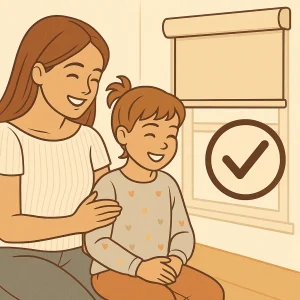 |
Typical appearance
These blinds are operated by:
- Directly pushing up or pulling down the bottom rail
- A tilt wand or side handle with no free-hanging cords
- Magnetic or soft-touch solutions that do not create loops
At normal eye level, you will not see long cords or chains.
Many of these products use a sealed Cordless Spring Box or similar Cordless Spring Mechanism inside the headrail. This hidden module stores and releases energy, so the blind feels light to operate, stays where you leave it and avoids snapping movements that could surprise children. For manufacturers and exporters of these mechanisms, tuning the torque and matching it to the fabric is part of delivering stable Children Safety performance over thousands of cycles.
Risk Analysis
If your blinds are truly cordless, you have already removed roughly 90% of the cord-related hazard around the window. For Children Safety, this is a major win, and many regulators treat cordless designs as the preferred option for homes with children.
But “low risk” is not “no risk”. Two areas remain important:
- Whether the blind is installed securely
- What children can climb near the window
Safety Checks and Optimization
- Test installation strength
- Grip the headrail or curtain rod with both hands and give it a firm downward pull.
- It should not move, tilt or make worrying sounds.
- Screws need to be fixed into solid structure (studs, masonry or strong frames), not just plasterboard.
- If you feel any looseness, call an installer to check — a falling blind is also a Children Safety issue.
- Re-arrange furniture strategically
- Move cribs, children’s beds, sofas, stools, toy storage or chairs at least 1 meter away from the window.
- This prevents children from climbing up to the glass or hanging their body weight from the blind, further protecting Children Safety.
With solid mounting and smart furniture layout, Cordless Blinds provide a low-risk environment where Children Safety is built into both the product and the room design.
Summary Table: Children Safety vs. Window Covering Types
| Safety Type of Blinds | Main Children Safety Risks | Emergency Measures | Long-Term Solution | Children Safety Level |
|---|---|---|---|---|
| Traditional corded (Type A) | Cord loops, high strangulation risk | Install and always use cord cleats / safety devices high on the wall | Replace with Cordless Blinds using internal spring hardware | ★☆☆☆☆ (Very high risk) |
| Chain-operated (Type B) | Chain loops, choking from loose beads, failed tension device | Secure tension device, shorten and fix chain at height, stop using if damaged | Replace with Cordless Blinds driven by a Cordless Spring Mechanism | ★★☆☆☆ (Medium risk) |
| Cordless (Type C) | Falling hardware if poorly installed, climbing risk from nearby furniture | Check mounting strength, move climbable furniture 1 m away | Maintain Cordless Blinds with a stable Cordless Spring Box and regular checks | ★★★★★ (Low risk) |
This table is a quick reference to see how your current setup aligns with Children Safety goals — and where an upgrade could make the biggest difference.
Behind the Design: How Mechanisms Support Children Safety
For families, the visible promise is no cords, no chains, no loops.
Behind that promise is a collection of engineering decisions that also influence Children Safety:
A quality Cordless Spring Mechanism is designed to:
- Balance the weight of the fabric and bottom rail
- Avoid sudden “snap ups” that can startle children
- Hold its position reliably over many thousands of up-and-down cycles
As exporters working with brands and fabricators, our role is to help them select the right cordless components, tune torque ranges and match tube sizes to fabric loads. When this work is done well, parents feel only one thing at the window: a blind that operates easily and supports Children Safety without drawing attention to itself.
Beyond Categories: Making Children Safety Your Default Filter
No matter where your blinds sit on the scale today, putting Children Safety first will guide you naturally toward safer choices — often ending in Cordless Blinds powered by sealed mechanisms.
When planning new window coverings for:
- Nurseries and children’s bedrooms
- Living rooms, play areas and family rooms
- Homes of grandparents, relatives and caregivers
- Rental units that may host families with children
use Children Safety as your primary filter before style or color.
Smart Questions to Ask When You Buy
- “Is this product truly cordless and designed with Children Safety in mind?”
- “Does this system rely on a tested Cordless Spring Mechanism or similar safer technology inside the headrail?”
- “Does this blind meet the latest child-related window covering safety standards or guidelines in my market?”
Check whether the product aligns with recognized frameworks in your region. Most modern standards either strongly encourage or effectively push the market toward cordless designs in environments where children live or frequently visit.
Conclusion: Children Safety Is a Journey — Good Design Makes It Easier
 |
 |
Children Safety is not a one-time checklist; it is a journey that evolves as children grow, move and explore.
By reviewing your window coverings today, you are already taking a strategic step:
- If you still use Type A or Type B, apply emergency protections now and plan an upgrade to Cordless Blinds with solid internal spring hardware.
- If you are at Type C, verify installation strength and room layout so your low-risk setup remains safe as children get bigger and more adventurous.
Switching to cordless solutions is more than a style update. It means your child can enjoy a bright room without hidden traps, and your Children Safety plan includes one more risk that has been quietly designed out of your daily life.
If you are unsure which retrofit or product type fits your windows best, it is wise to consult a professional blind installer or window covering specialist. For brands, builders and project owners, partnering with experienced exporters of Cordless Spring Box and Cordless Spring Mechanism solutions ensures that the Children Safety promise of cordless systems is backed by reliable, tested hardware in every headrail.
Field Insight — Extending Children Safety Beyond Your Own Home
Even if you have already improved Children Safety at home with cordless systems, the places your child visits every week may still hold avoidable risks.
Broadened Perspective
Treat window covering safety as part of a larger Children Safety ecosystem: homes, schools, daycare, relatives’ houses, vacation rentals and community spaces. Each location that replaces corded systems with Cordless Blinds supported by safe mechanisms removes one more loop from your child’s world.
Practical Extensions
- Scan “secondary” environments
During visits to grandparents, friends or holiday rentals, take a few seconds to look at the windows. If you see long cords or chains, keep children away from that area and gently raise the concern. - Engage landlords and building managers
If you rent, ask about plans to improve Children Safety in units used by families. Suggest cordless upgrades when existing blinds are replaced. - Talk with schools and childcare centers
Ask which types of blinds are installed, whether corded products are still in use, and if there is a roadmap to move gradually toward cordless, child-oriented solutions. - Align upgrades with renovations
Whenever you repaint, replace windows or refresh a room, add Cordless Blinds with stable spring hardware to the standard renovation checklist — not as a decorative extra, but as part of the Children Safety budget. - Keep a simple safety map
Note which rooms and locations already meet your Children Safety standard and which still rely on cords or chains. Revisiting this list annually keeps decisions visible and actionable.
The long-term goal is clear: Children Safety should not depend on luck or constant reminders. By making cordless, well-engineered window coverings the norm instead of the exception, you steadily remove one of the most underestimated hazards from a child’s everyday environment.