Why Are Leading Manufacturers Switching to the Easy Spring System for Their Next-Gen Products?
Spring Brake Mechanism for Cordless Roller Shades
Quick Summary
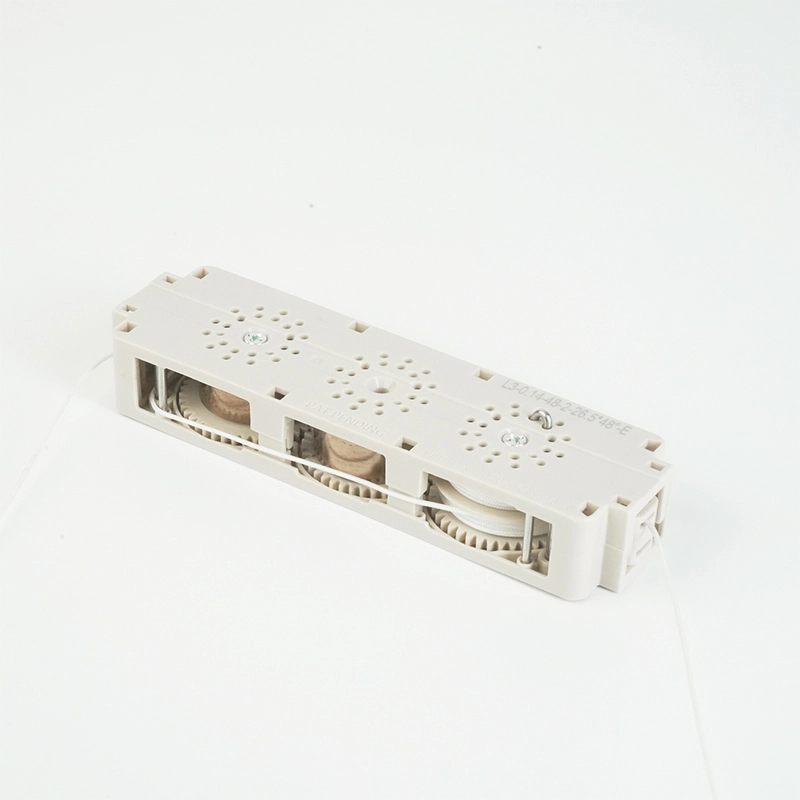
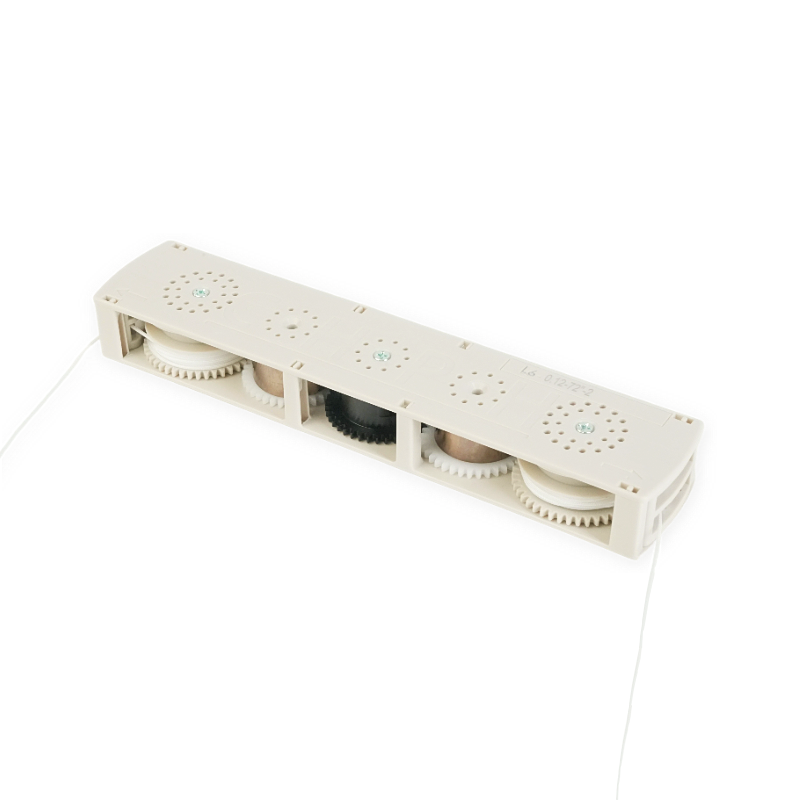
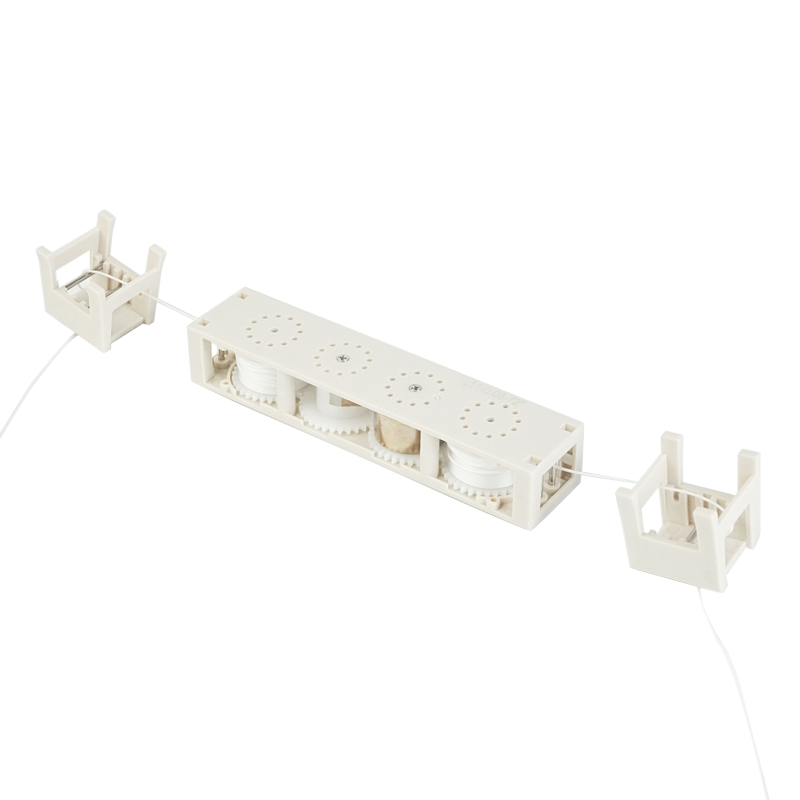
Easy Spring System is a spring brake mechanism designed for B2B window covering manufacturers.
It improves the safety, operational stability, and user experience of cordless shading products.
The system integrates an internal tension adjustment mechanism that maintains stable performance
across fabrics of different weights while remaining compatible with common shading system platforms.
Easy Spring System is a spring brake mechanism designed for B2B window covering manufacturers.
It improves the safety, operational stability, and user experience of cordless shading products.
The system integrates an internal tension adjustment mechanism that maintains stable performance
across fabrics of different weights while remaining compatible with common shading system platforms.
For window covering manufacturers, the key benefits include:
- Improved operational stability of shading systems
- Reduced after-sales service and maintenance costs
- Simplified production line upgrades
- A cordless solution aligned with modern safety standards
With optimized structural design, manufacturers can enhance product performance without major changes
to existing production lines while meeting safety requirements in residential, commercial, and public environments.
Technical Advantages of Easy Spring System
Precision Tension Adjustment
The integrated internal tension adjuster allows engineers to calibrate spring tension based on fabric weight and load conditions.
This ensures balanced performance across various shading materials.
Stable Braking Mechanism
The built-in brake structure allows the shade to stop and hold its position securely, preventing slipping or uncontrolled retraction.
Quiet and Smooth Operation
Optimized mechanical design allows the system to operate with extremely low noise while maintaining smooth motion.
Compatibility with Existing Systems
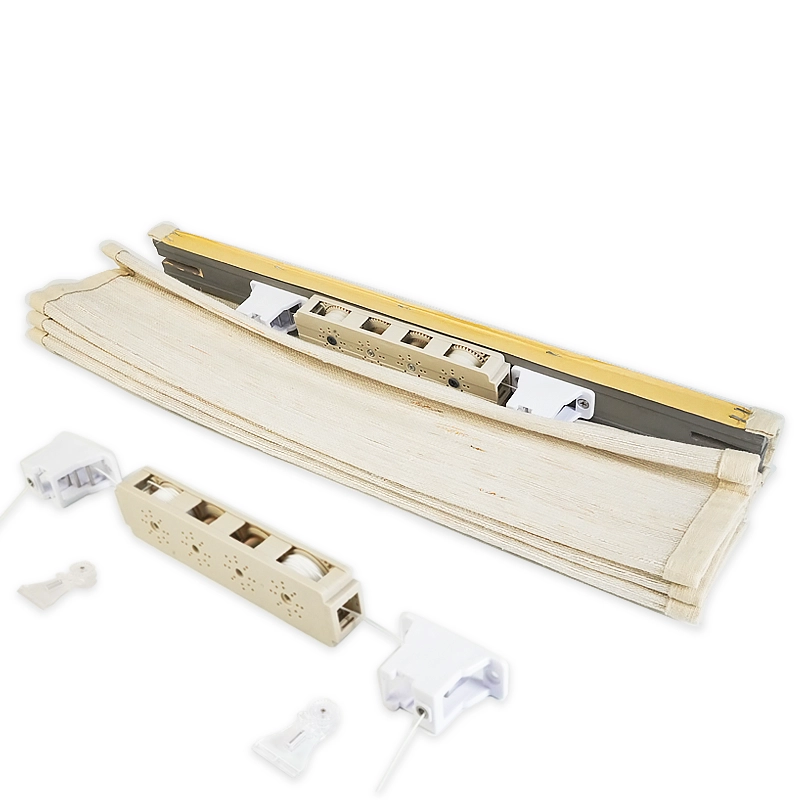
The mechanism is designed to fit commonly used shading structures, enabling manufacturers to upgrade system performance without redesigning the entire product architecture.
Reduced Maintenance Requirements
Stable tension and braking control reduce mechanical failures, minimizing maintenance requirements during long-term use.
Field Insight: Cordless Shading Systems Are Becoming a Global Standard
One of the most significant trends in the window covering industry is the transition from traditional corded systems to cordless shading solutions.
This shift is mainly driven by three factors.
1. Increasing Safety Regulations
Many countries have introduced stricter safety guidelines for corded window coverings due to child safety risks.
Industry organizations and regulatory authorities are encouraging the adoption of cordless alternatives.
2. Higher Reliability Requirements in Commercial Spaces
Commercial environments such as office buildings, hospitals, and schools require shading systems with:
- Lower maintenance frequency
- Stable long-term operation
- Higher safety standards
3. Upgrading Expectations in the Premium Residential Market
Modern homeowners increasingly prefer window coverings that provide:
- Cordless operation
- Quiet performance
- Smooth positioning control
Under these conditions, reliable spring-driven mechanisms have become a key component in upgrading shading product performance.
“The following table summarizes the key performance metrics of the Easy Spring System.”
Performance Reference Data
| Performance Metric | Typical Value | Industry Significance |
|---|---|---|
| Operating Noise Level | < 22 dB | Suitable for quiet residential and office environments |
| Tension Adjustment Range | Multiple fabric weight levels | Compatible with light, medium, and heavy fabrics |
| Position Holding Accuracy | High stability | Shade remains at desired position |
| Mechanical Durability | Long-cycle performance | Supports frequent daily operation |
Application Scenarios
Because of its stability and cordless safety design, the Easy Spring System can be applied across a wide range of shading environments.
Commercial Buildings
Office buildings and large commercial spaces require shading systems capable of frequent daily operation.
Reliable spring systems help reduce maintenance needs in large installations.
Healthcare Facilities
Hospitals and medical environments prioritize quiet operation and safety.
Cordless mechanisms eliminate potential hazards while maintaining smooth functionality.
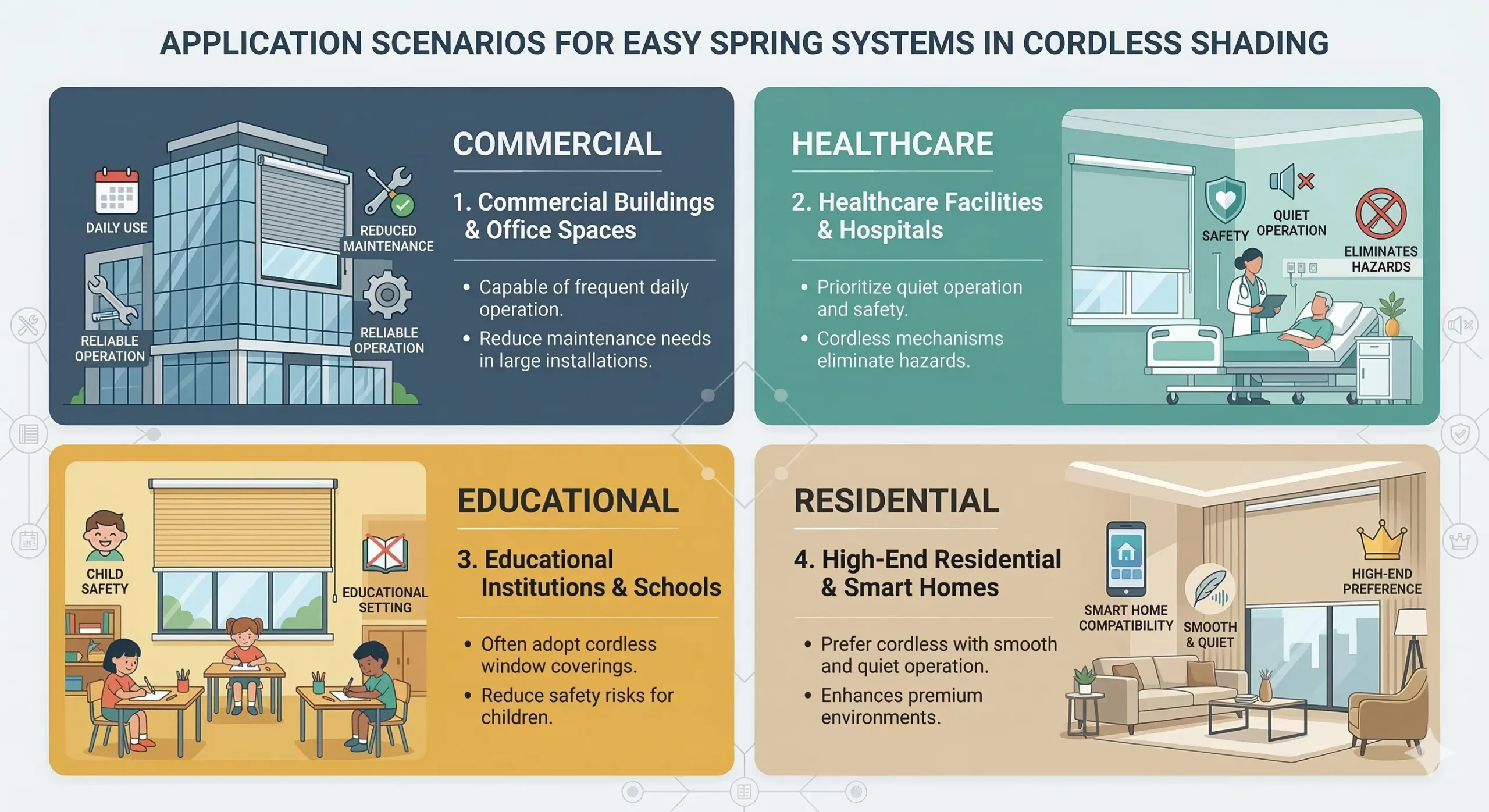
Educational Institutions
Schools and childcare facilities often adopt cordless window coverings to reduce safety risks for children.
Residential Applications
High-end residential and smart home environments increasingly prefer cordless window coverings with smooth and quiet operation.
Application Value Comparison
| Application Environment | Key Requirement | System Advantage |
|---|---|---|
| Commercial Offices | Frequent use | Durable mechanism with stable performance |
| Hospitals | Quiet environment | Low noise operation |
| Schools | Safety | Cordless design reduces hazards |
| Residential Homes | User comfort | Smooth positioning and easy control |
FAQ: High-Performance Cordless Spring Systems for Global Manufacturers
1. What is the technical definition of an “Easy Spring System” in window coverings?
An Easy Spring System is a precision-engineered, spring-driven cordless mechanism designed for modern shading products. Unlike traditional manual controls, it utilizes a calibrated internal spring motor to provide a “touch-and-release” experience. It ensures smooth lifting, silent operation, and stable positioning across various applications, including roller shades, zebra blinds, and Roman shades.
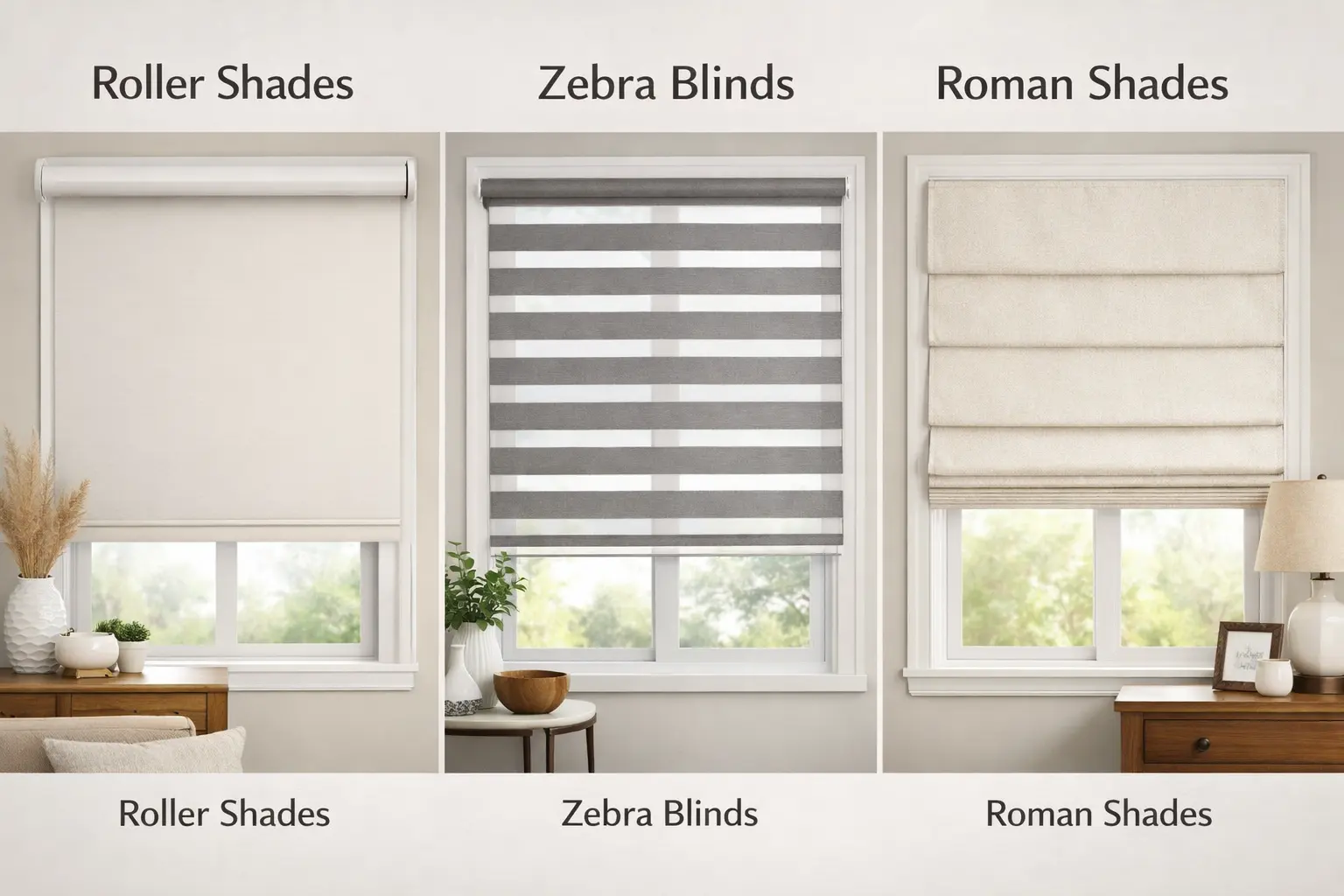
The system improves both safety and mechanical reliability in modern cordless window covering designs.
2. How does the internal tension adjuster optimize blind performance for heavy-duty fabrics?
The internal tension adjuster is a critical component for project engineers. It allows for micro-adjustments of the torque based on specific fabric weights and roller tube diameters. This precision engineering prevents:
• Creep: The shade sliding down from its set position due to gravity.
• Retraction Failure: Insufficient power to lift the bottom rail completely.
• Tension Decay: Compensating for spring fatigue after thousands of cycles.
3. Is the Easy Spring System compatible with standard global roller shade components?
Yes. Our system is engineered for seamless integration. It is designed to fit standard industry tube diameters (e.g., 38mm, 40mm, or custom specs), allowing manufacturers to upgrade their existing product lines to cordless versions without a costly overhaul of their current hardware or profiles.
4. Why is “Cordless by Design” becoming the mandatory industry standard in North America?
Market shift is driven by both safety and regulation. In the U.S. and Canadian markets, the ANSI/WCMA standards have strictly limited the use of cords to prevent strangulation hazards. Transitioning to a spring-driven system ensures your products are 100% Child-Safe and compliant with the latest “Best for Kids” certification requirements.
5. What are the mechanical advantages of a spring system over traditional chain-drive mechanisms?
Beyond aesthetics, the spring system reduces the number of external moving parts, which minimizes the risk of mechanical breakage. For B2B buyers, this means lower RMA (Return Merchandise Authorization) rates and reduced long-term maintenance costs, especially in high-traffic commercial or hospitality projects.
6. How does the system handle “Leveling Control” for large-scale window installations?
The Easy Spring System features a balanced braking mechanism. When multiple shades are installed side-by-side (a common requirement for architectural projects), the internal braking system ensures that all shades stop at the exact same horizontal level, maintaining a clean, professional aesthetic.
7. Can the spring tension be adjusted post-installation by the end-user or installer?
While the primary tension is set during the manufacturing phase, our system is designed with an accessible adjustment port. This allows installers to fine-tune the tension on-site to account for environmental factors or specific user preferences without dismantling the entire headrail.
8. What is the expected lifecycle (cycle test) of the spring and braking components?
For the US market, durability is non-negotiable. Our spring systems are tested to exceed 5,000 to 10,000 cycles (up/down movements). This ensures that the spring’s “memory” remains consistent over a typical 5-10 year product lifespan, protecting your brand’s reputation for quality.
9. Does the Easy Spring System support “Dual-Shade” or “Zebra” configurations?
Absolutely. The versatility of the torque output makes it ideal for Zebra blinds and Dual-layered shades, where the weight distribution differs from standard roller shades. The constant-force spring technology ensures the “sheer-to-solid” transition remains smooth and effortless.
10. How does adopting this system provide a competitive edge for OEM/ODM manufacturers?
By integrating a high-end spring solution, manufacturers move from “commodity pricing” to “value-added positioning.” It appeals to CEO and Executive levels looking to penetrate the premium residential and commercial sectors in the US, where “Cordless” and “Safety” are the primary selling points for modern brand values.