How to Choose Quiet, Child-Safe Window Coverings for Smart Homes?
Motorized Shutters vs Motorized Blinds
Quick Summary
In a smart home, the best window coverings are quiet, child-safe and automation-ready. This article compares
motorized shutters and motorized blinds, explaining how each performs on noise, safety, smart
integration and room-by-room application. It also shows how pairing
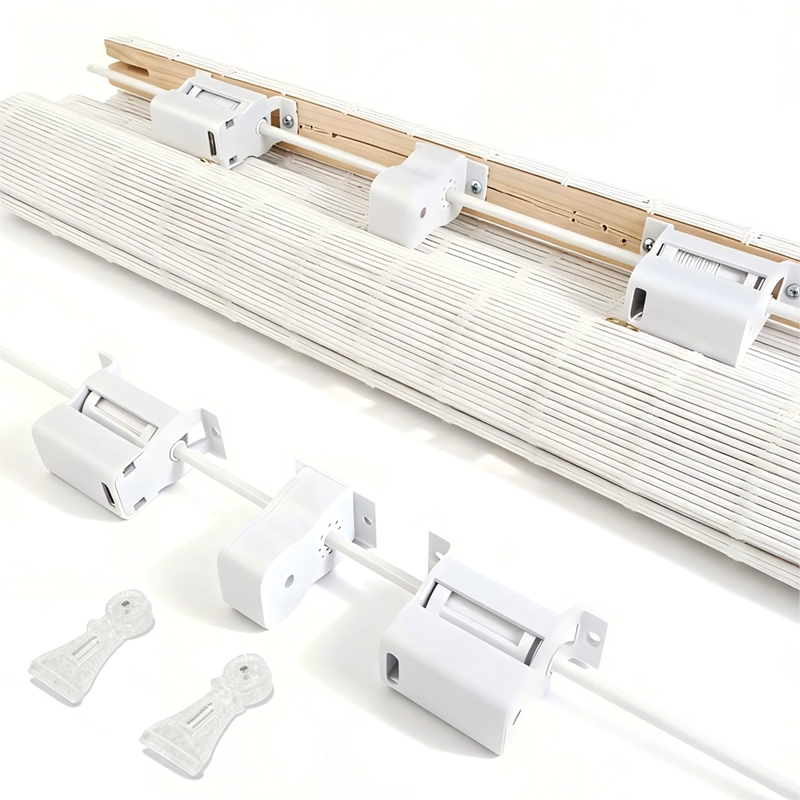
OEM cordless spring units and motor Venetian blind accessories with
smart-home compatible electric plantation shutters can help OEM brands, installers and homeowners build a consistent,
family-friendly shading strategy across the whole house.
In a connected home, window coverings are no longer just “fabric in front of glass”. They are part of your comfort system:
controlling light, heat, glare, privacy and – increasingly – sleep quality and child safety. But once you start
combining motors, sensors and smart hubs, two questions quickly dominate:
- Will it be quiet enough for bedrooms, nurseries and late-night automation?
- Is it truly child-safe, without exposed cords or risky loops?
For most smart-home projects, you end up choosing between two main categories:
motorized shutters and motorized blinds. Both can work beautifully – if you match the right
system to the right room and pair it with the right components.
This guide walks through the key decisions, with practical notes for OEM brands, integrators and homeowners, and links to deeper
technical content such as
Why Do Premium Blinds Need Quiet Operation? and How to Choose the Right Lift System for Smooth, Safe Roman Shades.
1. What “Quiet” and “Child-Safe” Really Mean in a Smart Home
1.1 Noise: Not Just Decibels, but Perception
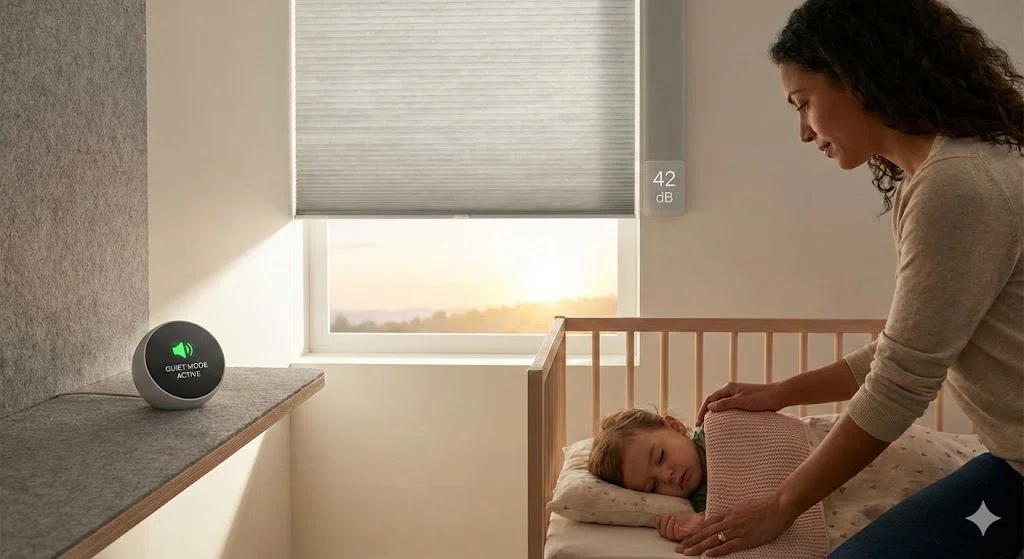
In real homes, “quiet” is less about the exact decibel number and more about how the motion feels:
- Does the motion start and stop smoothly, or does it jerk and vibrate?
- Is the noise a short, soft hum, or a long, rattling grind?
- Does automation at 6:30 a.m. wake someone up in the next room?
For premium ranges, many brands now target low 40s dB(A) or less at 1 m in real-world conditions,
combined with soft start/stop and good damping. That’s where the choice of motor, gearbox and – for blinds –
cordless spring mechanisms becomes critical.
1.2 Child Safety: Getting Rid of Hazardous Lift Cords
For smart homes with kids or pets, the basic rule is simple:
no free-hanging control cords or chains. That means:
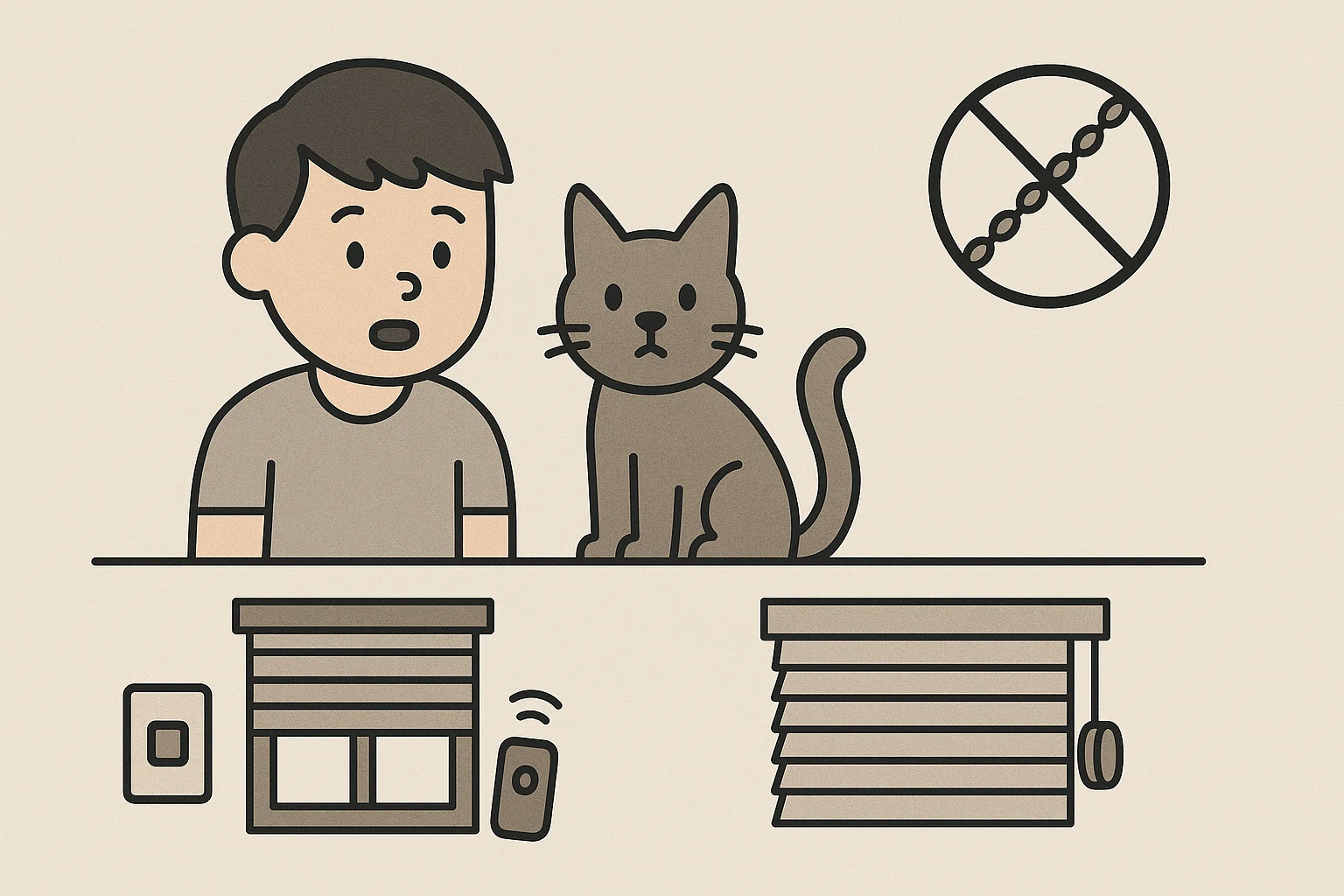
- Motorized shutters: controlled by a switch, remote or app; no lift cords.
- Motorized blinds: should be cordless at the user interface, even if internal cords exist inside the system.
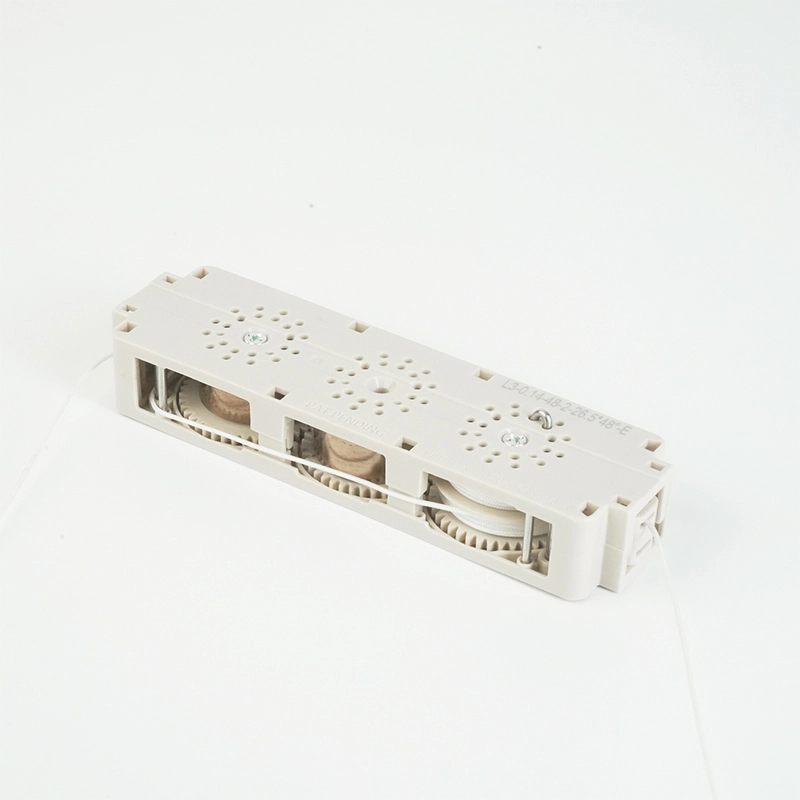
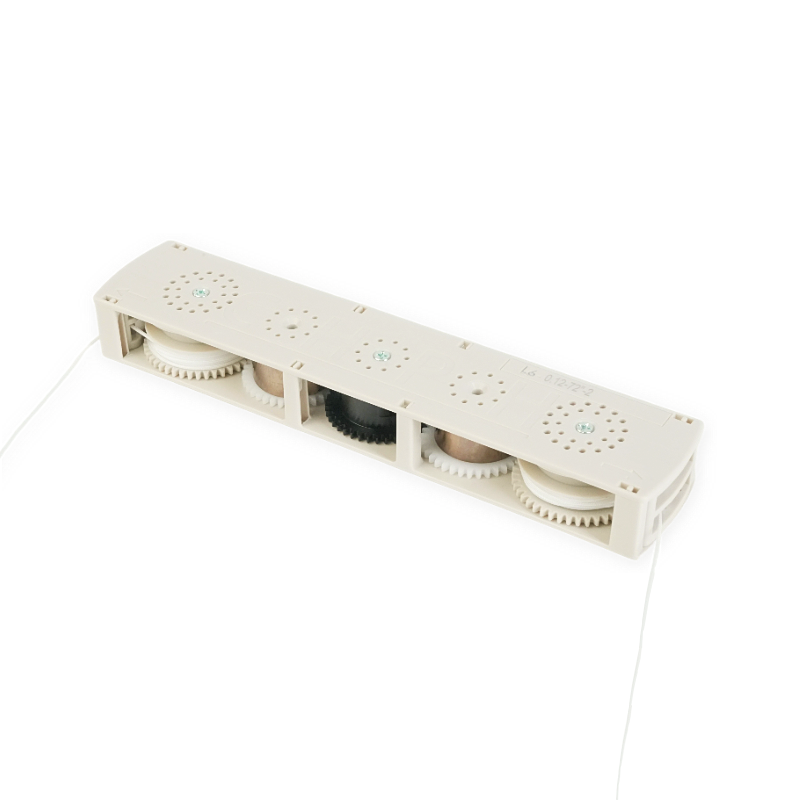
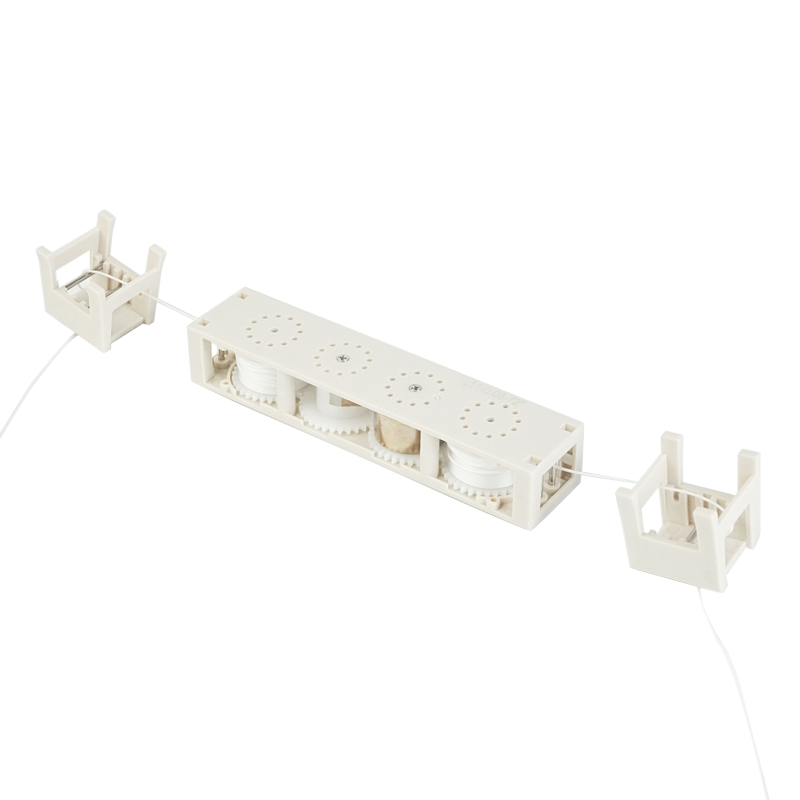
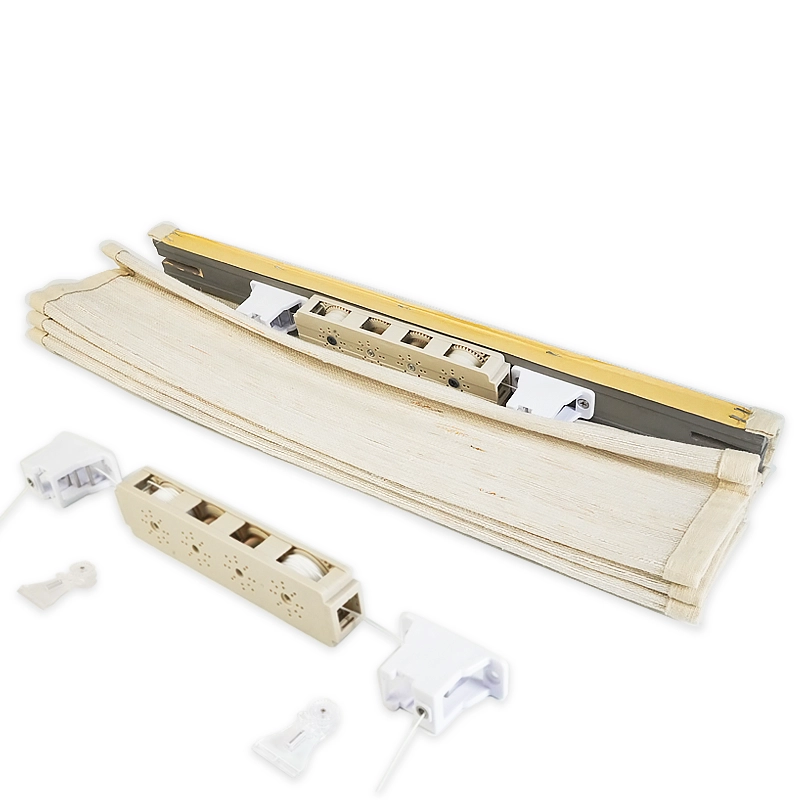
For motorized blinds, a common architecture is to combine a DC tubular motor or tilt motor with a
cordless spring lift. If you want to dive deeper into that hardware, see
Cordless Spring Unit Device & Motor Venetian Blind Accessories and
Cordless Blind Mechanism with Spring Unit for Roller Shades.
2. Motorized Shutters: Quiet, Architectural and Durable
2.1 How Motorized Shutters Work
Motorized shutters (especially plantation shutters) typically use:
- A tilt motor hidden in the frame or tilt bar to rotate louvers.
- Sometimes a separate drive for opening/closing whole panels in larger systems.
In smart homes, the motor is often integrated with a wireless receiver or gateway, allowing control by
remote, wall switch, app or voice assistant.
2.2 Noise Profile of Motorized Shutters
Shutters have some built-in acoustic advantages:
- Motor and gearbox are fixed in the frame, reducing rattling parts.
- The rigid structure and hinges help absorb vibration.
- Louvers move over a small angle, so run time is short.
For many projects, a well-chosen shutter motor is perceived as quieter than a full-height roller blind,
especially when paired with soft start/stop and quality bearings.
2.3 Child Safety with Motorized Shutters
Shutters are naturally strong on child safety:
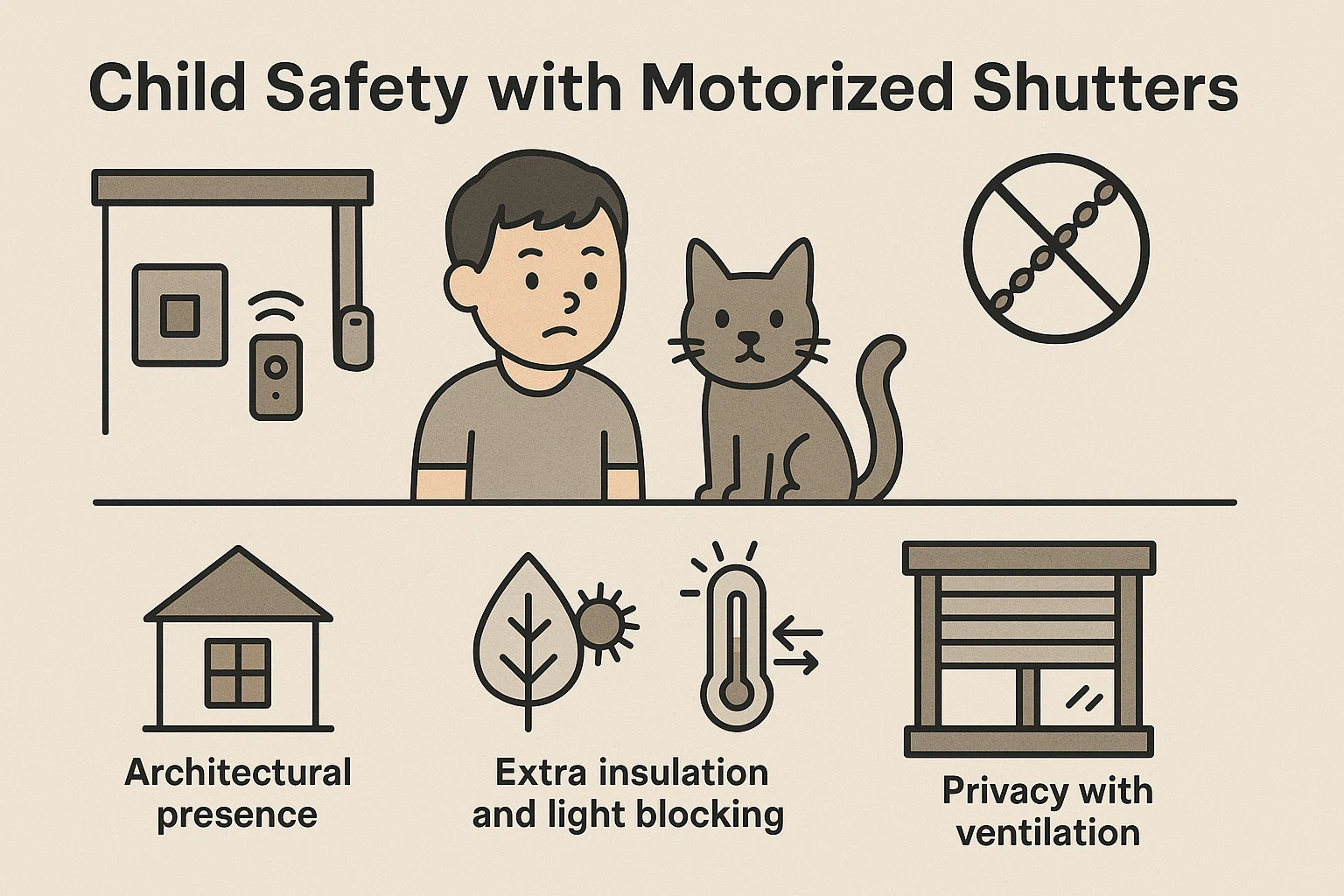
- No hanging cords – operation is via motor and control device.
- Panels are rigid and fixed; nothing dangles at child height.
- Louvers can be set to avoid finger pinch points if designed correctly.
For OEMs, pairing an electric frame with cordless blind hardware in other rooms creates a consistent
safety story across the whole home.
2.4 When Motorized Shutters Are the Better Choice
Motorized shutters usually win when you need:
- Architectural presence – adding value as part of the interior joinery.
- Extra insulation and light blocking for hot or cold climates.
- Privacy with ventilation – louvers tilted while windows are open.
- Durability in high-use areas such as family rooms and home offices.
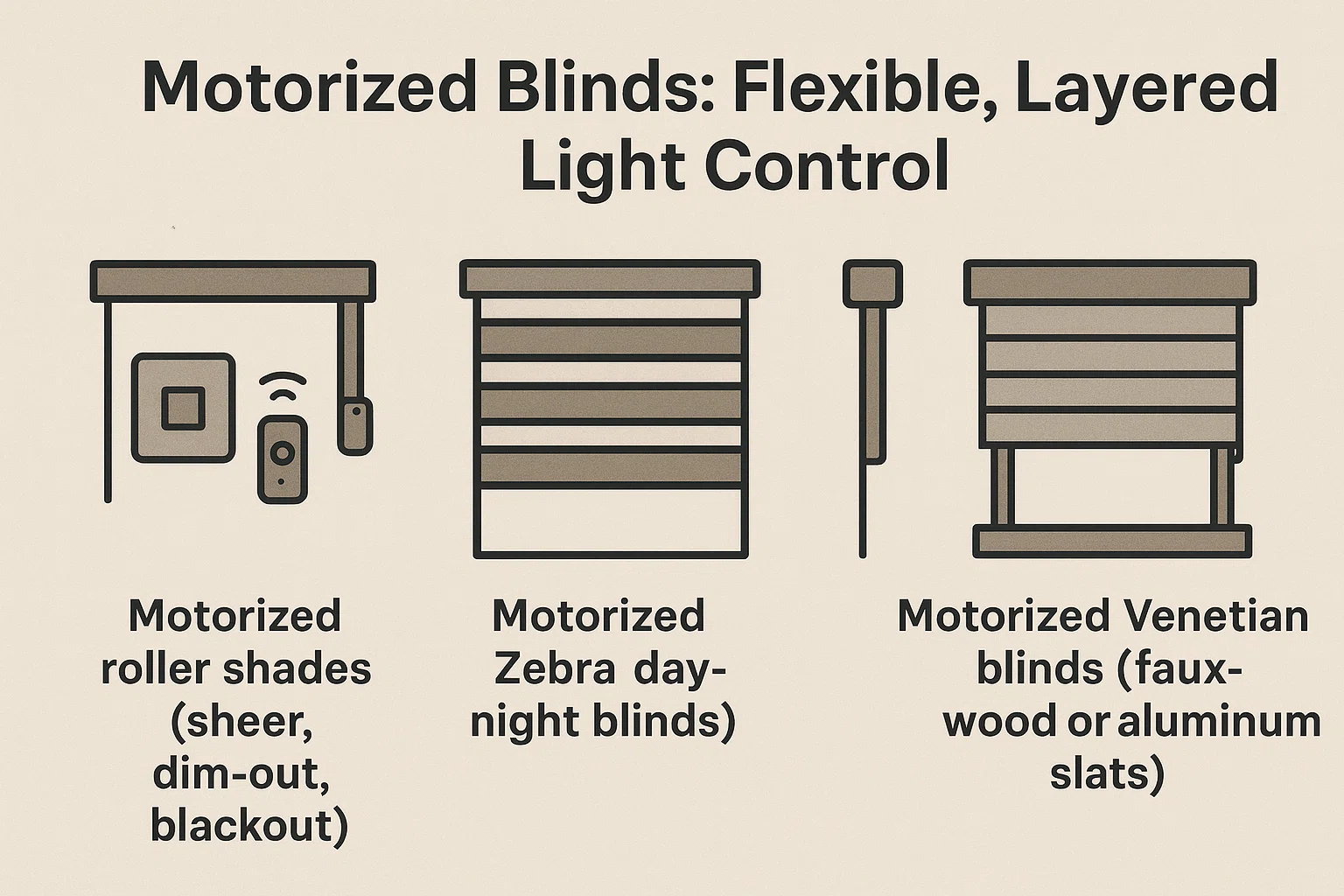
3. Motorized Blinds: Flexible, Layered Light Control
3.1 Common Types of Motorized Blinds in Smart Homes
Most smart homes use one or more of the following:
- Motorized roller shades (sheer, dim-out, blackout)
- Motorized zebra / day-night blinds
- Motorized Venetian blinds (faux-wood or aluminum slats)
- Motorized Roman or honeycomb shades
In many premium systems, a tubular motor or tilt motor handles the motion, while a
cordless spring mechanism or internal brake stabilizes the load, keeps the shade balanced and improves
child safety by removing front cords.
3.2 Noise Behavior of Motorized Blinds
Compared with shutters, motorized blinds can be slightly more sensitive to noise because:
- Fabric or slats move over a larger travel distance.
- Roller tubes and bottom rails can resonate if not balanced.
- Poor lift hardware can create clicks, rattles and impact noise.
This is where integrating a well-designed spring-assisted cordless system makes a difference. For example,
combining a quiet motor with an OEM spring unit like the platform described in
What Is an OEM Cordless Spring Unit Device for Roller Shades, and When Should You Use It? can significantly cut bounce
and impact noise in roller programs.
3.3 Child Safety with Motorized Blinds
Motorization alone does not guarantee safety – you still need to check how the system is controlled:
- Best practice: no exposed chains or pull cords at the front.
- Preferred: cordless spring lift inside the headrail or tube, with the user touching only the bottom rail or using a remote.
- Acceptable in some markets: wall-mounted key switch or touchscreen without cords.
For OEM designers, a strong approach is to build a cordless mechanical platform for manual SKUs and then
offer motorized versions that reuse the same safety logic. See
Cordless Blind Mechanism with Spring Unit for Roller Shades and Cordless Spring Unit Device & Motor Venetian Blind Accessories for hardware reference.
3.4 When Motorized Blinds Are the Better Choice
Choose motorized blinds when you need:
- Fine light control (e.g., tilt Venetian slats or adjust day-night zebra bands).
- Layered fabrics (sheer plus blackout on separate rollers).
- Lower per-opening cost than fully framed shutters.
- Flexible design options across different rooms and interior styles.
4. Room-by-Room Guide: Shutters or Blinds for Smart Homes?
Use the guide below as a starting point when planning a whole-house smart shading strategy.
| Room Type | Recommended System | Key Priorities | Notes |
|---|---|---|---|
| Nursery / Kids’ Room | Motorized blackout roller + cordless spring lift | Child safety, darkness, very low noise | Use cordless mechanisms and schedule runs outside sleep windows. |
| Master Bedroom | Motorized shutters or dual-motor blinds (sheer + blackout) | Acoustic comfort, privacy, automation | Shutters add insulation; blinds offer more fabric options. |
| Living Room | Motorized zebra or Venetian blinds | Glare control, aesthetics, scene presets | Pair tilt motors with cordless lift for child-safe daily use. |
| Kitchen | Motorized PVC/composite shutters or roller blinds | Humidity resistance, easy cleaning | Use moisture-resistant materials and sealed hardware. |
| Home Office | Motorized light-filtering blinds | Glare control, video-call background, quiet operation | Combine app scenes with time-based or light-based automations. |
5. Smart Integration: Making Shutters and Blinds Work Together
5.1 Protocols and Gateways
Most smart-ready motors today speak in one of a few common “languages” (proprietary RF, Zigbee, Z-Wave, Wi-Fi, etc.).
When mixing motorized shutters and motorized blinds:
- Try to standardize on one ecosystem where possible.
- Use a multi-channel gateway that can schedule both shutters and blinds together.
- Group by room scenes (e.g., “Movie Mode”, “Good Morning”, “Away”).
5.2 Combining Motor + Spring for Better Comfort
For blinds, one of the most comfortable architectures is to pair:
- A quiet motor for movement, and
- A cordless spring or brake mechanism to stabilize weight and position.
This hybrid approach, discussed in depth in Cordless Spring Unit Device & Motor Venetian Blind Accessories, protects both user comfort
and motor life – especially in large windows and high-cycle rooms.
5.3 Building a Consistent Safety Story
From a brand and homeowner perspective, it is easier to say:
“All our shades and shutters are child-safe and free from exposed cords.”
That means:
- Choosing electric plantation shutters with no add-on cords.
- Upgrading legacy corded roller and Venetian lines to cordless spring-based platforms.
- Referencing clear content like
How to Sell ‘Child Safe’ Cordless Blinds to U.S. Families Without Sounding Pushy in your marketing and installer training.
6. FAQ — Motorized Shutters vs Motorized Blinds for Quiet, Child-Safe Smart Homes
Q1. Which is quieter, motorized shutters or motorized blinds?
In many cases, well-built motorized shutters are perceived as slightly quieter because the motor sits in a
rigid frame and louvers move over a small angle. However, a quiet motorized blind with a good cordless spring
or brake system can be just as comfortable in real use, especially for roller and honeycomb shades.
Q2. Are motorized blinds automatically child-safe?
Not always. Motorization removes the need for pulling cords, but some systems still include exposed chains
or cord loops. To be truly child-safe, choose blinds that are cordless at the user interface, for example
using an internal spring-assisted lift combined with motor control.
Q3. Can I mix motorized shutters and motorized blinds in the same smart home?
Yes. Many high-end projects use shutters in street-facing or high-value rooms and
blinds in bedrooms and secondary spaces. The key is to keep the control system unified so scenes, timers and
safety logic remain consistent.
Q4. What if I already have corded roller shades installed?
OEM brands and installers often retrofit those ranges by switching to
spring-assisted cordless mechanisms and adding motors where needed. This protects existing profiles and fabrics while
bringing them up to modern safety expectations.
Q5. Are battery-powered systems noisy or underpowered?
Modern battery motors are much better than early generations. For typical residential sizes, a
well-matched motor + spring system can run quietly and deliver thousands of cycles per charge. Oversized,
very heavy shades may still need wired power.
Field Insight — Designing a Whole-Home, Quiet & Child-Safe Strategy
Choosing between motorized shutters and motorized blinds is not a one-time yes/no decision.
The quietest and safest smart homes use each system where it performs best, and support both with the right components.
- Use shutters where you need architectural impact, insulation and long-term durability.
- Use blinds where you want flexible fabrics, layered light control and easier budget scaling.
- Standardize on cordless platforms: pair motors with
spring-assisted, child-safe mechanisms so you never rely on front cords again. - Align safety and storytelling: support your sales and installer teams with content such as
Why Do Premium Blinds Need Quiet Operation to connect engineering decisions to real family life. - Think in ecosystems, not single windows: pick motors, gateways and cordless hardware that can grow
with the home and with your product line.
When shutters, blinds, motors and cordless mechanisms all pull in the same direction, the final result is simple for the
homeowner: a smart home that stays quiet, safe and comfortable – automatically.