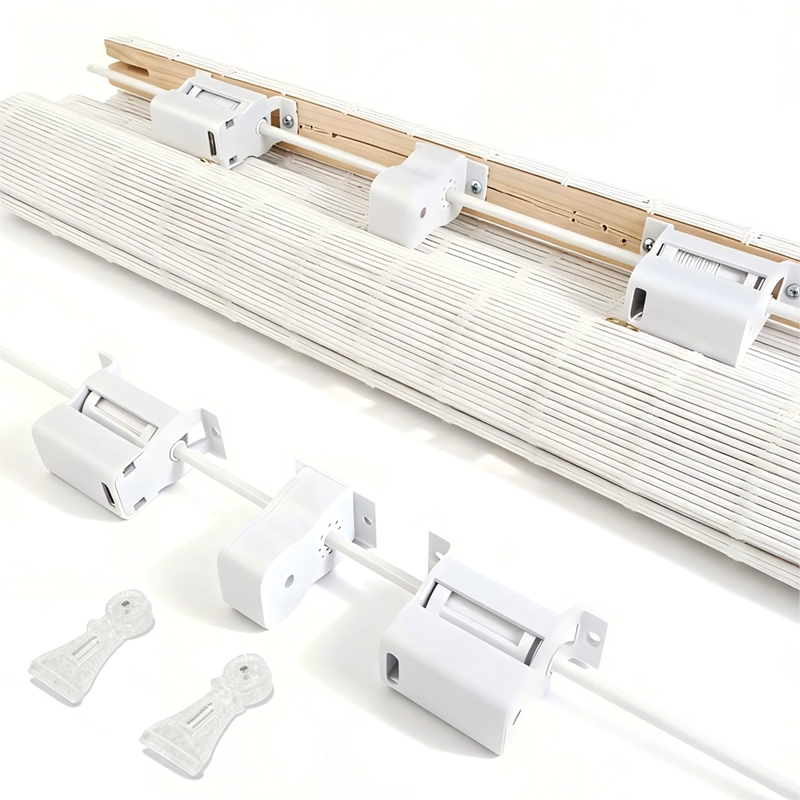
How to Choose the Right Lift System for Smooth, Safe Roman Shades
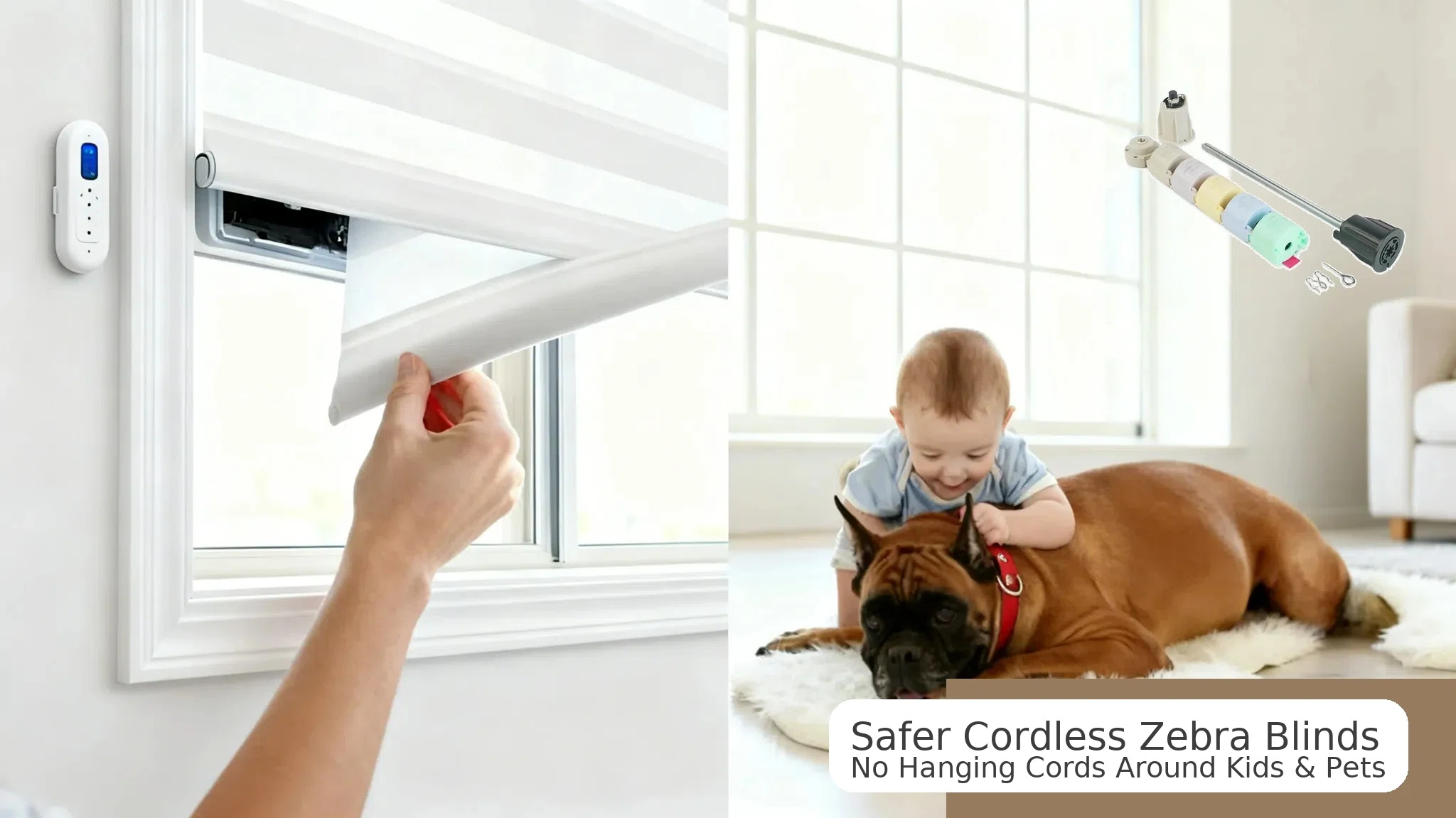
Quick Summary — How to Choose the Right Lift System
A Roman shade only feels truly premium when the lift system is smooth, predictable, and safe. Behind the fabric folds,
you are really choosing between corded, continuous-loop, cordless spring, and motorized lift systems.
This guide explains how to choose the right lift system for smooth, safe Roman shades in real homes:
we compare operation feel, child safety, durability, and cost, and give you a simple step-by-step framework for selection.
- Understand what makes a Roman shade feel smooth and safe in daily use.
- Compare the four main lift system types in a simple table.
- Decide when to choose cordless vs. motorized lift systems.
- Avoid common mistakes that lead to noisy, uneven, or unsafe Roman shades.
1. What Makes a Roman Shade Smooth and Safe?
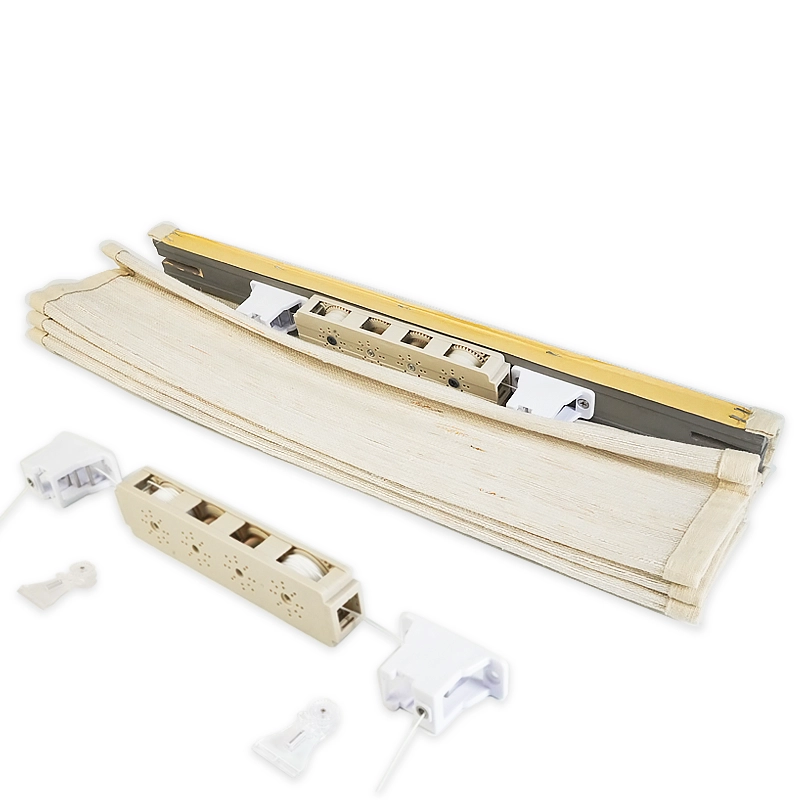
From the outside, a Roman shade is just fabric folding into neat stacks. But the user experience is defined by the lift system hidden in the headrail.
To get a smooth, safe Roman shade, you should look for:
- Balanced lifting — the shade rises evenly without tilting to one side.
- Controlled speed — no sudden dropping, jerking, or snapping up.
- Stable stop — the shade comfortably holds at any position without drifting.
- Low noise — quiet, damped motion instead of squeaks or clatter.
- Safe interface — no long, accessible cords or chain loops around children and pets.
All these qualities come from the mechanical design of the lift system: cord routing, friction management, and whether a
spring or motor is used to balance the fabric weight. Choosing the right lift system is the real secret behind smooth, safe Roman shades.
2. Main Types of Roman Shade Lift Systems
Most Roman shades use one of four lift system types. Each option delivers a different mix of smoothness, safety, and cost.
Understanding these basics will make it easier to choose the right lift system for your project.
2.1 Traditional Corded Lift System
The traditional design uses pull cords threaded through rings or eyelets at the back of the fabric. The cords gather at one side and are tied off on a cleat.
- Pros: Lowest hardware cost; familiar to many installers; simple components.
- Cons: Exposed cords create a strangulation risk for children and pets; cords can tangle or fray; holding position depends on how carefully the user wraps the cleat.
- Best for: Low-traffic rooms without children or pets; short-term or budget-focused projects.
2.2 Continuous-Loop (Chain) Lift System
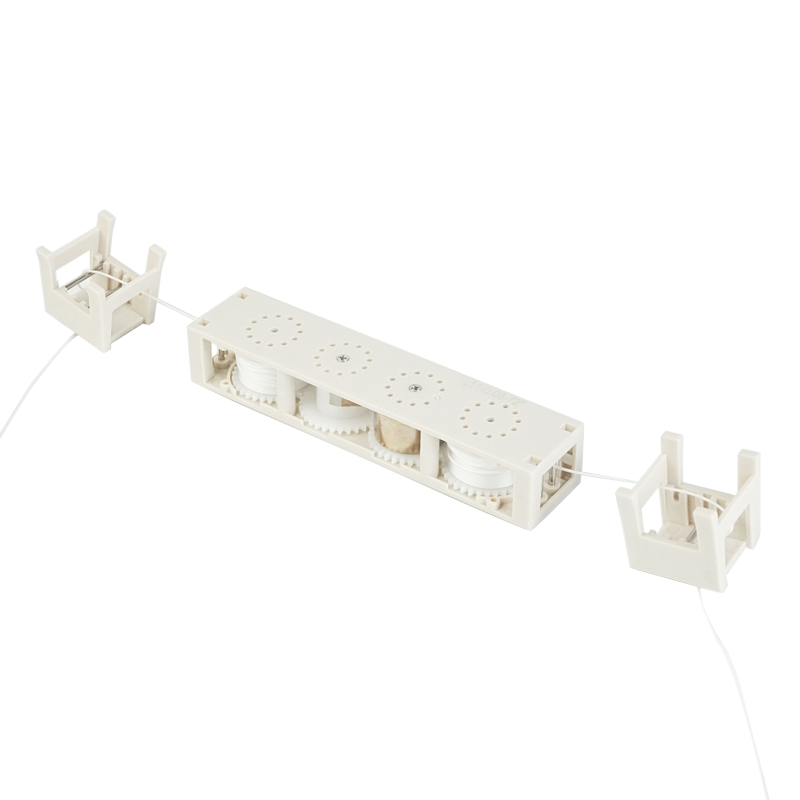
A continuous bead chain runs over a clutch mechanism in the headrail. Pulling the chain rotates an internal shaft that raises or lowers the Roman shade.
- Pros: Good mechanical leverage for heavier or wider shades; more controlled lifting compared to basic cords.
- Cons: The chain loop must be fixed with a tensioner to improve safety; many markets now limit free-hanging loops near children.
- Best for: Larger windows, commercial applications, or projects where motorization is not yet planned but safety hardware can be installed correctly.

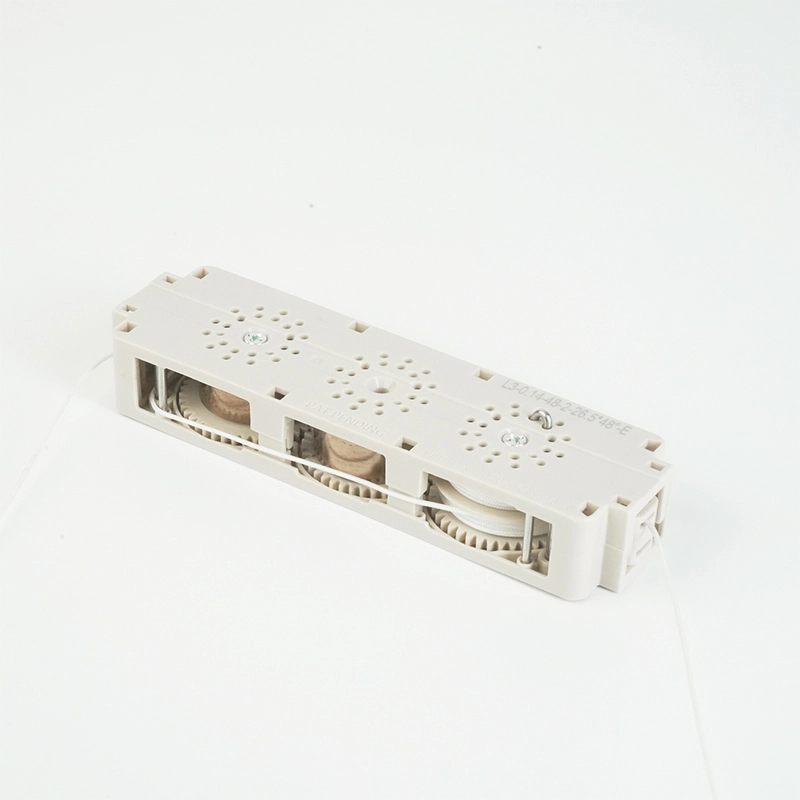
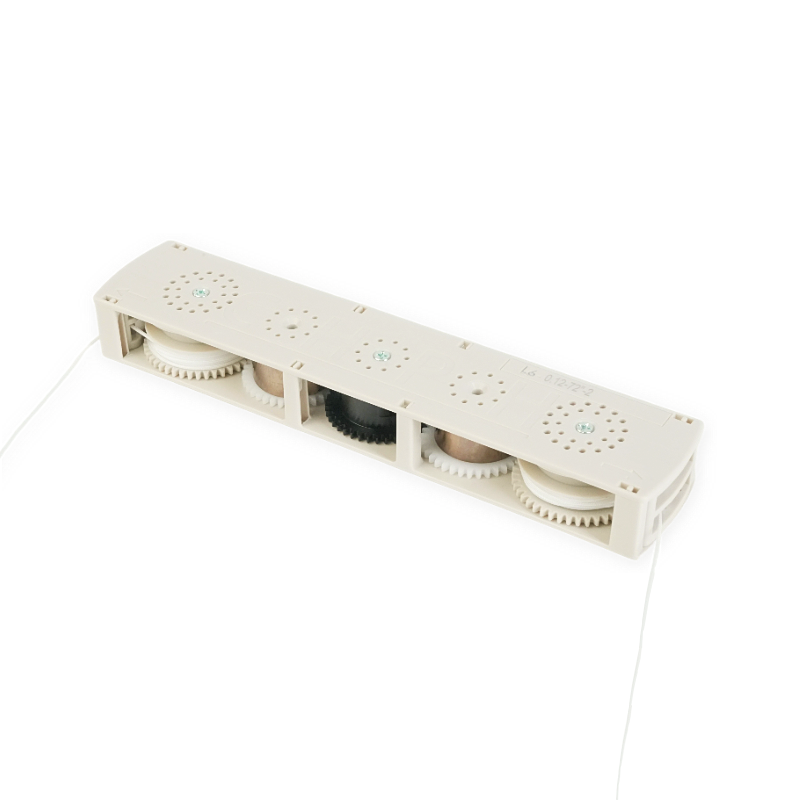
2.3 Cordless Spring Lift System
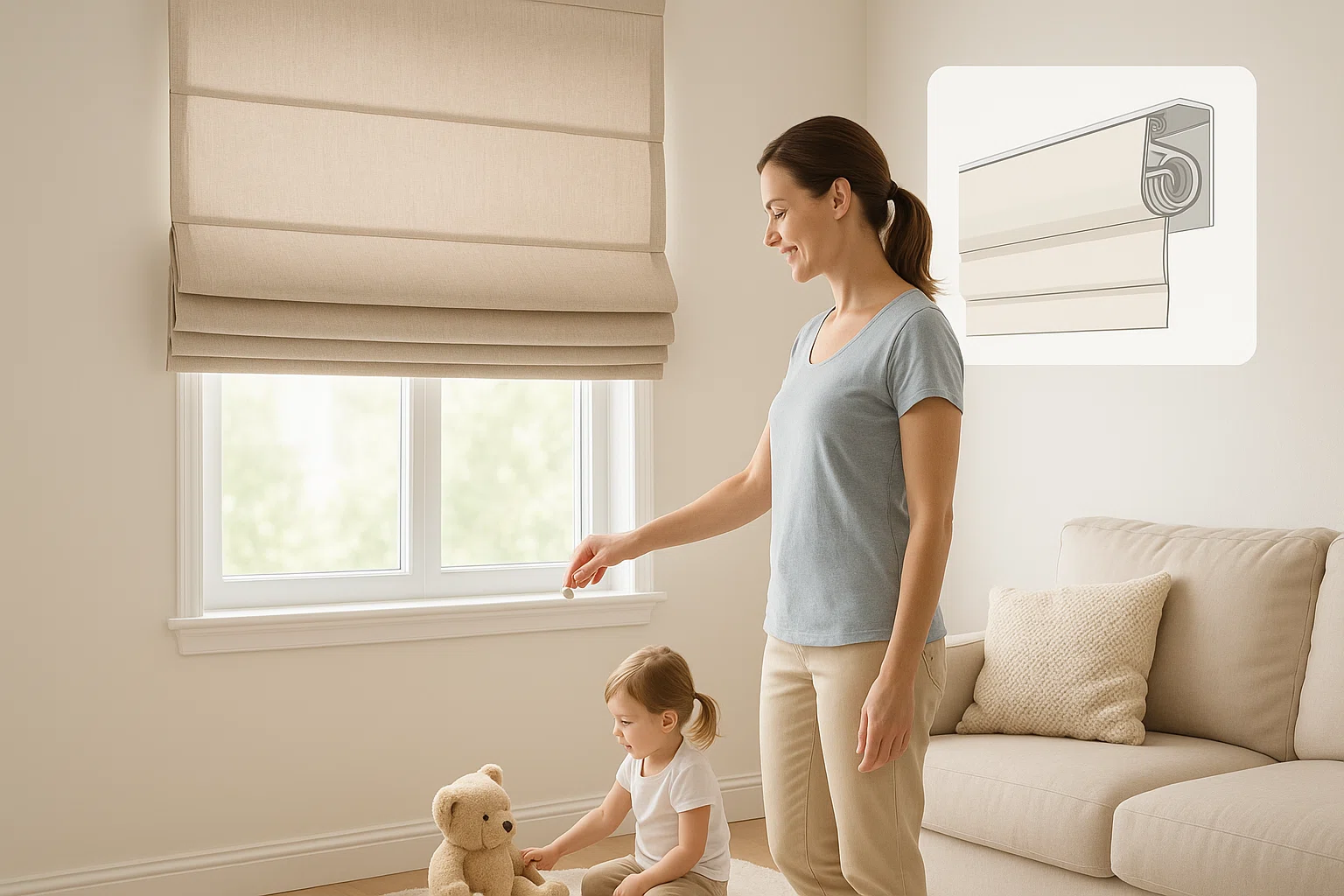
A cordless Roman shade uses an internal spring lift system inside the headrail. The user simply
pushes up or pulls down the bottom rail, and the spring balances the fabric weight so the shade stays in place.
- Pros: No exposed lift cords or chains; cleaner façade; child- and pet-friendly; quick and intuitive operation.
- Cons: The spring torque must be precisely matched to fabric weight and size; low-quality hardware can cause snapping, drifting, or uneven stop positions.
- Best for: Bedrooms, children’s rooms, living areas, and any space that prioritizes safety and a modern look.
2.4 Motorized Roman Shade Lift System
A motorized lift system uses a compact drive or tubular motor to control the Roman shade via remote, wall switch, or smart-home integration.
- Pros: Highest comfort level; smooth and repeatable motion; ideal for scenes, groups, and automation.
- Cons: Higher upfront cost; requires power (wired or battery); slightly more complex setup.
- Best for: High-end homes, tall or hard-to-reach windows, elderly users, and projects that already plan for smart shading.
2.5 Quick Comparison of Lift Systems
| Lift System Type | Smoothness | Child Safety | Typical Shade Size | Cost Level* |
|---|---|---|---|---|
| Traditional Corded | Basic; depends on user | Low — exposed cords | Small to medium | $ |
| Continuous-Loop Chain | Good with quality clutch | Medium — safe with tensioner | Medium to large | $–$$ |
| Cordless Spring Lift | Smooth when correctly tuned | High — no lift cords | Small to medium (size-specific) | $$ |
| Motorized Lift | Excellent and consistent | High — no manual cords | Medium to very large | $$–$$$ |
*Cost level is relative and will vary by region, brand, and configuration.
3. How to Choose the Right Lift System for Smooth, Safe Roman Shades
To choose the right lift system for smooth, safe Roman shades, start from how and where the shade will be used—not from the catalog page.
The best choice comes from balancing user needs, shade size, and safety expectations.
3.1 Step 1 — Think About Who Will Use the Shade
- Children’s rooms and nurseries: Prioritize cordless spring or motorized systems to remove free-hanging cords.
- Living rooms and family spaces: Cordless lift systems combine a clean look with everyday practicality.
- Rooms used by elderly or low-mobility users: Motorized Roman shades reduce effort and improve accessibility.
- Rarely used rooms: Budget corded systems may be acceptable, but safety still matters if children visit.
3.2 Step 2 — Match Lift System to Shade Size and Fabric
The right lift system also depends on the width, drop, and fabric weight of the Roman shade:
- Lightweight fabrics (sheers, simple cottons): Work well with most systems, including cordless springs.
- Blackout or interlined Romans: Heavier shades may require stronger springs, continuous-loop clutches, or motorization.
- Very wide windows: Often better with motorized or high-quality chain systems to keep lifting smooth and even.
When ordering, always provide exact width × drop and indicate if the Roman shade is standard, room-darkening, or blackout.
This helps the supplier specify a lift system that stays smooth and safe throughout its life.
3.3 Step 3 — Check Safety Regulations and Buyer Expectations
Many countries now have stricter standards on corded window coverings because of child safety concerns.
Even where regulations are still catching up, modern buyers increasingly expect cordless or motorized Roman shades in family living spaces.
- Eliminate free-hanging cords and loops whenever possible.
- If you use a chain system, install tensioners and follow safety instructions carefully.
- In children’s rooms and nurseries, treat cordless or motorized systems as the default choice, not an upgrade.
3.4 Step 4 — Consider Installation, Maintenance, and Lifecycle Cost
The cheapest lift system at order time is not always the cheapest over the whole lifetime.
- Installation: Cordless systems are usually simple to install; motorized systems may need power planning and setup.
- Maintenance: Better lift systems are designed for thousands of cycles with minimal adjustment.
- Service: Ask whether springs can be re-tensioned or motors can be serviced, rather than replacing the whole shade.
4. When Cordless or Motorized Is the Right Choice
In many real projects, the most reliable path to smooth, safe Roman shades is to remove manual cords from the equation.
That is why cordless spring and motorized lift systems are becoming the standard in modern homes.
4.1 When to Choose a Cordless Spring Lift System
A cordless spring lift system is often the best balance of cost, safety, and user experience when:
- You want a clean, cord-free look at the window.
- Children or pets regularly use the room.
- The shade size and fabric weight fall within the range that springs can balance comfortably.
- You prefer manual control without chargers, batteries, or wiring.
4.2 When to Choose a Motorized Roman Shade System
A motorized lift system is worth serious consideration when:
- Windows are tall, wide, or hard to reach.
- You want to control multiple Roman shades together with one button or one scene.
- You are designing for users who value convenience, accessibility, or high-end smart-home features.
- You are planning for energy management through automated shading schedules.
5. Common Mistakes When Selecting a Roman Shade Lift System
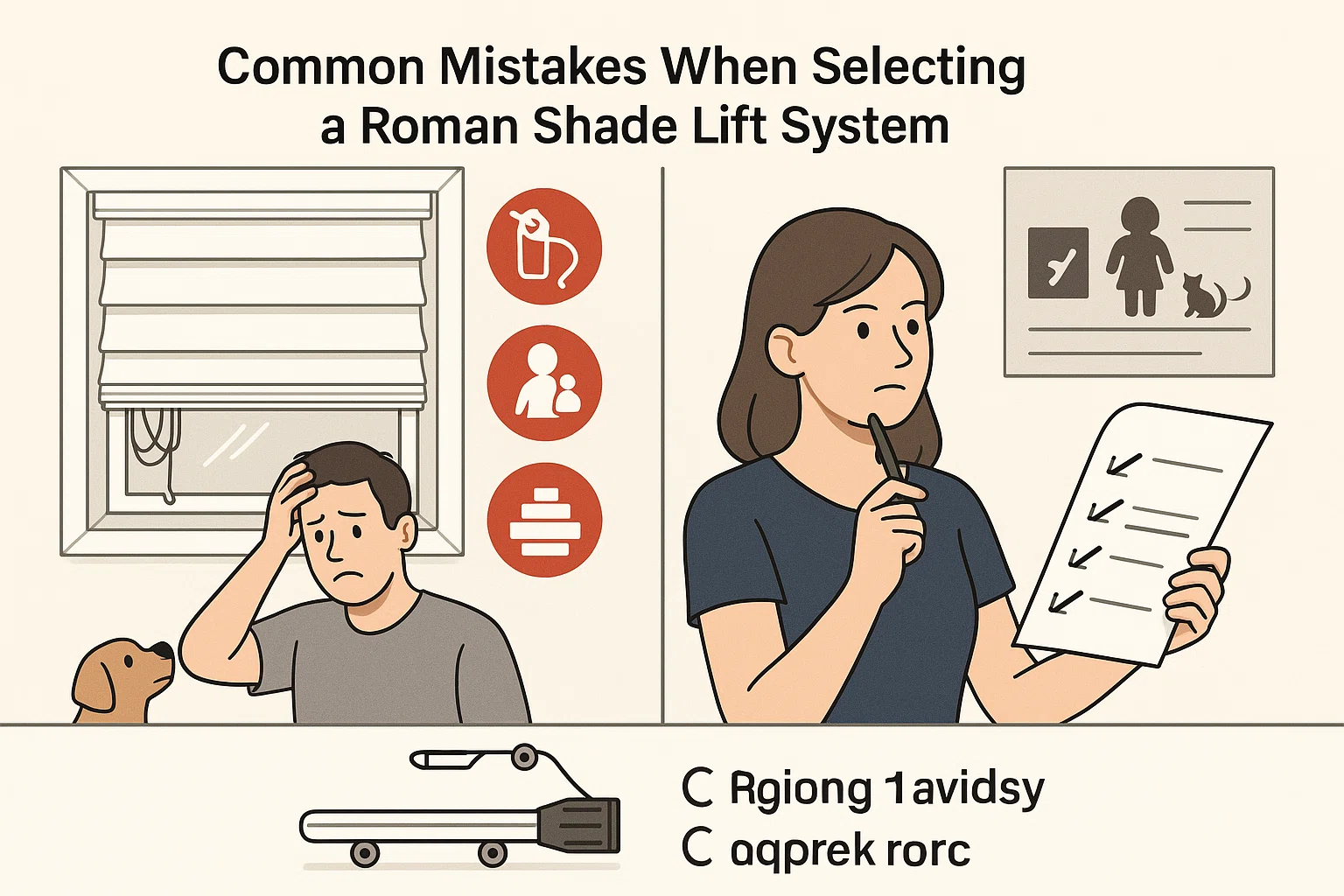
Even experienced buyers and designers can run into problems when the lift system is treated as an afterthought.
Some of the most common mistakes include:
- Choosing only by price: Selecting the cheapest hardware and then dealing with rough operation, noise, or service calls.
- Ignoring child safety: Keeping corded systems in rooms where children sleep or play.
- Underestimating fabric weight: Using a basic corded or weak spring system for heavy blackout Romans.
- Forgetting user height and reach: High-mounted headrails without motorization can make daily operation frustrating.
- No plan for upgrades: Picking a headrail that cannot be upgraded later to cordless or motorized operation.
To avoid these traps, always come back to the core question: “What lift system will keep this Roman shade smooth and safe over its entire life?”
6. FAQs About Roman Shade Lift Systems
1. What is the safest lift system for Roman shades in a child’s room?
The safest options are cordless spring systems and motorized Roman shades, because they remove free-hanging cords and loops.
In children’s rooms and nurseries, corded systems are generally considered a last resort.
2. Are cordless Roman shades difficult to operate?
A properly tuned cordless lift system should feel light and smooth. If a cordless Roman shade feels heavy, snaps up, or drifts,
the spring rating or setup is not well matched to the shade size and fabric weight.
3. Can I retrofit an existing corded Roman shade to cordless or motorized?
In many cases, yes. Suppliers often offer retrofit headrails that upgrade corded Romans to cordless or motorized operation.
The key is to check size, weight, and fabric to make sure the new lift system can safely support the shade.
4. Which lift system lasts the longest?
Lifespan depends on design quality and usage. High-quality cordless spring and motorized systems that are tested over tens of thousands of cycles
usually outlast basic corded setups, which are more prone to cord wear and knotting problems.
5. Is a continuous-loop chain still acceptable for smooth, safe Roman shades?
Yes, but only when installed with a fixed tension device and kept out of reach of children.
However, many families now prefer cordless or motorized Roman shades because they combine smooth operation with a cleaner, safer window appearance.
6. Do motorized Roman shades always require wiring?
Not necessarily. Many modern systems use rechargeable battery packs hidden inside the headrail.
Larger or commercial installations may still prefer wired low-voltage power for lower maintenance.
7. How can I tell if my Roman shade is too large for a cordless lift system?
Very wide or tall blackout Romans can exceed the comfortable range for some cordless systems.
Share your exact dimensions and fabric type with your supplier so they can calculate whether a specific spring or motor is suitable.
8. Are cordless and motorized lift systems much more expensive?
Cordless and motorized systems do cost more than basic cords, but the premium is often small compared to the value of
better safety, smoother operation, and fewer service issues over time.
9. What kind of maintenance do Roman shade lift systems need?
Most lift systems only require occasional dusting and a check that brackets and screws remain tight.
For motorized systems, you may need to charge or replace batteries every few months to years, depending on daily usage.
10. How can I explain lift options simply to my customers?
One simple script is: “Corded is basic and cheaper but less safe; chain is stronger but needs safety hardware;
cordless is clean and family-friendly; motorized is the premium, push-button option.”
Then you match the lift system to the room, user, and budget.
Field Insight
On real projects, complaints about Roman shades almost never start with the fabric. They start with phrases like
“It’s hard to pull,” “It won’t stay where I leave it,” or “I’m worried about the cords around my kids.”
In other words, they are lift system problems.
If you want Roman shades that feel calm and safe to live with, treat the lift system as a core decision, not an afterthought.
The right hardware choice removes everyday friction for years.
- Start from the user: Who touches the shade every day, and what do they need?
- Respect safety trends: Cordless and motorized Roman shades are becoming the default in family homes.
- Match system to load: Dimension the lift system carefully to the fabric weight and window size.
- Think long-term: A slightly higher upfront cost can save time, worry, and replacement later.
- Plan for evolution: Where possible, choose headrails that can be serviced or upgraded as needs change.
Choosing the right lift system is the simplest way to ensure your Roman shades are not just beautiful on day one,
but smooth and safe to use every single day.