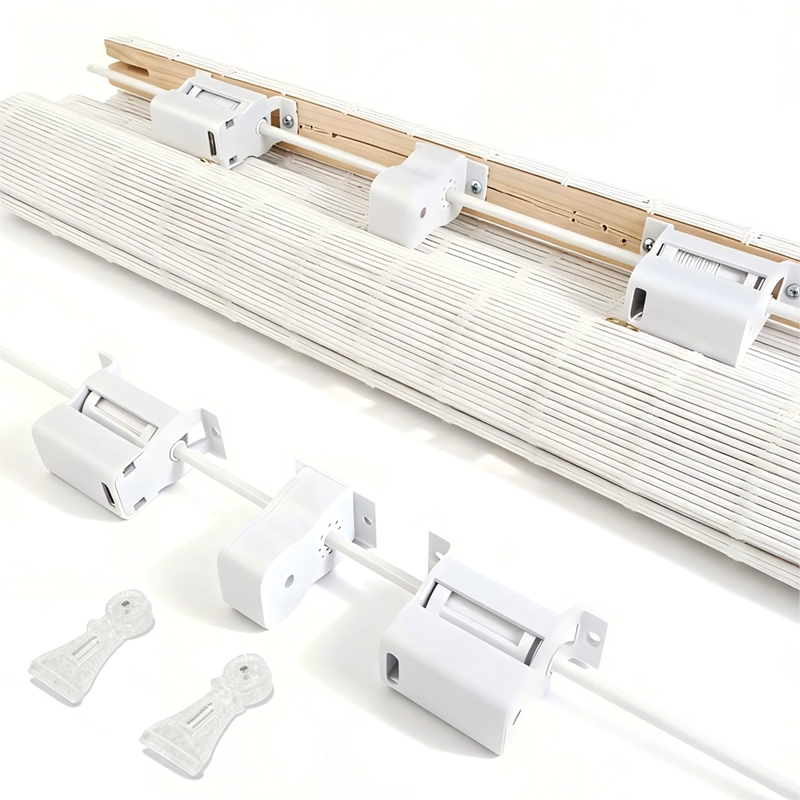
What Is an OEM Cordless Spring Unit Device for Roller Shades, and When Should You Use It?
Quick Summary
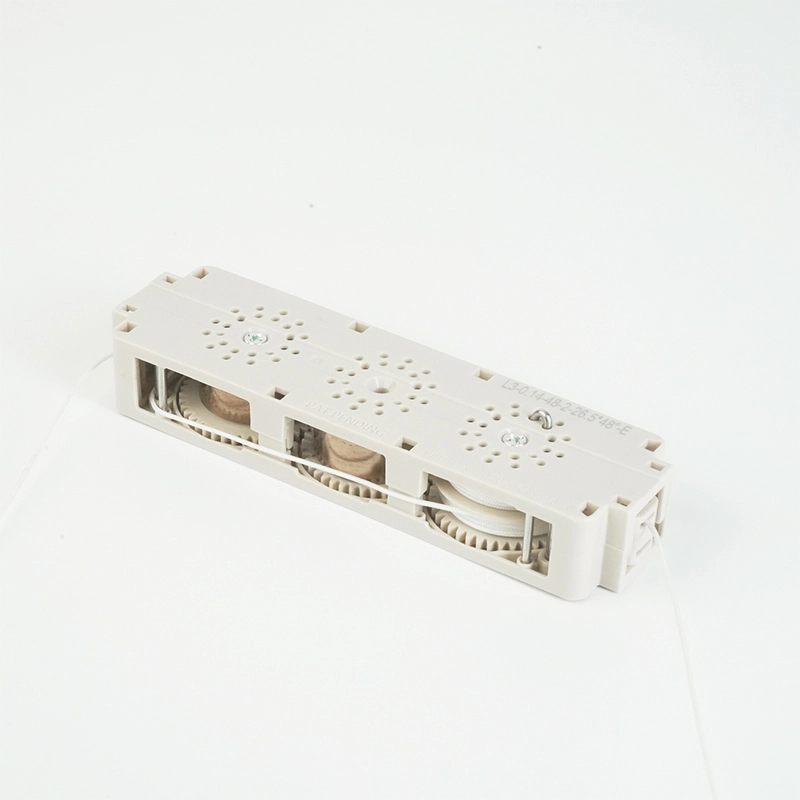
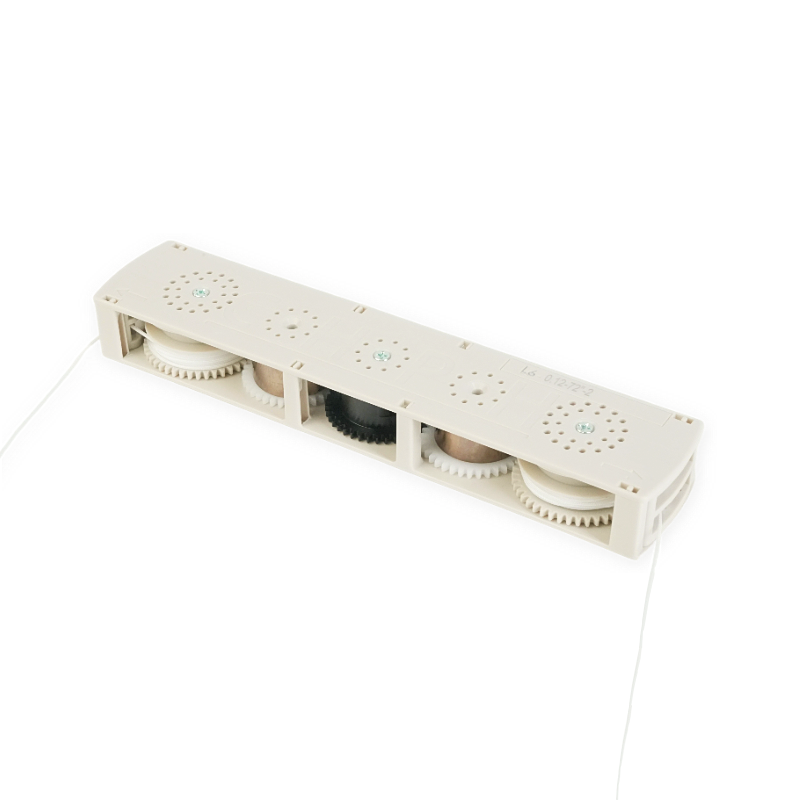
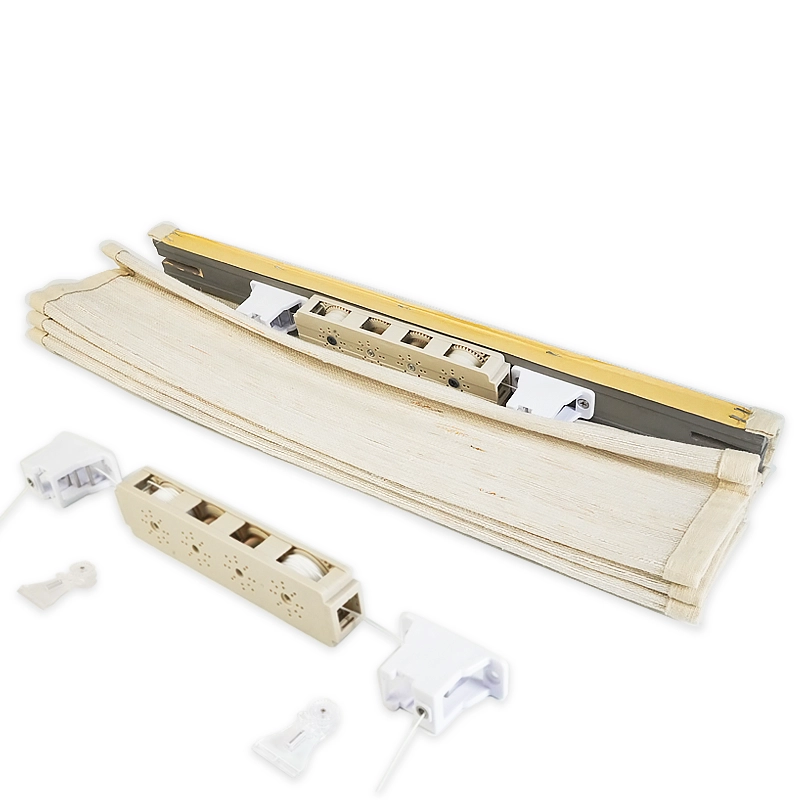
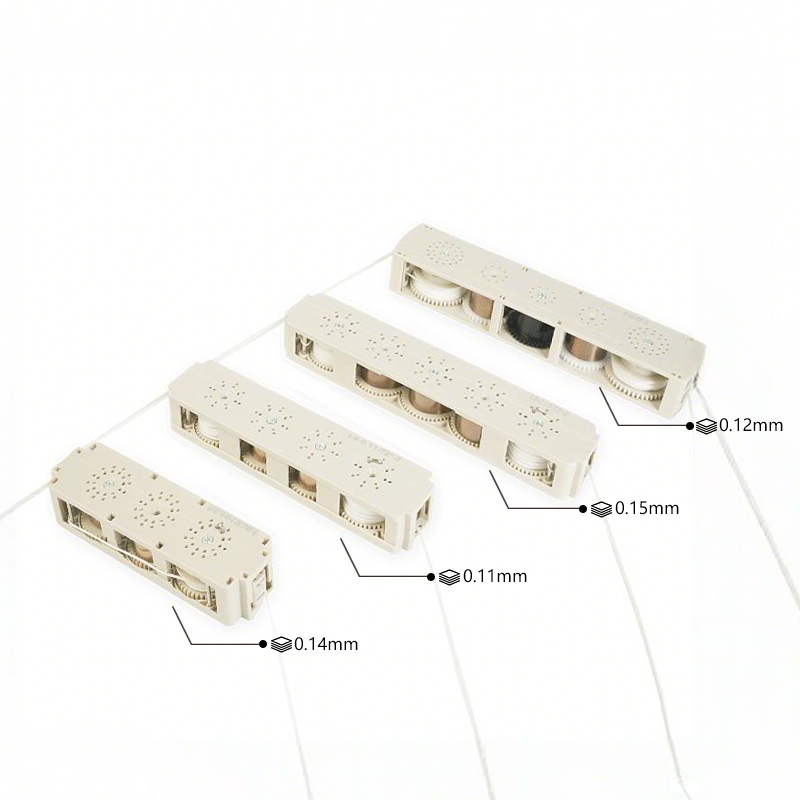
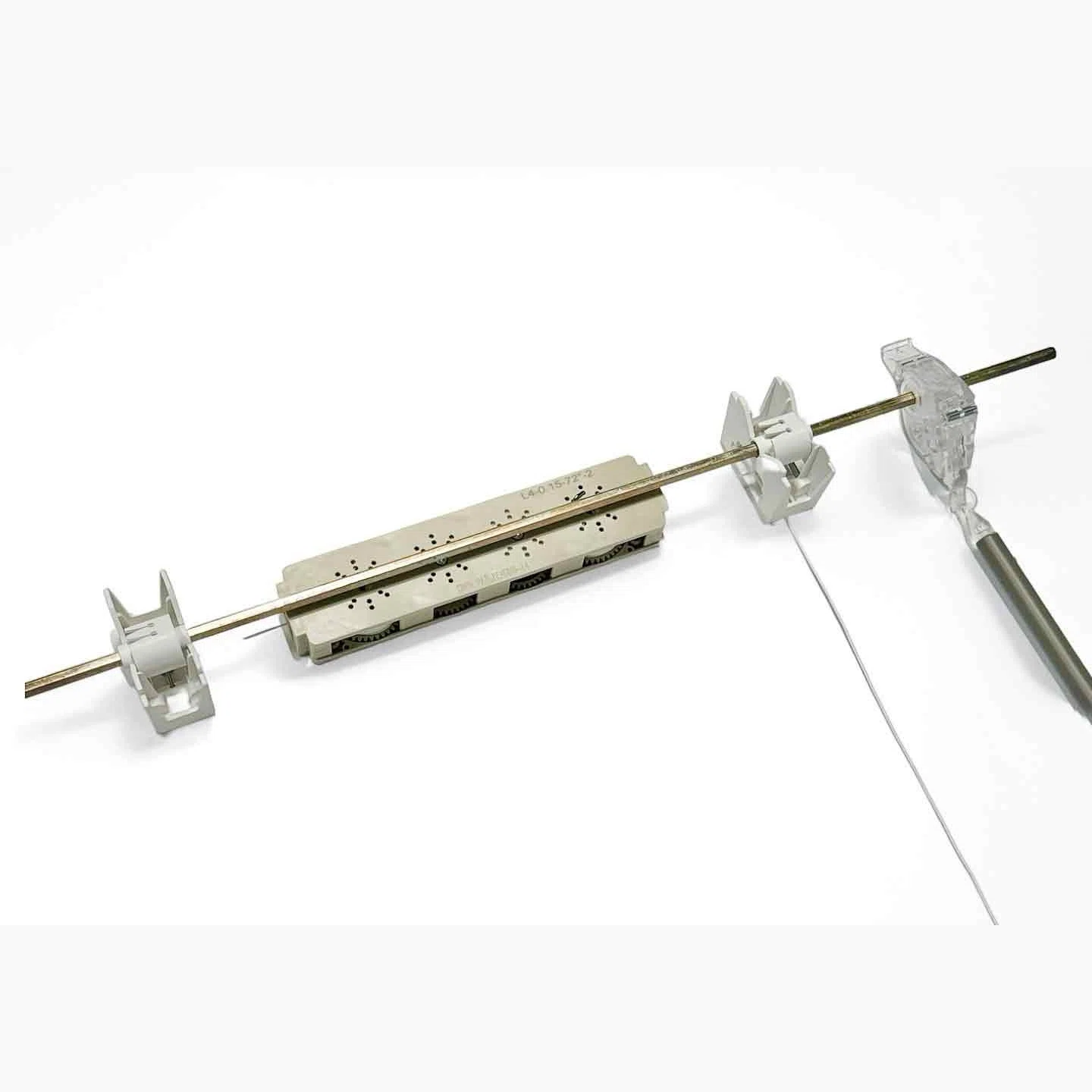
An OEM cordless spring unit device for roller shades is a pre-assembled lift core that drops inside the tube and replaces external chains or cord locks.
Built around a constant-force spiral spring, sealed housing and integrated brake, it balances fabric weight and lets users raise and lower the shade by simply
guiding the bottom rail. OEM brands use these modules when they need child-safe cordless operation, a consistent “feel” across many SKUs, and
a scalable way to upgrade legacy chain-driven programs without redesigning every component from scratch.
 |
 |
For roller shade OEMs, “going cordless” is no longer just a nice product story – in many markets it is becoming the default expectation for
child safety, acoustic comfort and visual simplicity. The challenge is engineering a lifting system that feels light, controlled and reliable across
dozens of fabric types and sizes, without exploding your BOM or assembly complexity.
That is where an OEM cordless spring unit device comes in. Think of it as a ready-made “muscle + brain” that lives inside the tube: the
constant-force spring provides balanced lift, the brake and damping control speed, and the adapter set connects everything to your existing roller pipes.
1. Why Roller Shade OEMs Are Moving Toward Cordless Spring Units
Before we open the tube and look at the mechanics, it helps to understand why OEMs are standardizing on cordless spring platforms instead of
designing every system from zero.
1.1 Regulatory and Safety Pressure
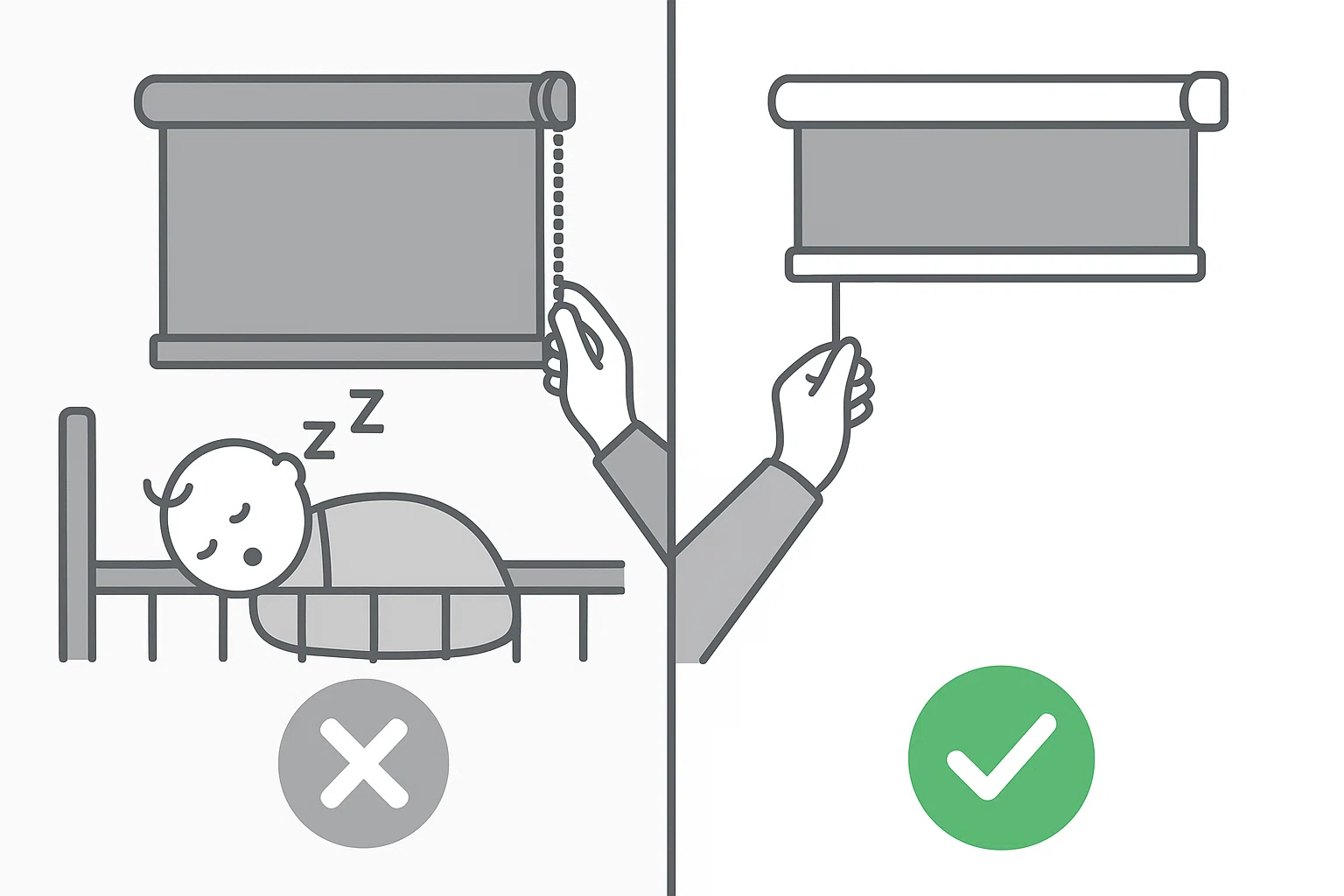
In North America and Europe, corded roller shades are under growing scrutiny because exposed chains and cords can pose entanglement hazards for
children and pets. Cordless designs remove the visible lift cord/chain from the user interface, making it easier to meet current and upcoming child-safety
requirements and to position your line as “family-ready” without lengthy legal explanations.
1.2 Customer Expectations for Quiet, Smooth Operation
End users might not know what a constant-force spring is, but they immediately notice when a shade:
- Feels heavy and jerky when they pull it down,
- Snaps up too fast when they let go, or
- Hits the top rail with a loud “clack” every morning at 7am.
A properly engineered cordless spring unit delivers a stable force curve over the full stroke, so the blind feels balanced from bottom to top, reducing
noise and impact compared with improvised spring solutions or low-cost cord locks.
1.3 OEM Pain Points: Too Many Mechanisms, Too Many SKUs
Traditional programs often rely on:
- Different gearboxes and chain mechanisms for each tube diameter, and
- Different custom springs or balance methods for each weight range.
The result? Complex stocking, higher training costs, more assembly errors, and a nightmare when trying to scale globally.
A standard OEM cordless spring unit family lets you:
- Use the same core module across multiple tube sizes via adapters,
- Tune performance via pre-tension and spring spec instead of changing the whole mechanism, and
- Roll out new fabrics without re-engineering the entire lift system.
2. What Is an OEM Cordless Spring Unit Device for Roller Shades?
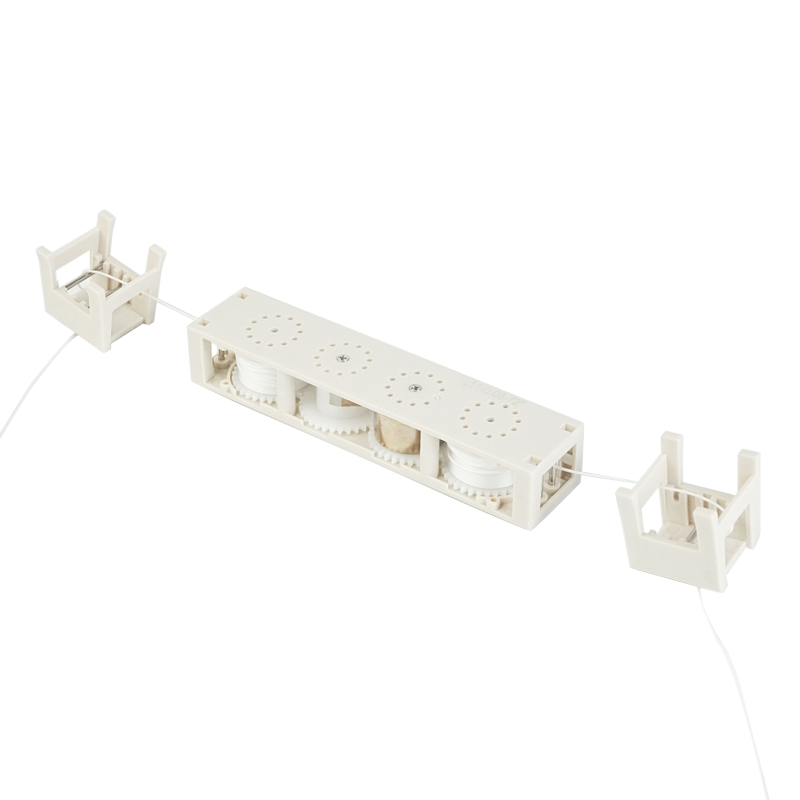
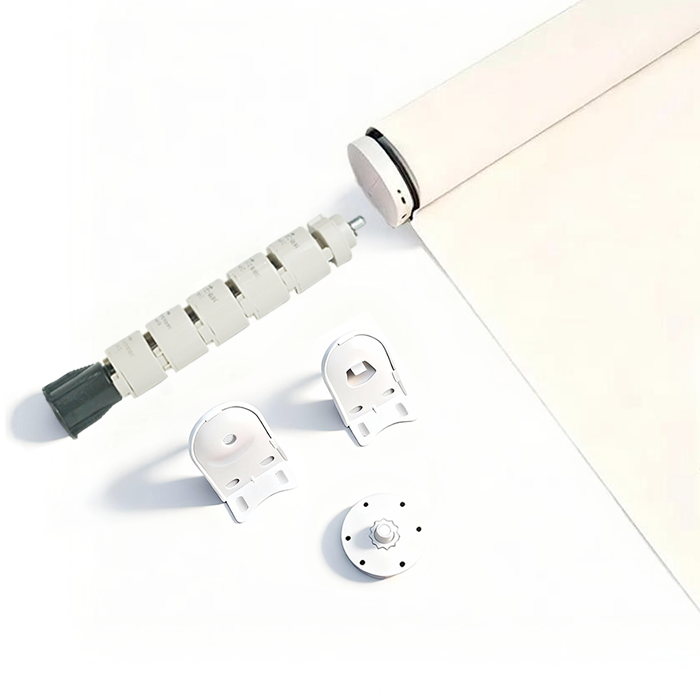
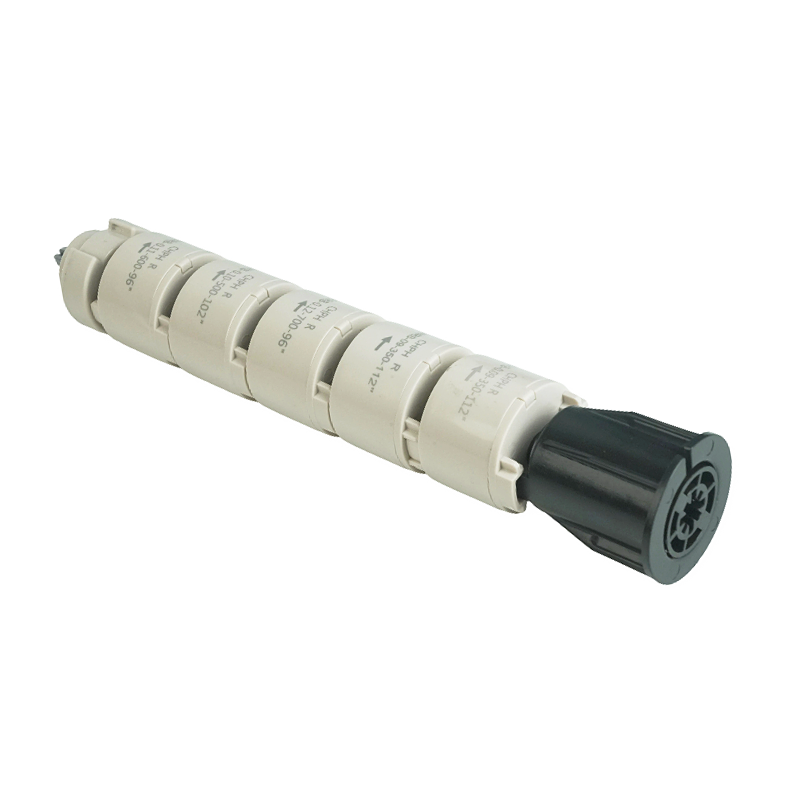
At its core, an OEM cordless spring unit device is a sealed lifting mechanism designed to sit inside a roller tube and provide
the entire “lift and balance” function as a single pre-tested module.
 |
 |
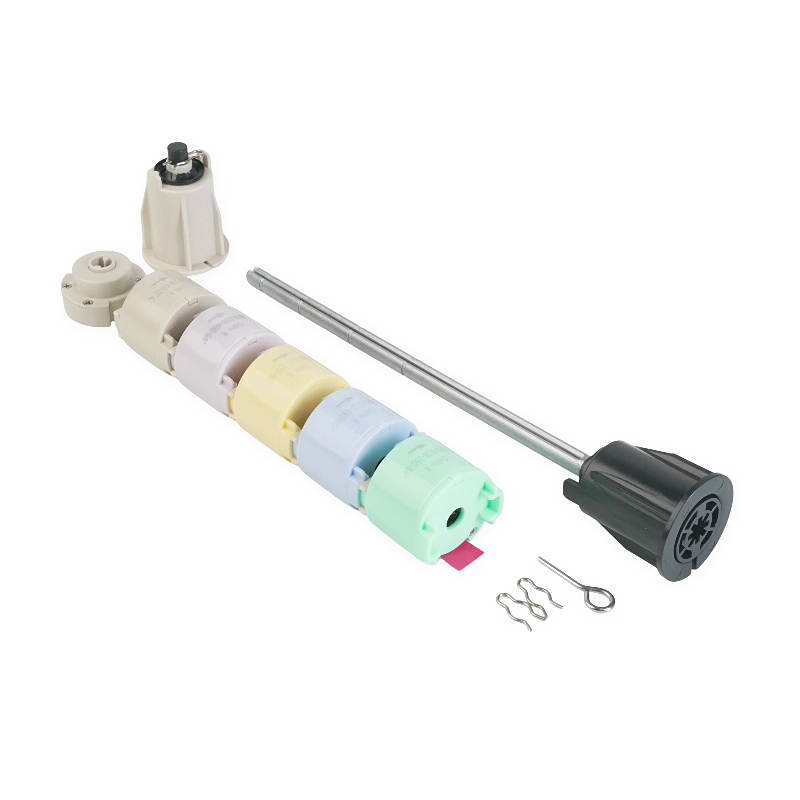
2.1 Main Components Inside the Module
While designs vary by supplier, most OEM-grade modules share a similar architecture:
- Constant-force spiral spring: A thin strip of spring steel or stainless steel wound into a spiral. It stores energy via bending (not compression),
delivering a near-constant pull over the full stroke so the blind feels evenly balanced as you move it up and down. Force fluctuation can be engineered
within a tight band (often within ±5%) over the working range for smooth lift. :contentReference[oaicite:0]{index=0} - POM or metal housing: A low-friction, wear-resistant casing that keeps the spring aligned and protected from dust and damage, and provides mounting
points for other components. - Integrated brake / speed controller: A small braking mechanism that controls the rewind speed so the shade does not “run away” when released and does
not hit the top rail violently. - Drive shaft and tube adapters: The mechanical interface between the spring unit and your aluminum tube (e.g. Ø25 / Ø28 / Ø32 / Ø38 mm). These
allow the same core unit to be used across multiple roller systems. - End caps / support bearings: Components that sit in the bracket and support the rotating tube while the internal spring does its job.
 |
 |
2.2 How the Mechanism Works in Daily Use
From the end user’s point of view, operation is simple:
- To lower the shade, they gently pull the bottom rail down. The tube rotates, loading the spring and unrolling the fabric.
- To raise the shade, they guide the bottom rail up or slightly release it. The spring unwinds, driving the tube in the opposite direction and
rolling the fabric back onto the tube. - The brake and damping elements regulate speed and absorb impact so that motion is controlled and quiet rather than abrupt.
For OEMs, the key is that all of this behavior – force curve, speed, travel range – is pre-engineered inside the module. The fabricator simply
assembles the tube, fabric, brackets, and bottom rail around it.
3. Key Engineering Features OEMs Should Look For
Not all cordless spring units are equal. If you are sourcing an OEM platform rather than a retail-grade mechanism, pay attention to the following engineering features.
| Module Type | Recommended Shade Width | Max Shade Height | Typical Fabric Weight | Total Shade Weight Range | Typical Tube Diameter |
|---|---|---|---|---|---|
| Light (CF-1) | 0.60–1.20 m | up to 2.00 m | 120–200 g/m² | 1.0–2.0 kg | Ø25–28 mm |
| Medium (CF-2) | 1.00–2.00 m | up to 2.50 m | 180–260 g/m² | 2.0–4.0 kg | Ø28–32 mm |
| Heavy (CF-3) | 1.80–2.40 m | up to 3.00 m | 240–360 g/m² | 4.0–7.0 kg | Ø32–38 mm |
*Example reference ranges for illustration. Actual values depend on system design, components and supplier specifications.
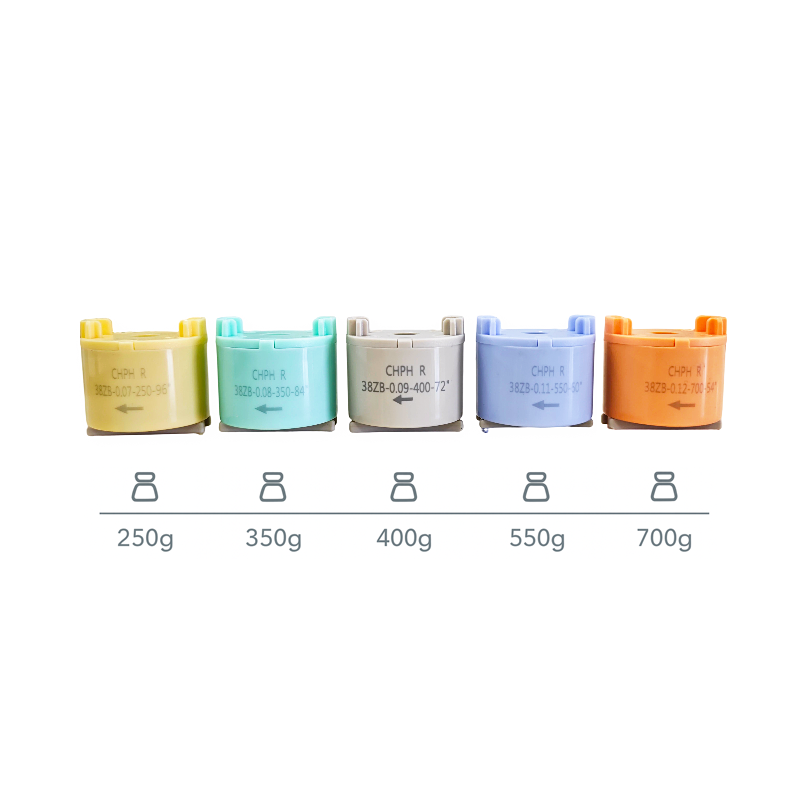
3.1 Force Matching and Weight Range
A good OEM spring unit family will cover a clearly defined load window (for example, small, medium and heavy modules covering 1–7 kg shade
weights at typical widths and heights). Within that window, the unit should:
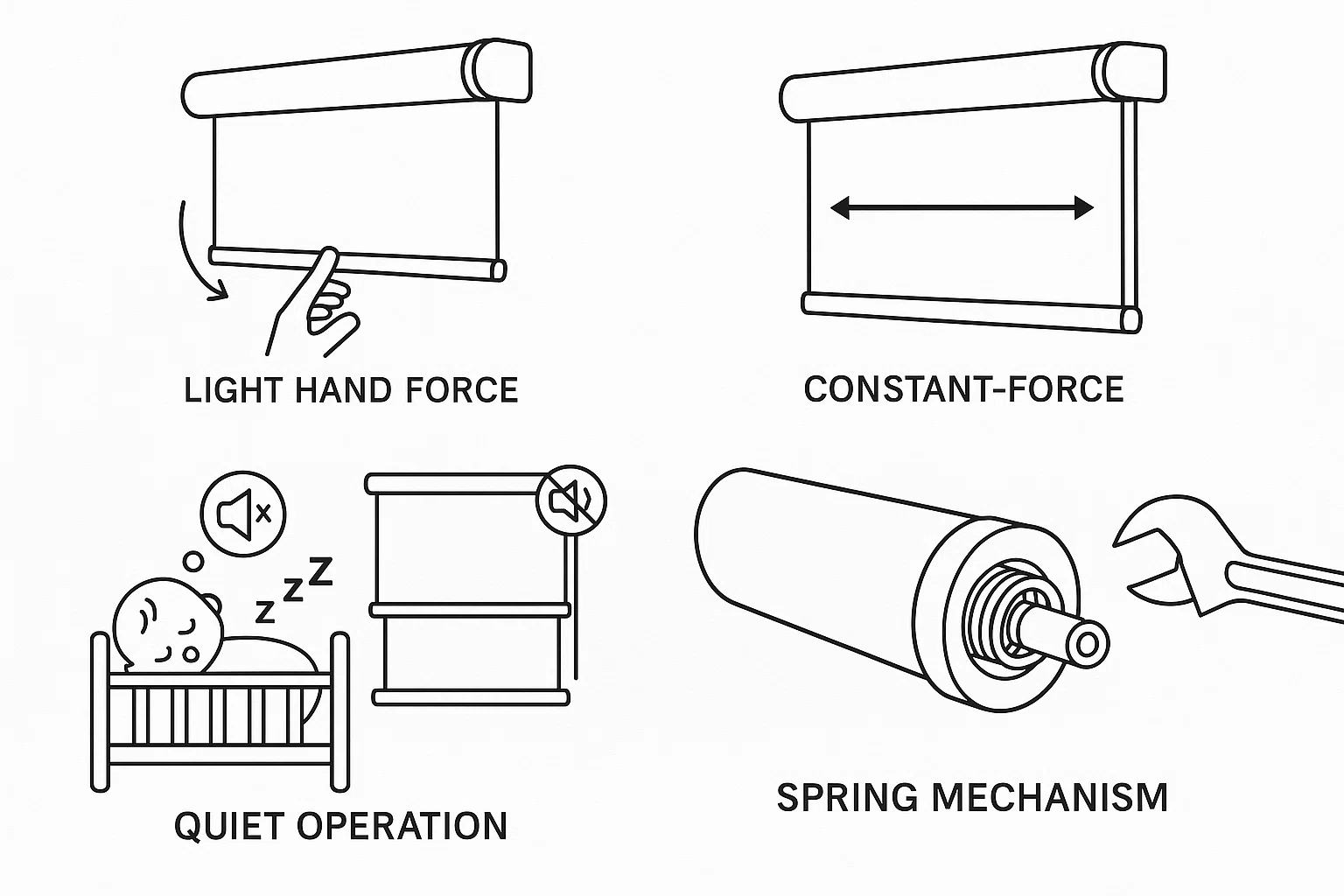
- Balance the fabric weight so the shade can be moved with a light hand force,
- Maintain stable performance over thousands of cycles, and
- Leave some safety margin for friction and environmental changes.
3.2 Constant-Force Behavior and User “Feel”
The main advantage of a constant-force spiral spring over a simple coil spring is that the force stays almost flat across the stroke, instead of being
strong at the bottom and weak at the top. That translates into:
- No “too heavy at first, too strong later” feeling,
- Less bouncing and fewer hard impacts inside the tube, and
- Better acoustic comfort in bedrooms, nurseries and open-plan living spaces.
3.3 Durability and Cycle Life
OEM-level modules should be tested to tens of thousands of cycles – often 10,000–30,000 full up-and-down operations under rated load – with acceptable
force drift and no structural failure. This is essential for:
- Hospitality, commercial and education projects that expect heavy daily use, and
- Retail programs where poor durability quickly turns into warranty cost and bad reviews.
| Parameter | Light (CF-1) | Medium (CF-2) | Heavy (CF-3) | Notes |
|---|---|---|---|---|
| Rated Load Range | 1.0–2.0 kg | 2.0–4.0 kg | 4.0–7.0 kg | Total shade weight (fabric + tube + bottom rail) |
| Target Cycle Life | ≥ 10,000 cycles | ≥ 15,000 cycles | ≥ 20,000 cycles | Full up–down cycles under rated load |
| Force Drift After Test | ≤ ±8 % | ≤ ±7 % | ≤ ±6 % | Measured vs. initial lifting force |
| Typical Noise Level @1 m | ≤ 40 dB(A) | ≤ 38 dB(A) | ≤ 38 dB(A) | Typical lab value in quiet room |
| Suggested Pre-Tension (2.2 m Drop) | 8–10 turns | 10–12 turns | 12–14 turns | Final value to be tuned per fabric and tube |
*Indicative engineering targets for explanation only. Final specifications should follow your own lab tests and supplier data sheets.
3.4 Noise and Vibration Control
Low-noise performance is becoming a differentiator in mid-to-high-end markets. Look for:
- Optimized friction pairs (spring surface finish, housing material, bearings),
- Damping or braking elements to soften the top impact and reduce clicking sounds, and
- Tight control of concentricity and alignment to avoid rattling or scraping noises inside the tube.
3.5 Assembly and Field Adjustability
A well-designed OEM cordless spring unit device should also be friendly to your production line and installers:
- Clear positioning for the spring unit inside the tube,
- Defined pre-tension procedures (e.g. “pre-wind X turns for Y kg at Z height”), and
- Practical field adjustment so installers can fine-tune behavior on site without opening the module.
4. When Should You Use a Cordless Spring Unit – and When Not To?
Because motors, chains and spring units all have their own sweet spots, OEMs often ask: “When does a cordless spring device make the most sense?”
4.1 Ideal Use Cases for OEM Cordless Spring Unit Devices
- Child-focused rooms and family housing
Nurseries, kids’ rooms and family living areas are natural candidates. Cordless operation removes the external chain, reducing entanglement risks and simplifying
your safety messaging in catalogs and online. - Mid-size residential roller programs
For typical residential widths and heights (for example, up to around 2.4 m wide and 2.5 m tall, depending on fabric and system design), a spring unit can
cover the majority of SKUs without the cost and complexity of motors. - Retail and DIY programs
In retail boxes, consumers expect a shade they can install quickly and operate by hand without reading a long manual. A cordless spring unit gives a
“grab and go” experience with no chains to route or cut. - Upgrading legacy chain-driven ranges
When you need to respond quickly to new child-safety requirements or retailer demands, an OEM module lets you convert an existing chain-driven platform
to cordless with minimal tooling changes. You keep your familiar tubes and brackets and change the “engine” inside. - Projects where noise matters
Bedrooms, hotel rooms, classrooms, and open-plan offices benefit from quieter lifts. A constant-force spring unit with proper damping can help keep operation within comfortable noise levels.
4.2 When a Cordless Spring Unit May Not Be the Right Choice
- Very large or very heavy rollers
Extra-wide, very tall or extremely heavy blackout systems (e.g. big meeting rooms, atriums) may simply exceed the practical range of a single spring unit.
There, tubular motors or dual-spring + motor hybrids are usually more appropriate. - Spaces requiring automation and integration
When your selling point is app control, voice assistants and schedules, motors still carry the story. Spring units can complement those lines but won’t replace them. - Ultra-budget segments with minimal safety expectations
Some markets still accept low-cost chain systems. If your brand strategy in that channel is pure price, an OEM cordless module might be “over-engineered”relative to your target.
5. How to Evaluate an OEM Cordless Spring Unit Supplier
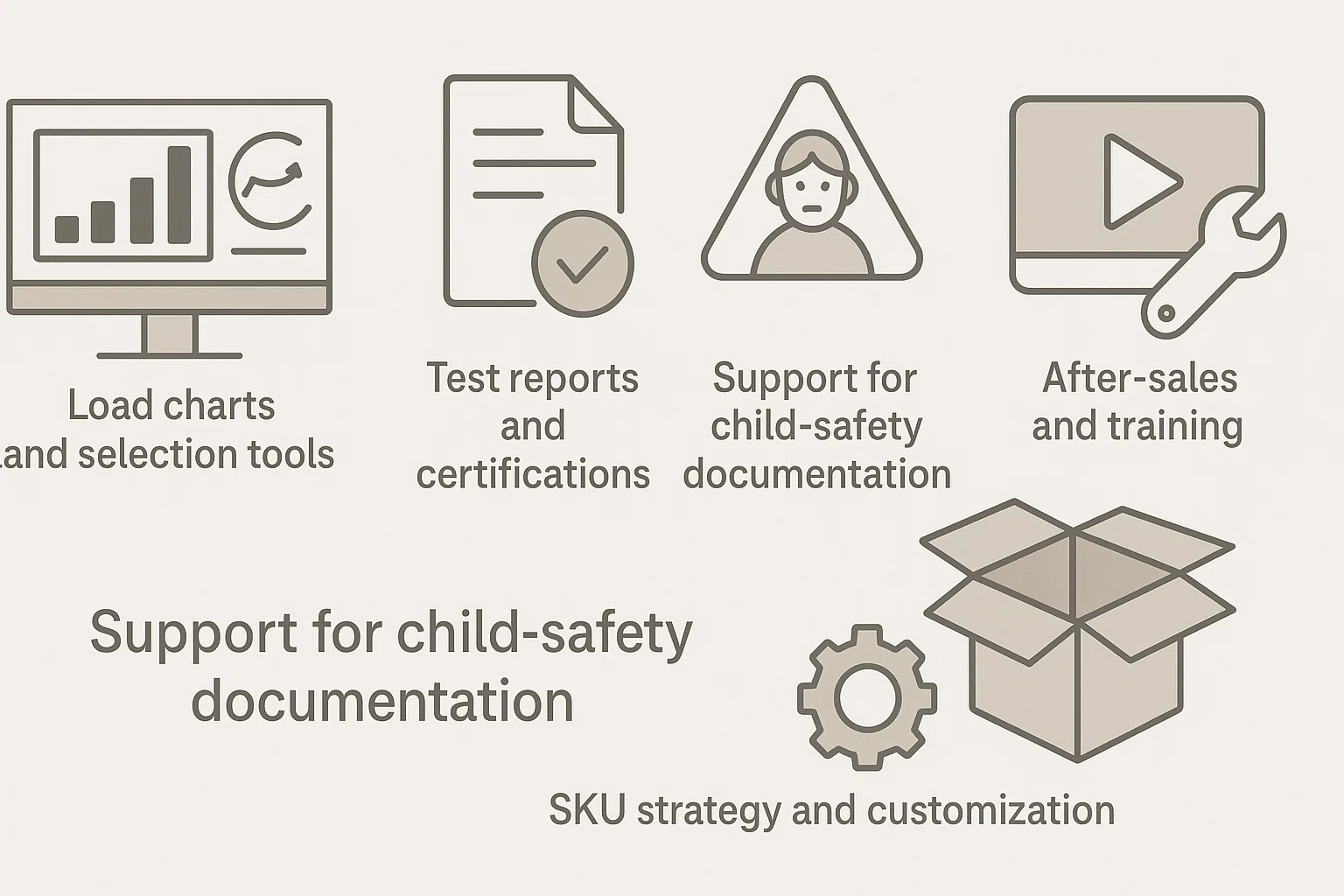
Once you decide a spring platform fits your roller shade strategy, the next step is choosing the right partner. A few practical questions:
- Load charts and selection tools: Can the supplier give you clear tables or software that match module models to shade weight, height and tube size?
- Test reports and certifications: Do they offer internal or third-party test data on cycle life, noise, and environmental durability?
- Support for child-safety documentation: Can they provide engineering statements, drawings and data to support your compliance files and
retailer audits? - SKU strategy and customization: Are spring specs and housings customizable for your key ranges, or are you locked into a one-size-fits-all retail product?
- After-sales and training: Do they help with installer guides, training videos and troubleshooting methods so that field teams can adjust shades without creating new problems?
6. FAQ: OEM Cordless Spring Unit Devices for Roller Shades
Q1. Is an OEM cordless spring unit the same as a standard cordless mechanism sold in retail?
Not exactly. Retail mechanisms are designed for a narrow range of sizes and for low-volume replacement. An OEM cordless spring unit device is engineered
as a platform: consistent behavior across many SKUs, defined load windows, and documentation for production lines and compliance teams.
Q2. Does a spring unit completely replace motors?
No. Spring units and motors are complementary. Spring units are ideal for manual, mid-size residential and light-commercial shades. Motors are still preferred
for very large, very heavy or fully automated projects. Many OEMs run both: cordless spring lines as the “quiet, safe manual option” and motor lines as the
“smart premium upgrade.”
Q3. Can we use one spring unit family across different tube diameters?
In most OEM platforms, yes. The spring core connects to different tube diameters through adapters and couplers. That’s one of the main reasons brands
adopt these devices – you reduce the number of mechanisms to stock while still covering several system sizes.
Q4. How do we choose the right spring unit for each fabric?
Selection is usually based on total shade weight (fabric + tube + bottom rail), maximum height and intended usage frequency. Your supplier should
provide a lookup chart or simple calculation method. For critical programs, it’s wise to build a few prototypes and run accelerated life and noise tests
with your actual fabrics.
Q5. How many cycles should we expect from a good OEM unit?
A reasonable target for residential and light-commercial shades is at least 10,000 cycles under rated load, with acceptable force drift and no structural
failures. Higher-end units may be designed for 20,000–30,000 cycles or more, depending on materials and application.
Q6. What happens if the spring force is mismatched to the shade weight?
If the spring is too weak, the shade will struggle to rise or stop mid-travel. If it is too strong, the shade may be hard to pull down and can
rebound too quickly when released, causing noise and potential safety concerns. That’s why force-matched, constant-force designs are so important in OEM
applications.
Q7. How much installer adjustment is typically needed on site?
If the module and shade are matched correctly, field adjustment should be minimal – usually just verifying travel limits and fine-tuning tension in special
cases. Good OEM modules are designed so installers can adjust pre-tension with a defined number of turns, without opening the housing or disassembling the
spring.
Q8. Can a cordless spring unit work in humid or kitchen environments?
Yes, provided the internal spring and housing materials are chosen for the environment. Stainless-steel springs and appropriate surface treatments improve
corrosion resistance, and sealed housings help keep contaminants away from moving parts.
Field Insight — Turning Springs into a Scalable Cordless Strategy
An OEM cordless spring unit device for roller shades is more than a single part: it is a platform decision. When you choose the right constant-force
module and build your program around it, you simplify engineering, reduce SKU clutter and give your sales team a clear, credible cordless story.
- Start with your target ranges: Define width, height and weight windows, then select spring units that comfortably cover those loads.
- Think in platforms, not one-offs: Use adapters and shared brackets so the same core module can support multiple systems and regions.
- Validate in real fabrics: Prototype with your heaviest and lightest materials, and run noise and life tests before scaling.
- Align safety and marketing: When the mechanism is genuinely child-safe and quiet, your marketing can speak calmly and confidently.
- Plan the upgrade path: Use cordless spring units to modernize legacy chain programs now, while keeping open doors to future motor and hybrid lines.
Done well, your cordless spring platform becomes a quiet but powerful asset: it hides inside the tube, but it shapes how your brand feels in every room
where the shades are used.