Spring Systems Are Not Static — Fabric Weight Changes Everything

A cordless spring system is not balancing fabric.
It is balancing a load that keeps changing.
Quick Summary
In a cordless blind, fabric weight is not a constant.
As the blind moves, roll diameter, leverage radius, and effective torque demand continuously shift.
This is why a system that feels smooth during testing can still become unstable, sluggish, or drift during real use.
The Industry Shortcut: Treating Load as Static
For a deeper breakdown of why cordless blinds behave like machines—not textiles—see
spring-systems-are-not-static-fabric-weight-changes-everything/ Most cordless spring systems are designed and validated under a silent assumption:“If the blind feels smooth at mid-travel, the system is fine.”
That assumption is wrong.Mid-travel testing only captures the system at its most forgiving mechanical state:
- Roll diameter is moderate
- Torque demand is near average
- Braking is operating inside its comfort zone
Real usage does not stay there.
Fabric Weight Is Not the Real Variable — Geometry Is
From an engineering standpoint, the problem is not fabric mass.
The problem is how that mass is expressed through geometry.
During operation, three things change at the same time:
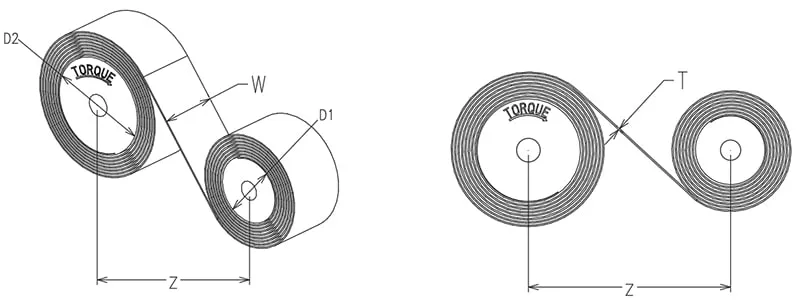
- Roll diameter
As fabric accumulates on the tube, the effective radius increases. - Lever arm effect
Torque demand is proportional to radius, not just weight. - Spring working point
The spring is constantly moving along its torque curve.
The result is a system that must satisfy a
variable torque requirement, not a fixed one.
Engineering sanity check:
If roll radius increases, the same fabric weight produces a different torque condition.
Your spring and brake must remain matched across that changing condition—otherwise the “good feel” window collapses.
Why “Smooth in Testing” Proves Almost Nothing
This distinction between perceived smoothness and real stability is explored further in
Cordless as a Mechanical System: Why “Smooth” Is Not the Same as “Reliable”
Bench testing typically evaluates short strokes and focuses on pull-force feel,
often avoiding full roll-up conditions.
That creates a false sense of confidence.
A system can feel light, quiet, and controlled
and still fail once it reaches the edges of travel, where torque balance shifts the most.
Smoothness is a snapshot. Stability is a range.
The Top & Bottom Sluggish Zones
When users report the blind feels heavy near the bottom, slows near the top,
or struggles to hold position, they are not describing random defects.
They are encountering zones where spring output and system resistance no longer align.
Bottom Zone
- Smaller roll diameter
- Higher effective torque demand
- Spring output may feel weak or sluggish
Top Zone
- Larger roll diameter
- Lower torque demand
- Spring may overpower braking authority
These behaviors are not “quality accidents.”
They are physics—ignored.
Why These Failures Appear After Installation — Not Day One
In real environments, interfaces bed in, friction gradients emerge,
and users naturally operate the blind across full travel.
Only then does the system experience its true operating envelope.
That’s why showroom demos pass, factory tests pass,
and field performance still degrades.
This is not aging. It is exposure.
This is also why early-cycle failures dominate real-world returns.
See
Why 90% of Cordless Shade Failures Happen in the First 1,000 Cyclesfor a deeper engineering breakdown.
What a Stable Spring System Actually Requires
A stable cordless spring system must:
- Tolerate torque variation across the entire travel
- Maintain control at both minimum and maximum roll diameters
- Match braking authority to the widest force band, not the average
If a system only works well at one point, it is not stable—it is merely well-timed.
Field Insight
- Fabric weight does not stay constant during operation.
- Changing roll geometry creates a variable torque requirement.
- Top and bottom sluggish behavior is a design signal, not a quality accident.
- If your testing avoids full travel, your conclusions are incomplete.
FAQ (Extended Engineering Edition)
Q1: If the blind feels smooth at mid-travel, isn’t that enough?
No. Mid-travel is often the most forgiving point.
Stability must be proven at the extremes—top and bottom—where roll diameter, leverage, and torque demand shift the most. Many failures are invisible at mid-travel.
Q2: What exactly creates the “top / bottom sluggish zone”?
It occurs when the spring’s usable torque band no longer overlaps cleanly with the system’s friction and braking authority at travel extremes.
The result is hesitant motion, inconsistent speed, or a “heavy” feel—despite appearing fine elsewhere.
Q3: Can increasing brake friction fix drift or sluggishness?
Sometimes it masks symptoms short-term, but it raises pull force and increases the risk of stick-slip.
The robust fix is stabilizing the force band first, then matching brake authority to that band—not the other way around.
Q4: What testing is most likely to catch these issues early?
Full-travel testing that includes top, mid, and bottom checkpoints, repeated cycling, and evaluation under real roll-up geometry.
Short-stroke or mid-height feel checks routinely miss system-level instability.
Q5: Why do these problems often show up weeks after installation?
Because real usage repeatedly reaches the extremes and friction interfaces bed-in.
Only then does the system operate across its full envelope—where weak margins finally get exposed.
Q6: Why does fabric weight change affect stability more than expected?
Because fabric weight does not remain constant across travel.
As the roll diameter changes, effective torque demand shifts continuously—especially near the top and bottom—exposing force-band mismatch.
Q7: Why are wide blinds more sensitive to these issues?
Width increases the lever arm.
Small torque or friction asymmetries that self-correct in narrow systems become amplified in wide blinds, reducing the system’s ability to stay balanced.
Width magnifies every imbalance.
This lever-arm effect is analyzed in detail inWhy Bigger Sizes Expose Problems Faster
Q8: Can installer adjustment compensate for spring or force-band issues?
Only marginally, and only temporarily.
Installer tweaks can mask static imbalance, but they cannot correct dynamic force mismatch across travel or over time.
Q9: Is this mainly a spring problem or a system problem?
It’s a system problem.
The spring defines the force band, but performance depends on how that band interacts with friction, braking, roll geometry, and load variation. Optimizing one component in isolation rarely works.
Q10: What’s the most reliable way to prevent these failures?
Design and validate the system as a full-travel force-balance platform.
That means: stable torque across travel, controlled friction behavior, brake authority matched to the force band, and testing that reflects real use—not showroom feel.