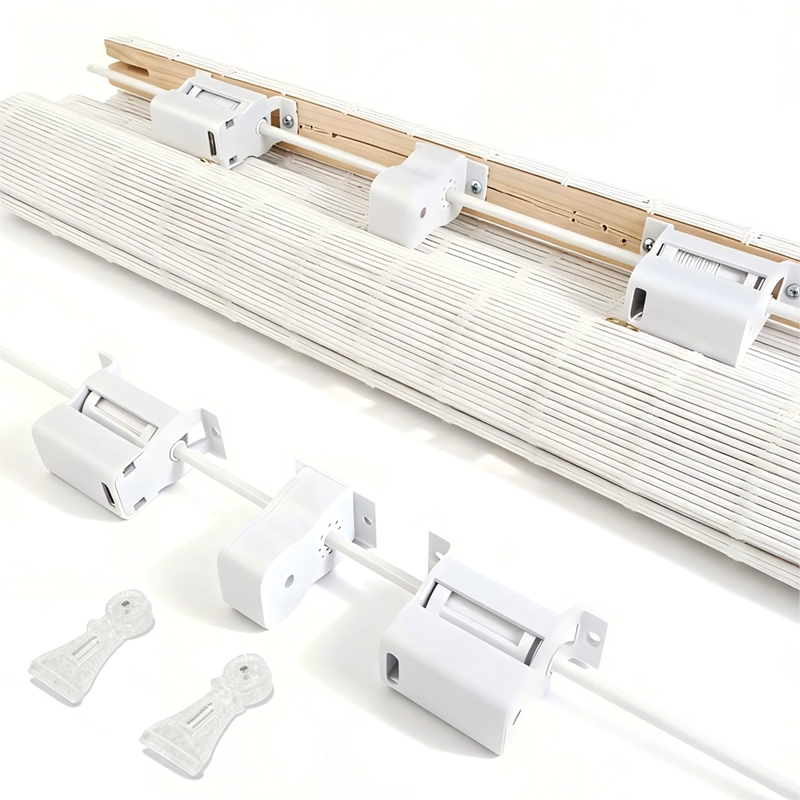
What to Consider Before Buying: Selecting the Right Blinds for Your Pet?
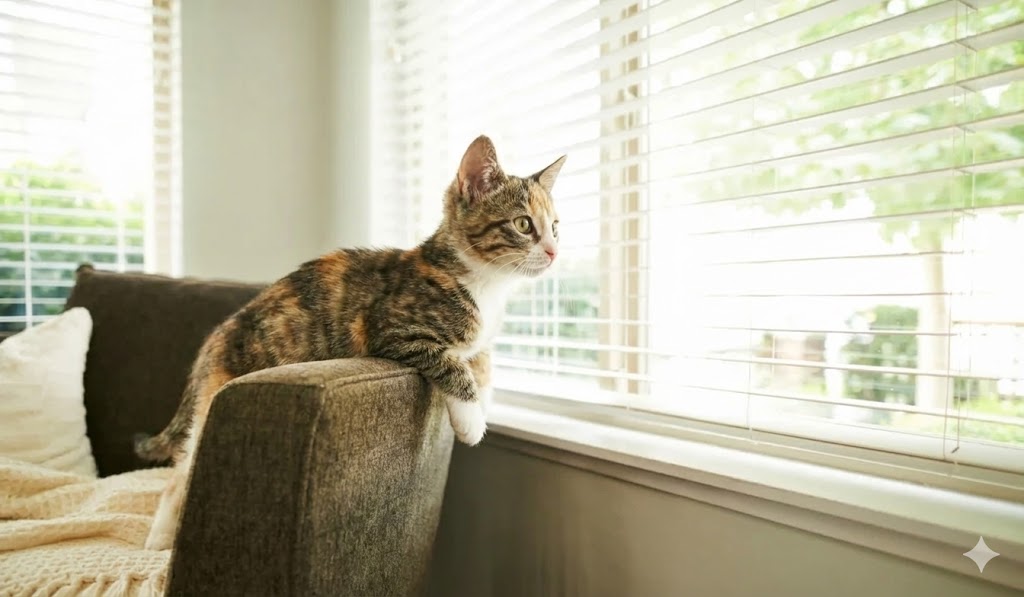
Quick Summary
When you live with cats or dogs, the “right” window treatment is not only about color and style. You need blinds that are
cordless and tangle-free, tough enough to survive claws and teeth, quiet enough not to scare anxious pets, and easy to clean.
This guide explains how to choose pet-friendly blinds by looking at safety, materials, blind type and your pet’s daily habits, so you can protect both your animals and your home.
1. Why Pets Change the Way You Choose Blinds
In a home without animals, blinds are mostly about privacy, light control and design. Add a cat that loves climbing or a dog that patrols every window, and suddenly your blinds become part of your pet-safety strategy as well.
Common problems when blinds are not chosen with pets in mind include:
- Cord and chain hazards – Pets can get tangled or caught in hanging cords and beaded chains while playing.
- Chewed components – Young dogs may chew plastic slats, bottom rails or chains near floor level.
- Claw damage – Cats treat dangling fabrics and loose folds as climbing toys or scratching surfaces.
- Falling hardware – Repeated pushing or jumping can loosen badly fixed brackets and end plugs.
- Hygiene issues – Fabrics that hold fur and dust can be hard to clean and may affect allergies.
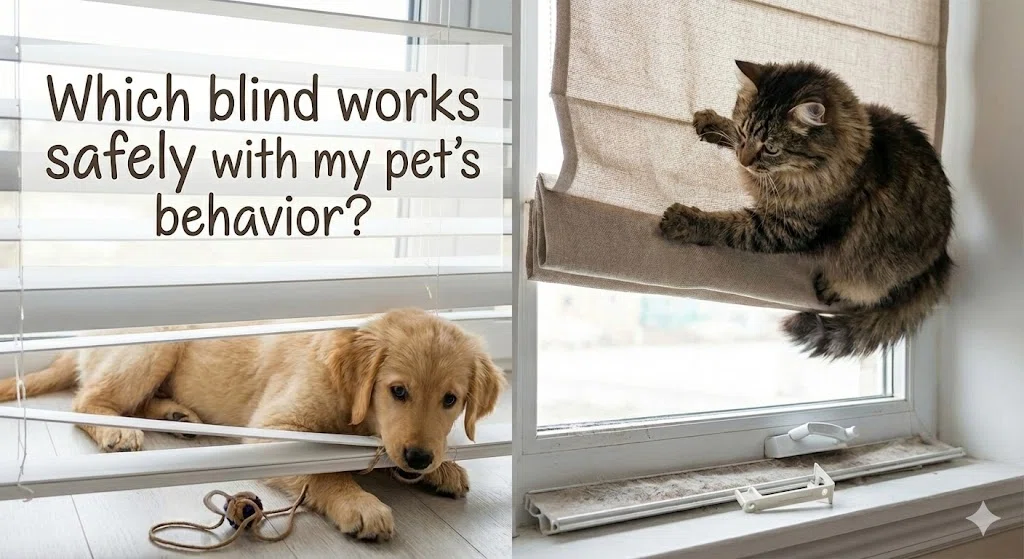
That’s why your first question should not be “Which blind matches my sofa?” but “Which blind works safely with my pet’s behavior?”
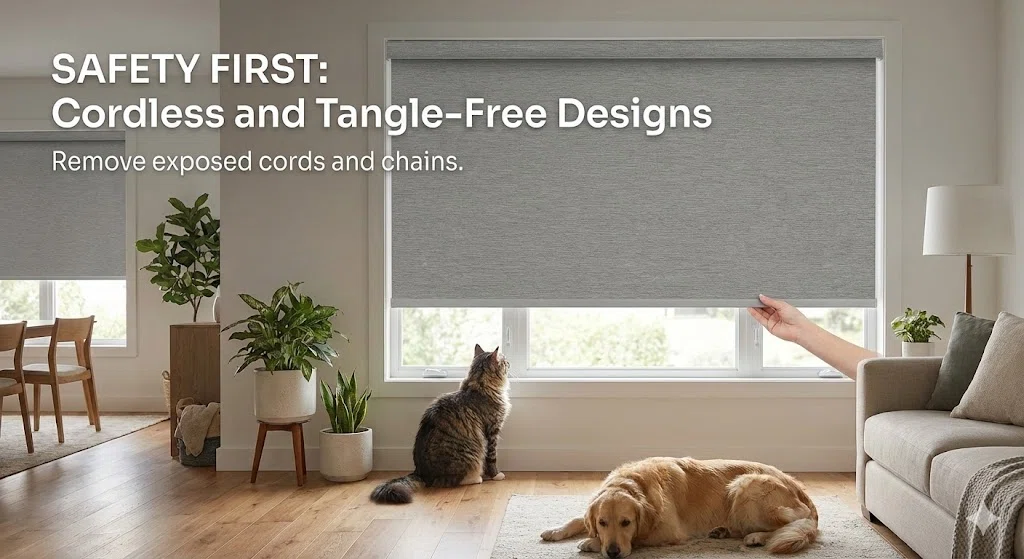
2. Safety First: Cordless and Tangle-Free Designs
For homes with pets (and children), the safest starting point is simple: choose cordless blinds with no loose cords or chains within reach.
2.1 Remove exposed cords and chains
Any exposed cord, loop or chain is interesting for pets. They bat, chew and tug on it, turning a simple control part into a potential hazard. Modern safety standards already push for no accessible cords; a pet home is a good reason to upgrade older blinds.
2.2 Cordless spring-lift blinds
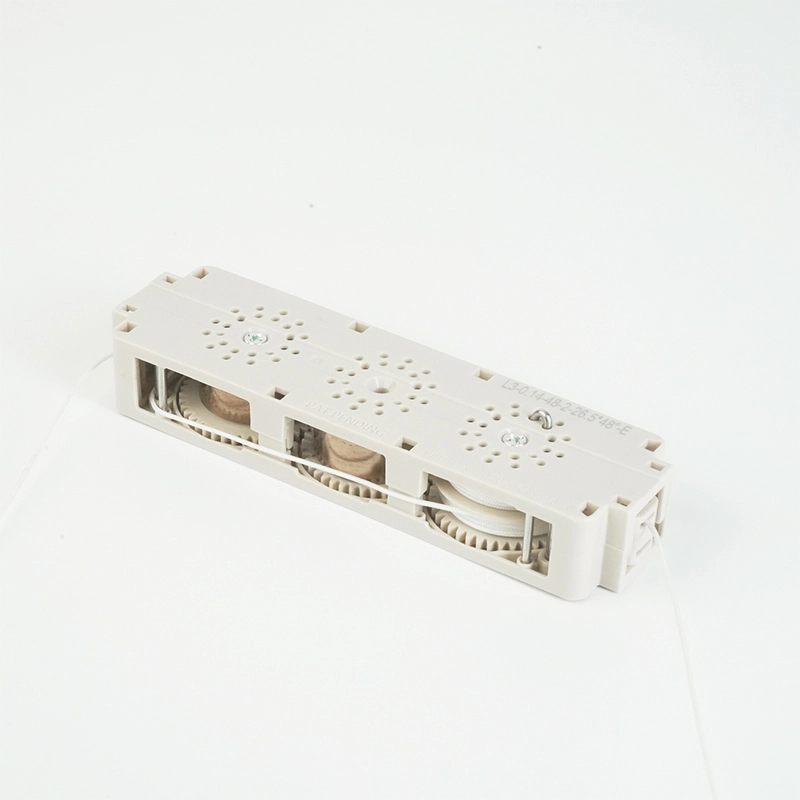
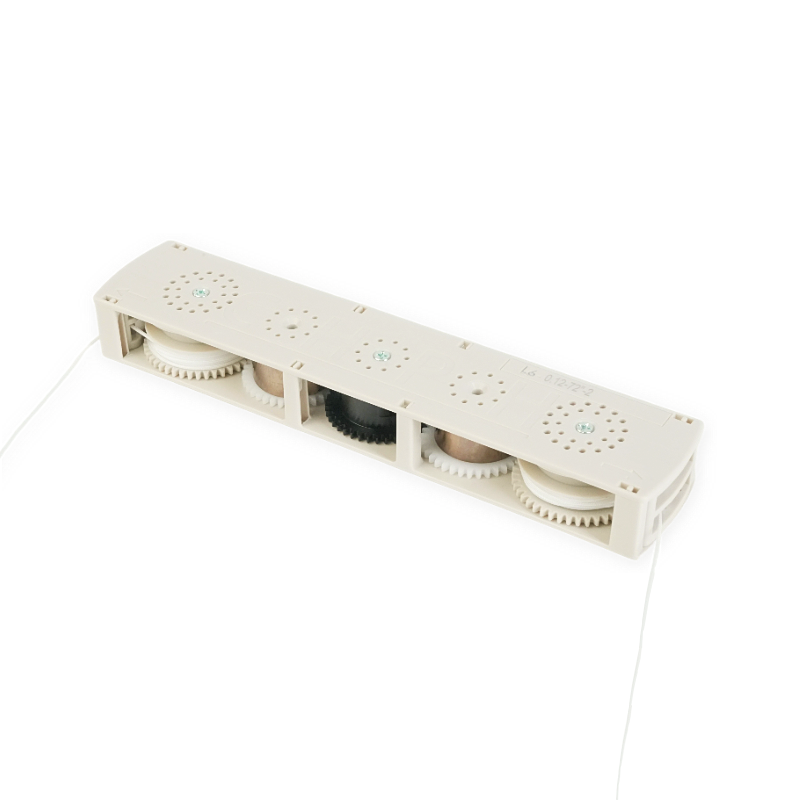
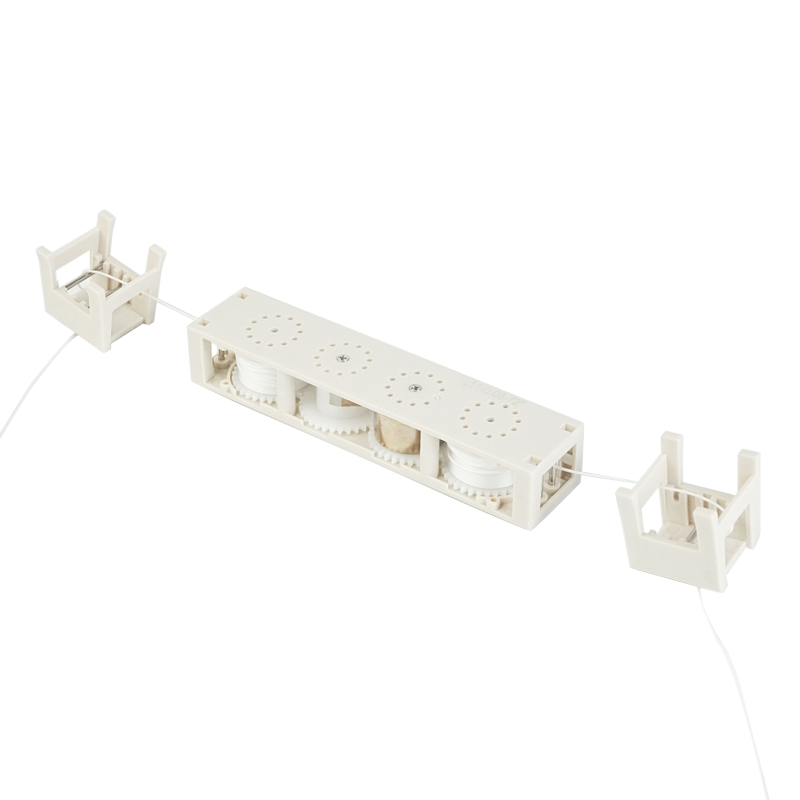
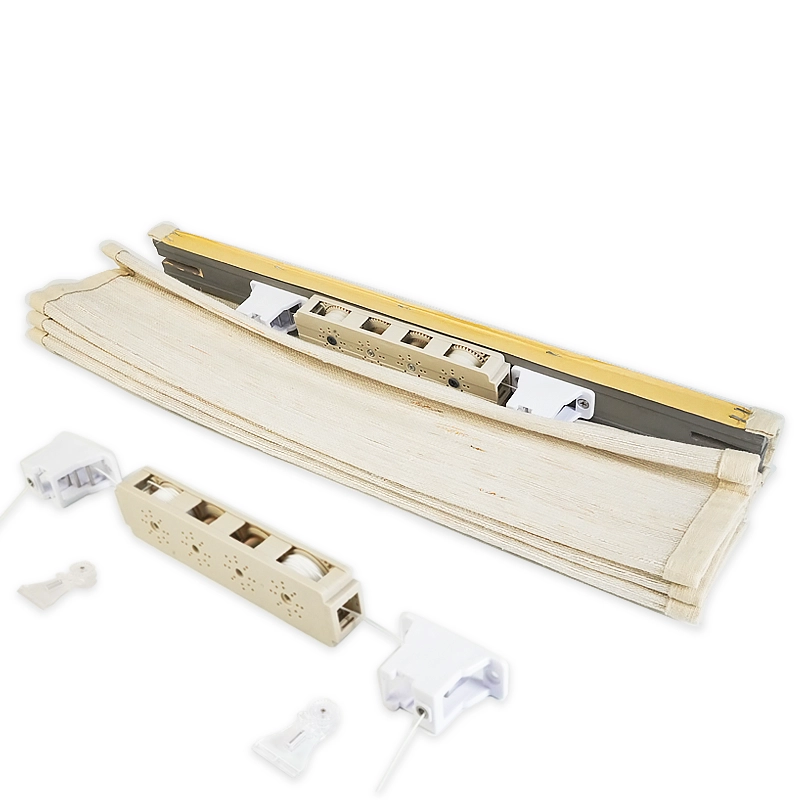
Cordless roller blinds and cordless zebra blinds use an internal spring mechanism inside the tube. You simply guide the bottom rail up or down by hand, and the spring balances the fabric so the blind stays at the height you set.
- No visible cords for pets to chase or bite.
- Smooth, controlled motion when the spring is correctly matched to the fabric weight.
- Clean front view that suits modern interiors and makes cleaning easier.
2.3 Motorized and smart options
Motorized blinds can also be very pet-friendly:
- Blinds are moved by a remote, wall switch or app, so there are no operating cords.
- You can schedule positions – open a favorite sun spot in the morning, close for cooling in the afternoon.
- Blinds are handled less by hand, so pets are less tempted to play with them.
Just make sure any power cables are routed where pets cannot reach or chew them, or choose battery-powered motors inside the tube.
3. Match Blind Type to Your Pet’s Personality
No two pets behave the same way. A calm senior cat and an energetic puppy create completely different risks. Use your pet’s habits as your design brief.
3.1 If you live with cats
- Avoid anything that dangles – cords, tassels or decorative pulls.
- Choose flat, tensioned surfaces like roller blinds, zebra blinds or honeycomb blinds that are harder to climb.
- Use tighter-weave fabrics that are less likely to snag on claws.
- Prefer inside-mount installation so the blind sits closer to the glass and is less “tent-like.”
3.2 If you live with dogs
- Reinforce the bottom zone – the first 50–80 cm from the floor is “dog height.” Choose sturdy bottom rails and fabrics that do not fray easily.
- Avoid fragile plastic slats that can snap when dogs push through to see outside.
- Keep a “view band” – many dogs relax when they can see out. Blinds that stop reliably at mid-height are helpful.
- Check bracket strength so repeated nudging does not loosen the system.
3.3 Quick comparison of blind types for pet homes
| Blind Type | Pet-Friendliness | Key Advantages | Things to Watch |
|---|---|---|---|
| Cordless roller blinds | Excellent | Flat, simple, no cords, easy to clean and repair. | Choose tougher fabrics if your cat climbs or scratches. |
| Cordless zebra blinds | Very good | Let pets see out through sheer bands while softening light. | More fabric layers mean more surfaces to catch fur. |
| Honeycomb / cellular blinds | Good | No slats to rattle, good insulation and sound absorption. | Delicate fabrics can be damaged if pets climb. |
| Faux-wood Venetian blinds | Medium | Slats can tilt for view and privacy, easy to wipe clean. | Slats can bend if pets push through aggressively. |
| Fabric Roman blinds | Low–medium | Soft, elegant look; good for low-traffic rooms. | Loose folds invite climbing and hold a lot of fur. |
| Interior shutters | Very good | Very robust, easy to wipe down, no fabric. | Higher cost and requires careful sizing so paws do not get caught. |
4. Fabrics and Materials: Claws, Fur and Cleaning
The fabric and finish you choose will determine how your blinds look after months of daily contact with pets.
- Scratch resistance – Tighter weaves, coated fabrics and some vinyl materials resist pulls better than very loose weaves.
- Stain resistance – Look for wipe-clean or washable finishes if pets lean against the blind or touch it with muddy paws.
- Static and hair – Some synthetic fabrics attract hair. Anti-static coatings and light textures make fur less visible and easier to remove.
- Color choice – Mid-tone neutrals hide paw prints and hair better than pure white or very dark colors.
5. Noise, Light and Your Pet’s Daily Routine
Many animals are sensitive to sudden noise and changing light. The way your blinds move can either calm them or make them more nervous.
- Quiet operation – Cordless spring-lift systems with good damping are typically quieter than metal chains hitting a headrail.
- Controlled speed – A blind that snaps up fast can startle pets. Correct spring tension and braking keep motion smooth and predictable.
- Comfortable light levels – Cats often love a warm patch of sun, while some dogs prefer shaded corners. Layered solutions like zebra blinds give you more control.
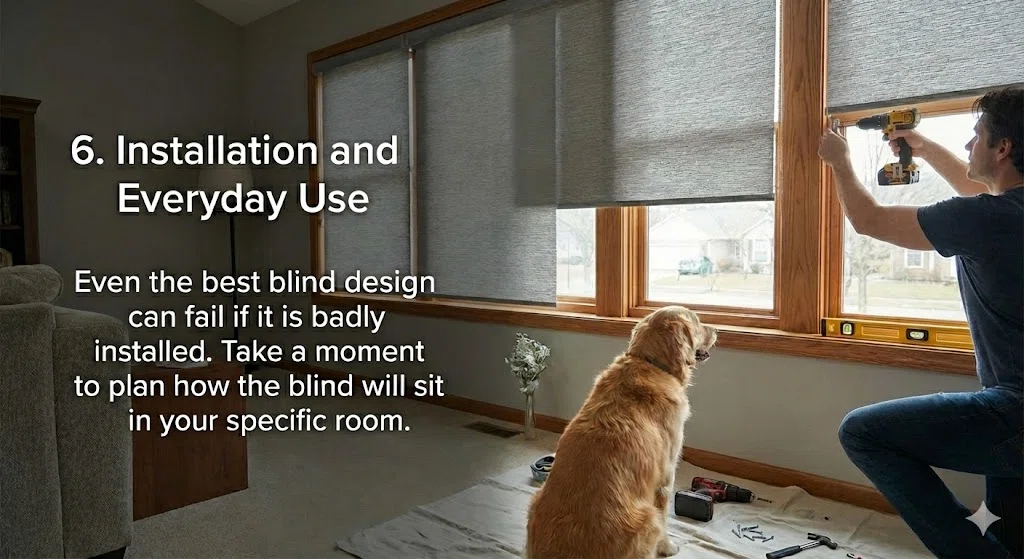
6. Installation and Everyday Use
Even the best blind design can fail if it is badly installed. Take a moment to plan how the blind will sit in your specific room.
- Mounting type – Inside-mount blinds sit closer to the glass and are harder to get behind. Outside-mount blinds can hide old frames but may be easier to push away from the wall.
- Bracket and screw quality – Use hardware that is properly rated for the blind size and occasional impacts.
- Clearance for your pet – If your cat loves the sill or your dog likes to sit at the window, make sure there is enough room without crushing the bottom rail every time.
- Safe operation habits – Avoid raising or lowering blinds while a pet is leaning on the bottom rail or half tangled in the fabric.
7. Pre-Order Checklist for Pet-Friendly Blinds
Before you confirm your order, run through this quick checklist:
- Are all selected blinds cordless or motorized, with no exposed cords or chains?
- Is the blind type (roller, zebra, honeycomb, shutters) matched to how your pet behaves around windows?
- Have you chosen durable fabrics and finishes that resist claws, teeth and stains?
- Do the blinds allow a comfortable view and light level in your pet’s favorite spots?
- Are brackets, screws and anchors specified for the correct load and wall type?
- Do you understand how to clean fur and dust from the chosen material?
8. FAQs: Blinds for Homes with Pets
Q1. Are cordless blinds really safer for pets?
Yes. Cordless blinds remove the main hazard that attracts pets: hanging cords and chains. With no loops to play with, there is far less risk of tangling, chewing or pulling the blind down.
Q2. Which blinds are best if my cat always sits in the window?
Cordless roller blinds or zebra blinds are a good choice. They offer a flat surface that is harder to climb and can be set at mid-height so your cat has a clear view outside without walking through vertical slats.
Q3. My dog chews everything near the floor. What should I look for?
Choose blinds with a robust bottom rail and fabrics that do not fray easily. Avoid delicate Roman folds or thin plastic slats at nose level. You can also raise the blind slightly during the day to keep the bottom rail out of “chew range.”
Q4. Are motorized blinds worth it for a pet home?
They can be. Motorized blinds remove manual cords and allow you to automate positions, which supports a stable daily routine for your pet. Just make sure any power cables are properly protected or choose in-tube battery motors.
Q5. How often should I clean pet-friendly blinds?
Light dusting or vacuuming with a soft brush every 1–2 weeks usually keeps fur and dust under control. For wipeable materials, follow the manufacturer’s guidelines for occasional deeper cleaning with a damp cloth.
Field Insight
In practice, the most successful “pet-friendly” blind ranges combine three things:
cordless or motorized lift hardware, carefully chosen technical fabrics that hide hair and resist damage, and clear selling tools that help end users match blind type to their pet’s behavior.
When you plan your next blind collection or renovation, treat pets as a core design factor from the start, not an afterthought—this reduces complaints, damage and replacement rates over the full life of the product.