How to Work with Component Suppliers to Upgrade Legacy Product Lines Safely
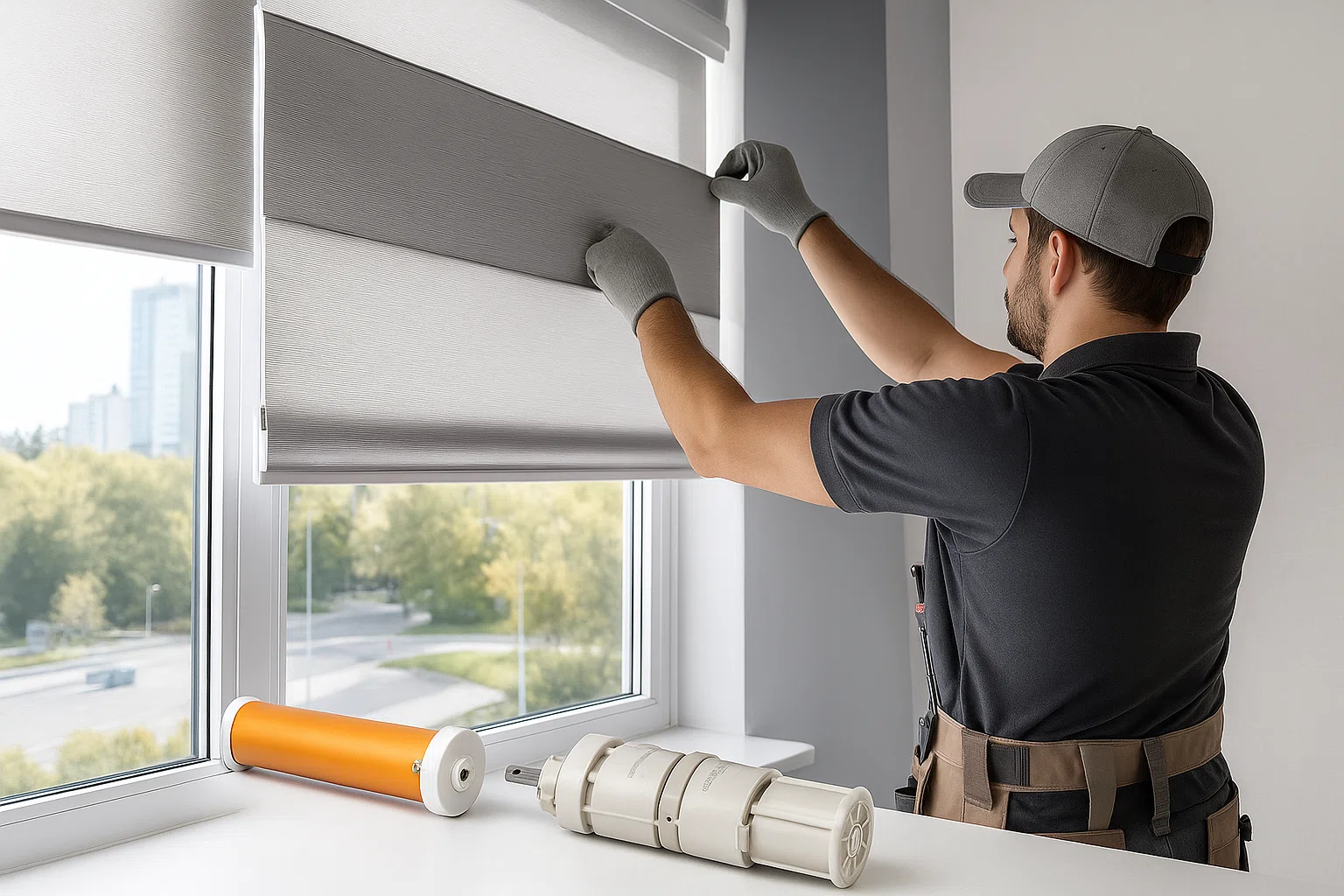
Quick Summary — For Brands, Buyers & Product Teams
Legacy corded blinds and shades are now under pressure from child- and pet-safety regulations and shifting retailer policies.
Upgrading is not just “swapping a mechanism”; it is a structured program that depends heavily on the engineering depth, testing capability and documentation of your component suppliers.
This article gives a step-by-step roadmap: how to map legacy risk, co-design safe cordless architectures with suppliers, validate in the lab and field, and scale upgrades without disrupting your current business.
1. Why Legacy Corded Product Lines Need a Safety-First Upgrade Plan
For many brands, legacy product lines are still built around corded lift systems: traditional pull cords, continuous bead chains, or basic clutch mechanisms.
These ranges may be profitable and familiar to your factories, but they increasingly clash with:
- Stricter child-safety regulations in key markets (e.g. mandatory cordless or inaccessible cord designs).
- Retailer requirements that favor or mandate cord-free options for mass-market channels.
- Parent and pet-owner expectations for safe, intuitive, tangle-free window coverings.
The challenge: you cannot simply bolt a cordless headrail onto an old design and call it “safe”.
Safe upgrades require re-engineering the whole system architecture — springs, brakes, wands, tubes, brackets, bottom rails — and that is where the right component supplier partnership becomes critical.
2. Step 1 — Map Your Legacy Portfolio and Risk Levels
Before contacting suppliers about new hardware, you need a clear picture of what you are upgrading.
A simple portfolio map helps you prioritize where a safety-driven upgrade is most urgent.
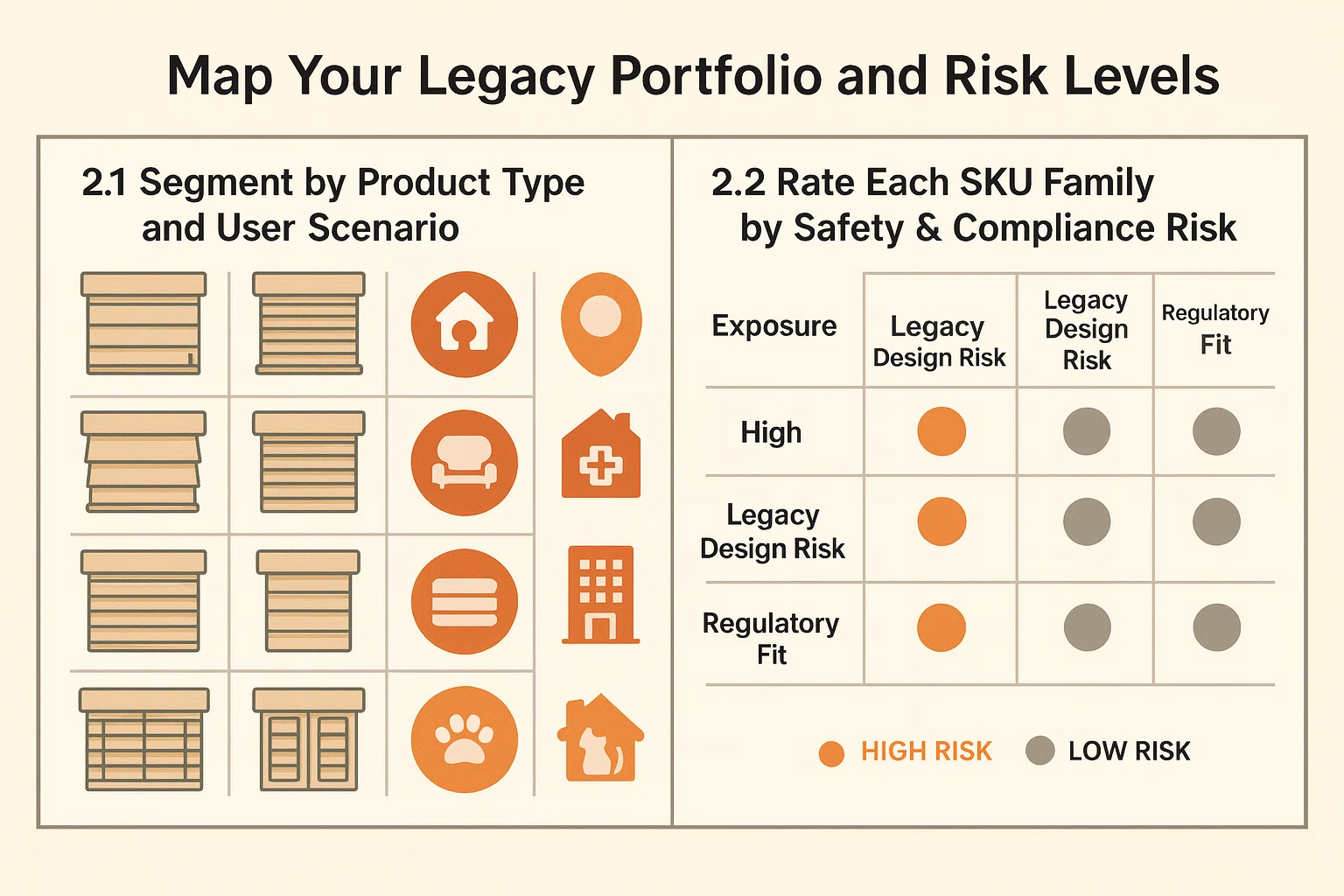
2.1 Segment by Product Type and User Scenario
Start by grouping your current ranges by both construction and typical room usage:
- By construction: roller blinds, zebra/dual shades, honeycomb shades, faux-wood Venetians, fabric Romans, bamboo Romans, verticals, shutters.
- By scenario: nursery and kids’ rooms, family living rooms, rental apartments, hospitality, commercial offices, health-care, etc.
Any corded products regularly installed in nurseries, kids’ rooms or pet-heavy homes should move to the top of your upgrade list.
2.2 Rate Each SKU Family by Safety & Compliance Risk
For each product family, give a simple score on three dimensions:
- Exposure: How often are these products used in homes with children or pets?
- Legacy design risk: Are there exposed cords, loops, or high pull forces?
- Regulatory fit: How far is the design from current “cordless or inaccessible cord” expectations in target markets?
This matrix will tell you where upgrading with cordless spring mechanisms or motorized options has the biggest safety and commercial impact.
3. Step 2 — Define Target Architectures with Component Suppliers
Once you know which legacy lines to tackle first, the next job is to define what the “new architecture” looks like.
This is where your component supplier should act as a co-engineer, not just a catalog vendor.
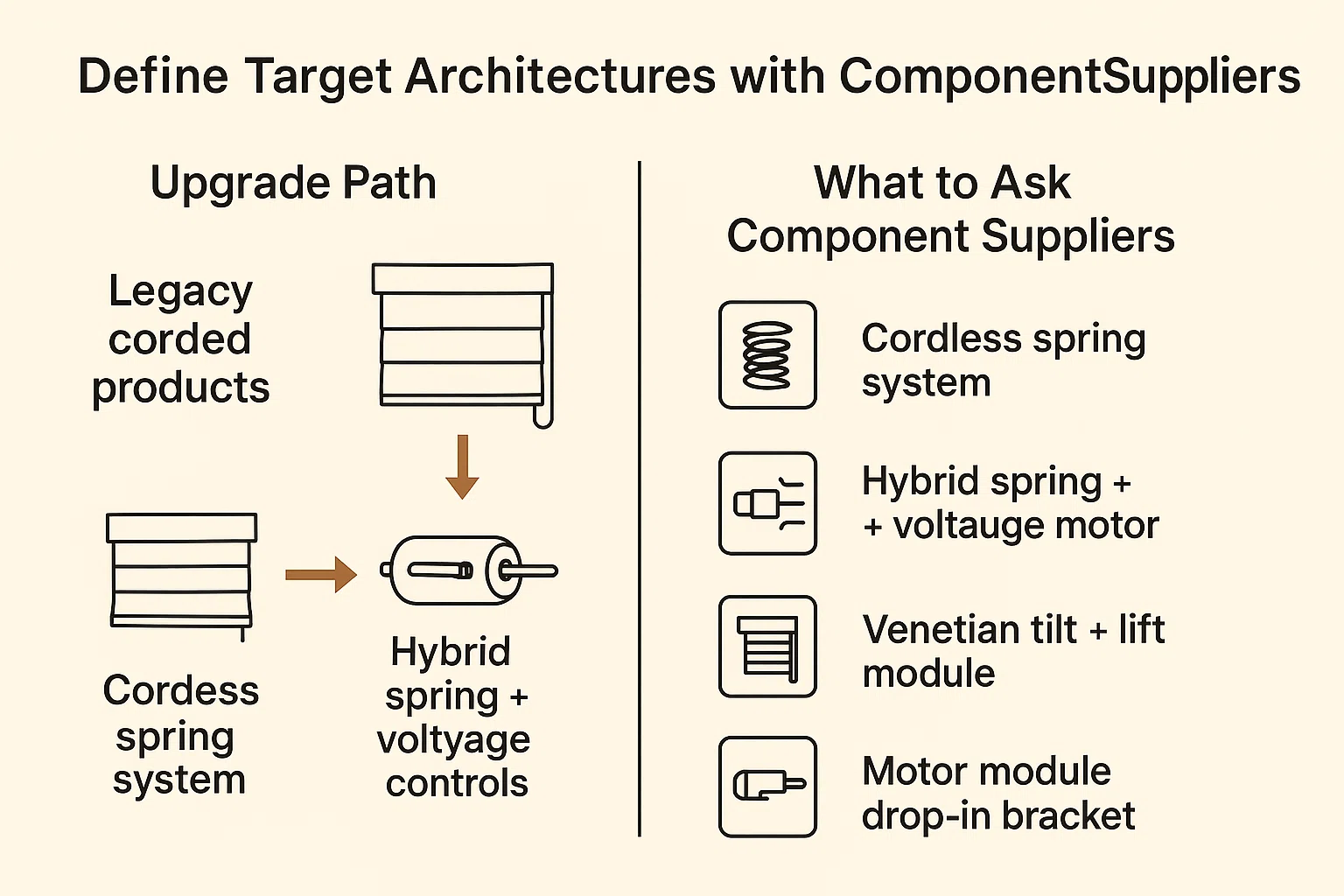
3.1 Choose the Right Upgrade Path for Each Legacy Line
Typical upgrade directions include:
- Corded → Cordless spring system
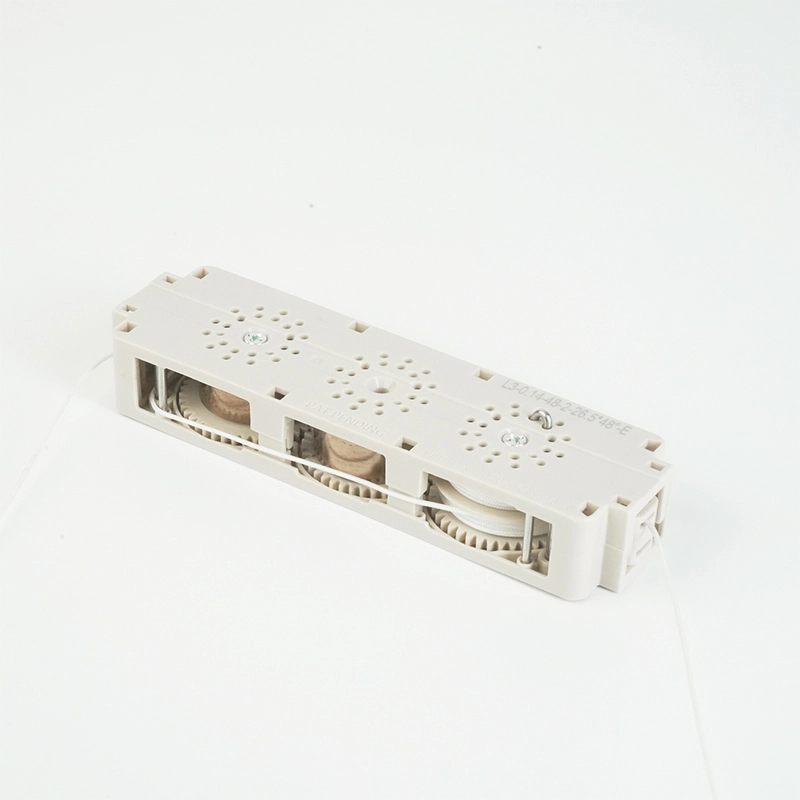
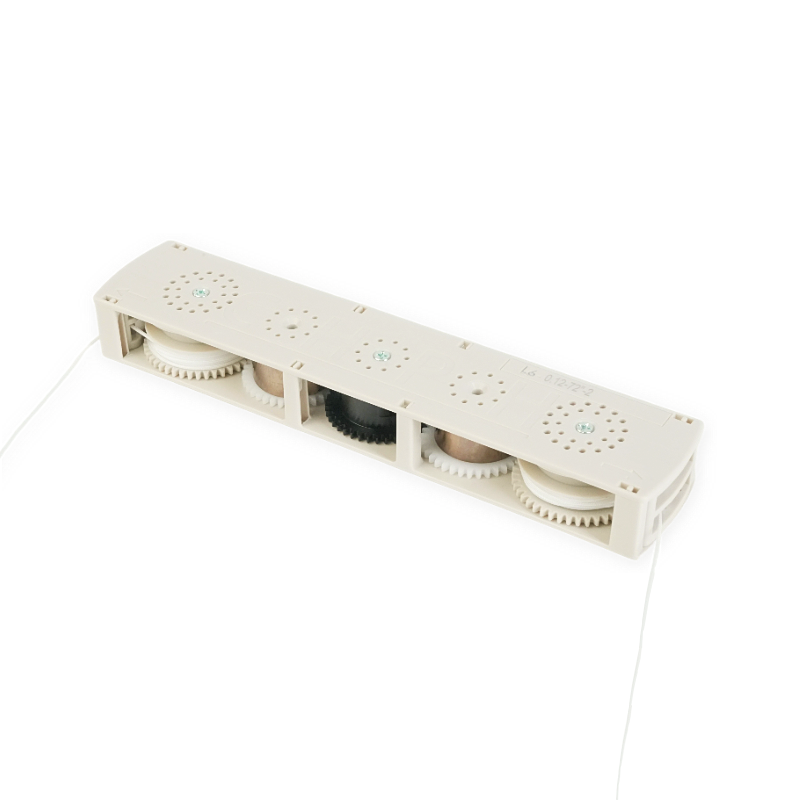
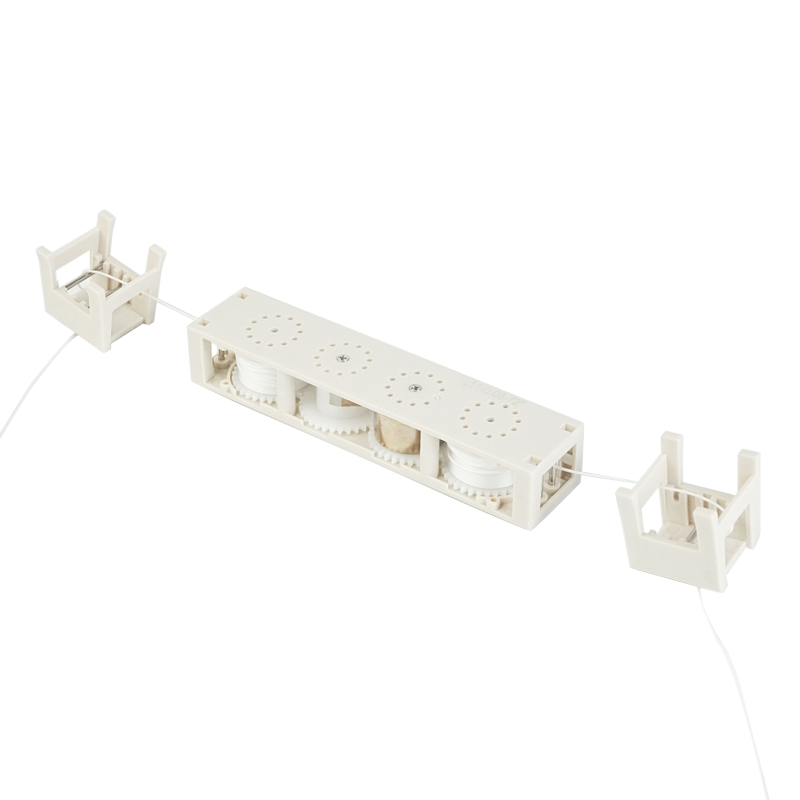
For roller, zebra, honeycomb and faux-wood, an in-headrail spring module with integrated brake can replace exposed cords. - Corded → Hybrid spring + low-voltage motor
Spring balance protects against drop and uncontrolled motion; the motor adds convenience and scenes. - High-risk cords → Inaccessible or tensioned controls
For lines that cannot immediately go fully cordless, interim solutions may use tensioners, break-away connectors or wand actuation to reduce entanglement risk.
3.2 Ask Suppliers for Mechanism Options, Not Just Parts
A strong component supplier should be able to propose complete mechanism concepts instead of isolated parts:
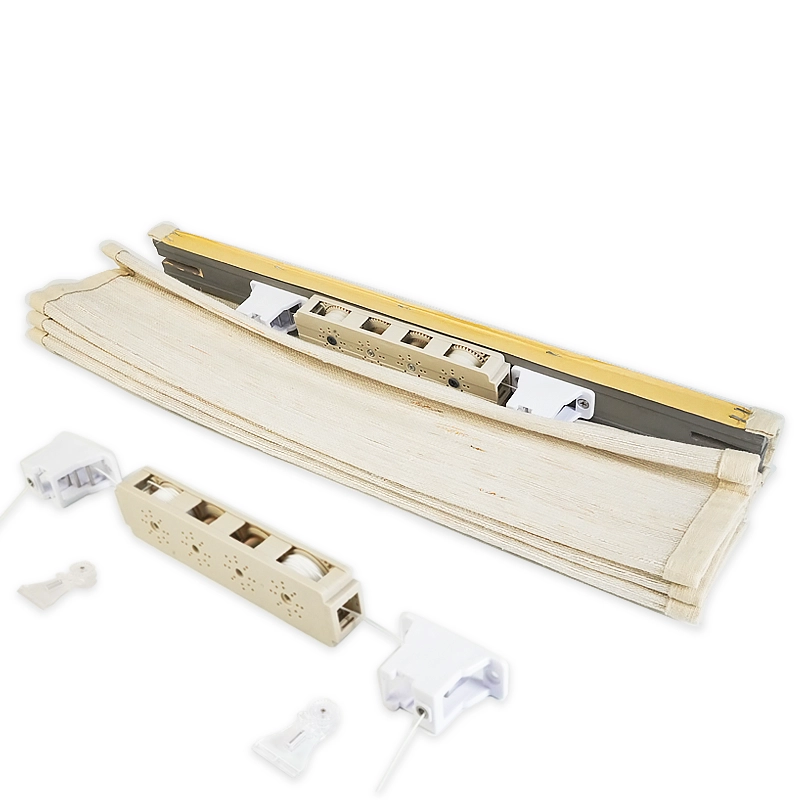
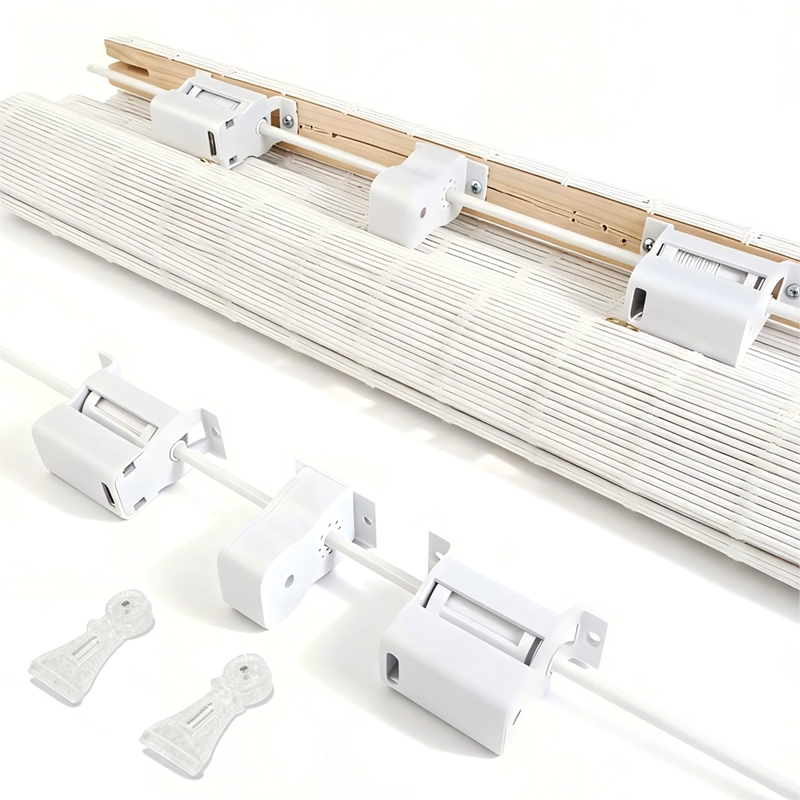
- Cordless spring box kits matched to your headrail and tube sizes.
- Top-down bottom-up lift systems compatible with your existing fabrics.
- Venetian blind spring tilt and lift combinations that remove external cords.
- Motor modules and brackets that drop into your current profiles with minimal re-tooling.
At this stage, share your target specs openly: max blind size, fabric weights, desired operating force, noise targets, and any specific compliance standards you must hit in North America or Europe.
4. Step 3 — Validate Supplier Capability for Safety-Critical Upgrades
Upgrading legacy lines is only as safe as the validation discipline behind the hardware.
Before locking in a supplier as your upgrade partner, look beyond price lists and sample boards.
4.1 Technical & Testing Questions to Ask
- Can they provide torque or force curves over the full spring stroke with tolerance bands?
- What cycle-life has been validated at your typical fabric load (e.g. ≥10,000 / 20,000 / 30,000 cycles)?
- How do they test hold-at-position and maximum rebound speed to avoid “snap-up” near the top stop?
- Do they simulate different fabric densities and widths, or only a “standard sample”?
- Which standards do their designs typically support (e.g. child-safety norms in your target markets)?
4.2 Materials, Process Control & Traceability
For legacy upgrades, consistency is as important as performance. A one-off good batch does not protect your brand.
You want suppliers who can explain:
- Spring materials (e.g. high-fatigue spring steel, 301/304 stainless) and heat treatment controls.
- Housing and gear materials (e.g. POM, PA6/PA66 with UV stabilizers) and lubrication strategies.
- Batch-level traceability for critical parts and assemblies.
- Which quality systems are in place (e.g. ISO 9001) and how often process audits are performed.
4.3 Documentation & Change Management
When you migrate legacy lines, documentation matters. Ask if the supplier can support you with:
- Technical drawings and BOMs for the new mechanism kits.
- Installation and adjustment instructions for factories and installers.
- Change-control procedures, so any future material or geometry change is tracked and re-validated.
5. Step 4 — Plan the Upgrade Program with Clear Phases
Treat your legacy-to-cordless migration as a multi-phase program, not a single purchasing event.
A simple roadmap shared with your component supplier keeps expectations aligned.
| Phase | Focus | Key Actions with Supplier |
|---|---|---|
| 1. Concept & Risk Review | Define upgrade scope and safety targets. | Share legacy designs, risk map, target markets and size ranges. |
| 2. Engineering Sample Stage | Prototype new mechanisms. | Request spring/torque data, build sample blinds, conduct internal tests. |
| 3. Lab & Field Validation | Verify safety and usability. | Run cycle tests, abuse tests, and field pilots in real homes with kids/pets. |
| 4. Production Roll-Out | Scale to factories & channels. | Train lines, lock specs, update packaging, marketing and instructions. |
| 5. Continuous Improvement | Monitor and refine. | Collect complaint data, run periodic re-tests, plan further upgrades. |
5.1 Use Pilot SKUs Before Full Conversion
Instead of flipping an entire range overnight, select a pilot group of SKUs that represent typical sizes and fabrics.
Run these through full lab testing and a limited market trial.
Involve the supplier in de-brief calls to refine spring torque, stop positions and installation steps before broad roll-out.
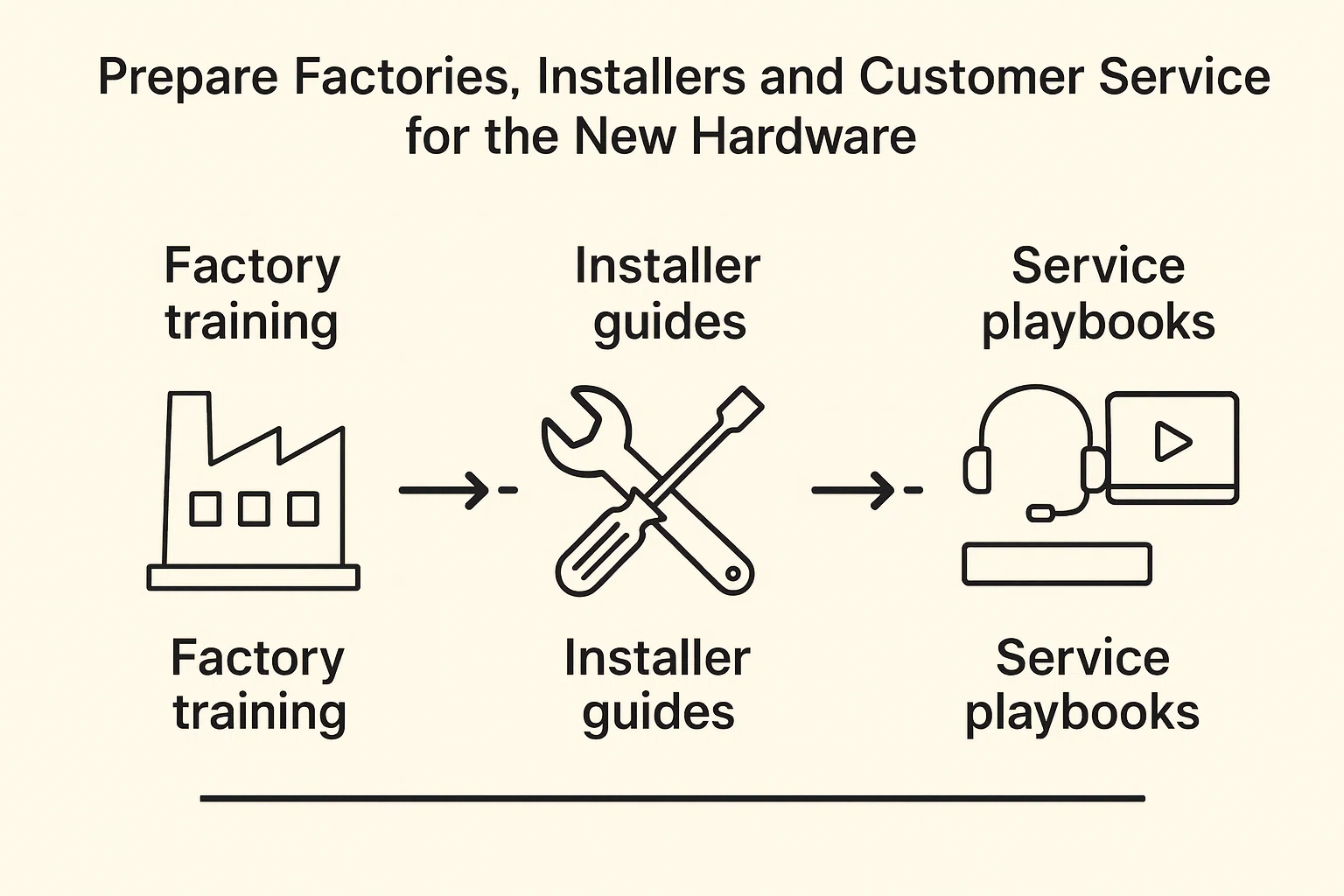
6. Step 5 — Prepare Factories, Installers and Customer Service for the New Hardware
A safe design can still fail in the field if your production and service teams are not ready.
When you work with component suppliers on legacy upgrades, ask for support across the full value chain:
- Factory training: how to assemble, pre-tension and adjust the new mechanisms.
- Installer guides: clear instructions for cutting to size, mounting, and setting limits in customers’ homes.
- Service playbooks: how customer service should respond to “too tight / too loose / snaps up” complaints.
Consider launching internal knowledge pages or short video clips built from your supplier’s materials.
This reduces variability and keeps the upgraded line performing as designed.
7. Common Pitfalls When Upgrading Legacy Lines with Component Suppliers
Even experienced brands can hit avoidable problems during safety-driven upgrades. Watch out for:
- Choosing only by price: A low-cost spring box without verified data might work in a showroom sample but fail after a few thousand cycles in the field.
- Ignoring extremes: Mechanisms tuned for “average” sizes may struggle at maximum widths or with heavier blackout fabrics.
- Under-testing rebound: A blind that “snaps up” the last 20 cm may technically lift, but it is not child-friendly or safe around pets.
- No change control: If your supplier changes grease, plastic grade or spring coating without joint re-validation, your field performance may suddenly shift.
- Forgetting internal communication: Sales may continue to sell legacy corded SKUs into child-sensitive applications if the upgrade plan is not explained clearly.
8. Building a Long-Term Safety & Upgrade Roadmap with Your Suppliers
Legacy upgrades are rarely “one and done”. Regulations evolve, retailers tighten policies, and new control technologies emerge.
The component suppliers you choose today should be able to support:
- Platform thinking: shared headrails and spring platforms that can evolve from manual cordless to motorized without full re-tooling.
- Global compatibility: designs that can be tuned for different regional norms while sharing as many components as possible.
- Data-driven refinement: the ability to turn customer feedback and complaint statistics into improved spring curves and mechanism tweaks.
If you treat suppliers as engineering partners in child and pet safety, not just part vendors,
your legacy upgrade program becomes a competitive advantage instead of a painful obligation.
FAQ — Upgrading Legacy Product Lines with Component Suppliers
Q1. Where should we start if we have many legacy corded products?
Begin with a simple portfolio and risk map. Prioritize SKUs that combine corded controls with
high exposure in homes with children or pets. Then pick a small representative group of SKUs as a pilot
and involve your component supplier early to propose suitable cordless or hybrid architectures.
Q2. How much technical information should we share with component suppliers?
The more accurate your information, the safer the upgrade. Share fabric weights, typical sizes, usage scenarios,
and target markets. This allows suppliers to tune spring torque, brake design and materials for real-world conditions,
not just lab samples.
Q3. What if our factories are used to corded systems and fear complexity?
Ask suppliers to provide clear assembly guides, pre-tension procedures and training sessions.
Modern cordless modules are often designed as drop-in cores that require fewer manual steps than old cord ladders and clutches.
A short learning curve is normal, but complexity should not increase dramatically if the mechanism is well-designed.
Q4. How do we know if a supplier’s cordless solution is truly safe for children and pets?
Look for verified test data (cycle-life, torque curves, rebound speed) and third-party test reports relevant to your target markets.
Then run your own field pilots in real homes with kids and pets, collecting feedback on operation, speed and ease of use.
A safe design should feel intuitive and controlled for any user, including grandparents and older children.
Q5. How can we manage cost while upgrading to safer mechanisms?
Work with suppliers to create shared platforms that cover multiple blind sizes and fabrics, reducing SKU complexity.
Start with your highest-risk, highest-volume legacy lines to spread tooling and development cost over more units.
Over time, safer cordless lines can open new channels and reduce complaint and service costs, improving the total business case.
Field Insight — How Leading Brands Approach Legacy Upgrades
In practice, brands that manage legacy upgrades successfully tend to share a few habits:
- They treat component suppliers as safety partners, bringing them into discussions early when mapping product risk.
- They upgrade in structured phases, with engineering samples, lab validation and real-home pilots before mass conversion.
- They insist on data — torque curves, cycle-life and rebound profiles — instead of relying on subjective “feels OK” tests.
- They train factories and installers proactively, so every blind leaving the line performs as the mechanism was designed.
- They maintain a rolling roadmap, planning further moves from manual cordless to hybrid and fully motorized options as markets evolve.
By combining a clear upgrade roadmap with the right component supplier partnerships, you can turn aging corded
product lines into safe, cordless families that satisfy regulators, retailers and — most importantly —
the parents and pet owners who trust your brand in their homes.