Why Your Component Supplier Choice is Critical for Pet & Child Safety
Quick Summary — For Brands, Buyers & Product Managers
Child- and pet-safe cordless window coverings do not start at the finished blind — they start at
the component supplier. The quality of springs, brakes, plastics and lift mechanisms directly shapes:
- Safety outcomes: entanglement risk, uncontrolled drop, and small-part hazards.
- Compliance exposure: ANSI/WCMA A100.1-2018, CPSC 16 CFR 1260, EN 13120 and retailer audits.
- Lifetime performance: force stability, cycle life, noise and field failure rates.
This article explains how to evaluate a component supplier beyond price:
what test data to request, which design details matter, and how to build a
safety-first supply chain for cordless shades, blinds and shutters.
1. Safety Starts Before Assembly: Inside the Headrail
When parents see a cordless blind, they usually look at the fabric and the absence of cords.
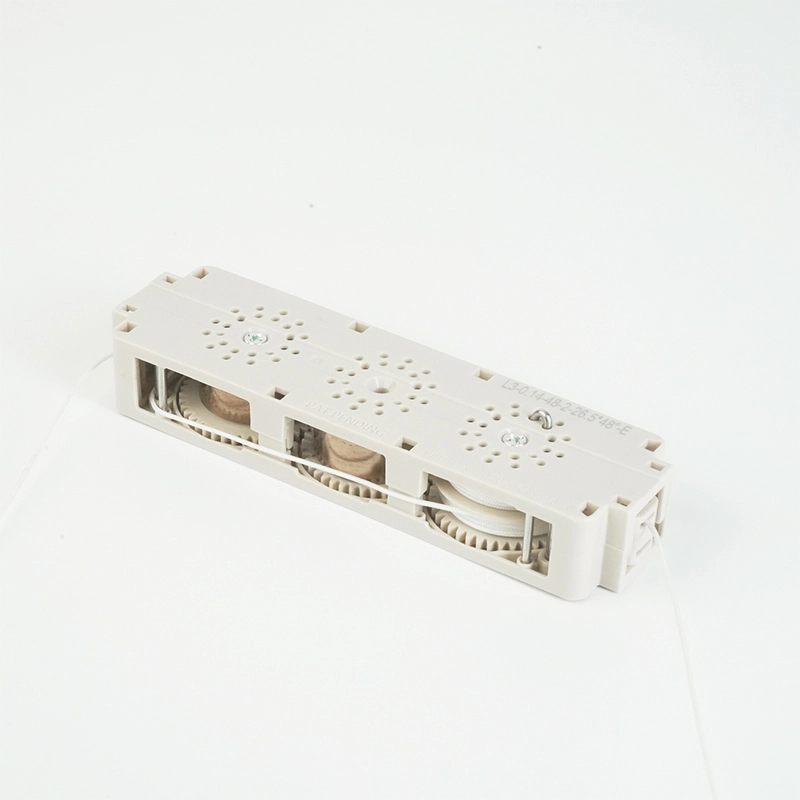
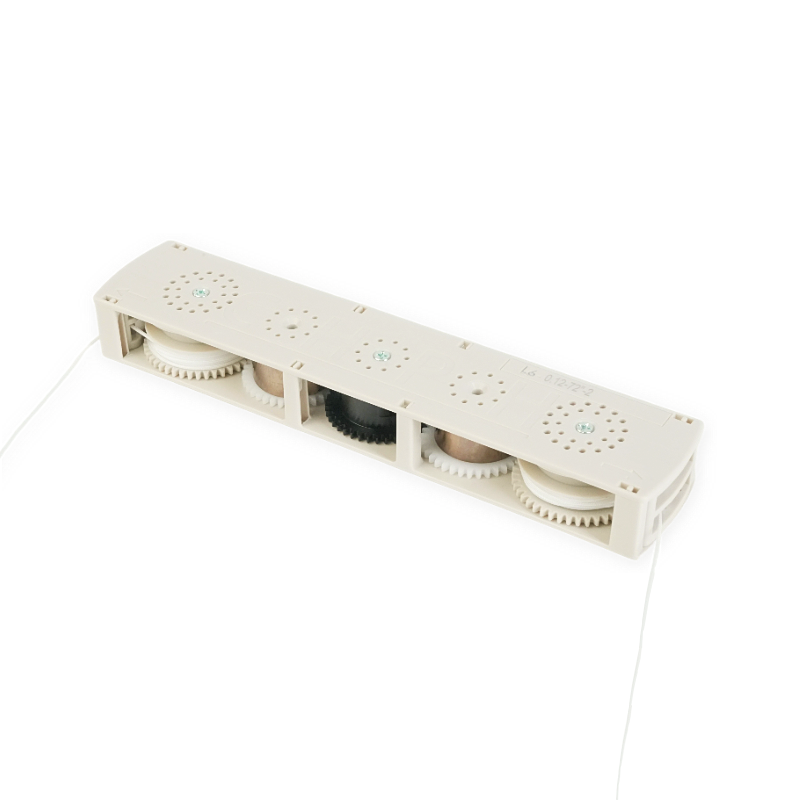
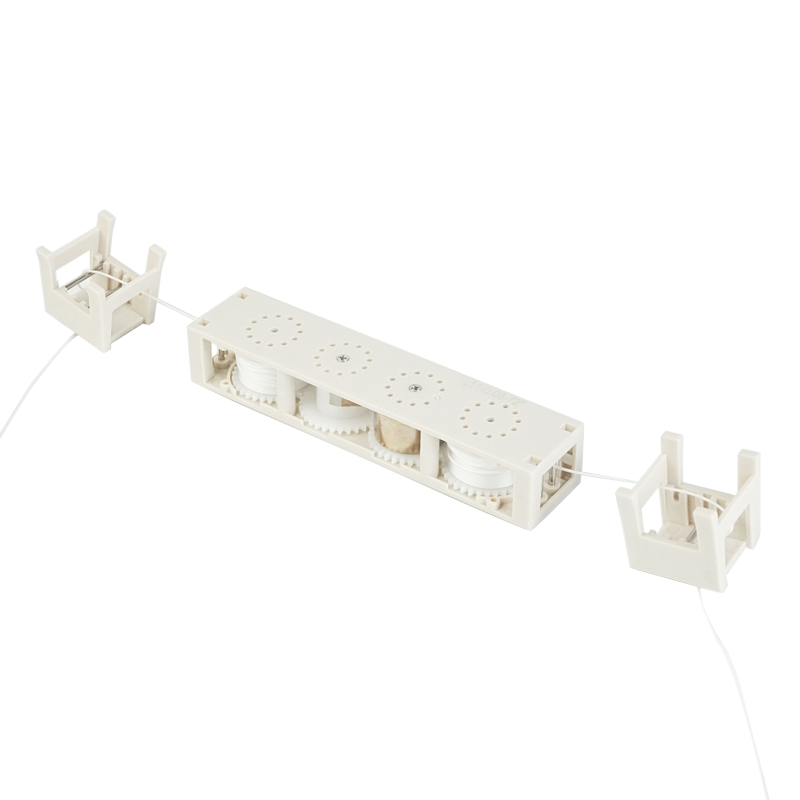
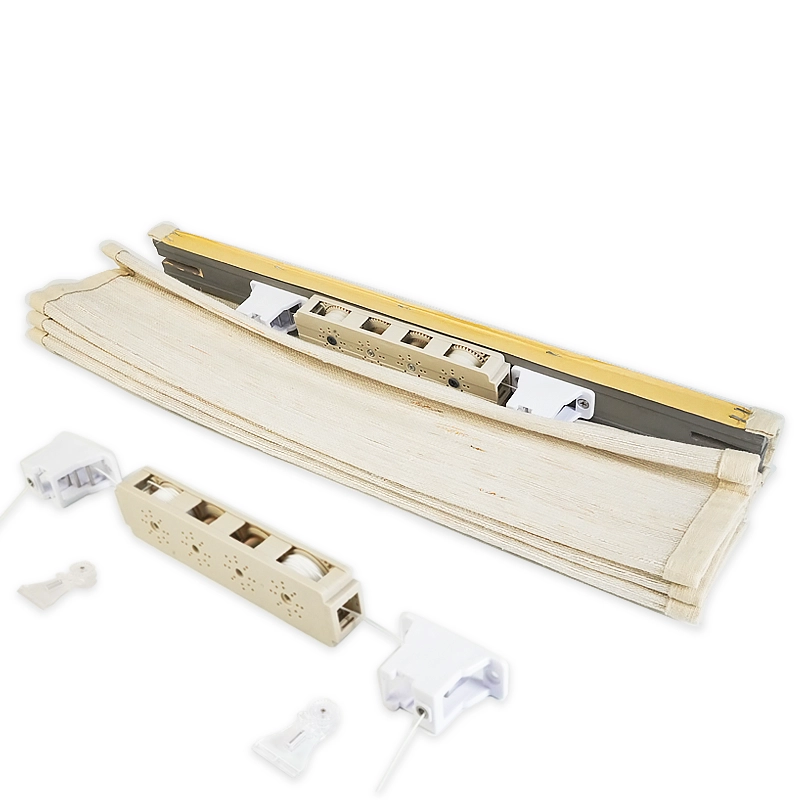
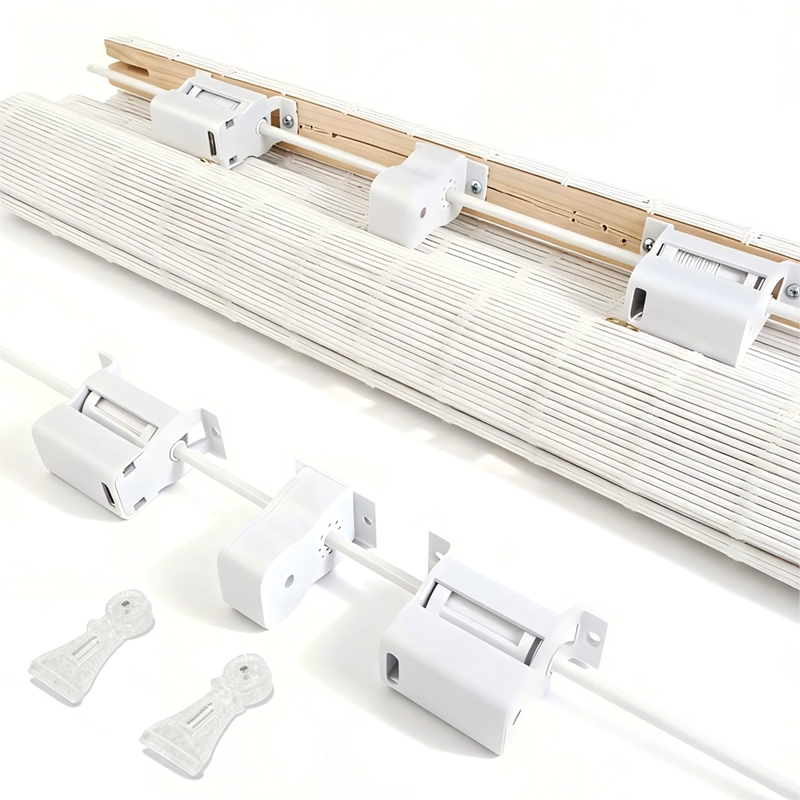
Engineers and buyers know the real story is hidden in the headrail: springs, drums, brakes, brackets,
plastics, tilt rods and bottom rails working together in a tight space.
For pet & child safety, three functions are non-negotiable:
- No accessible cords or loops that can form entanglement hazards.
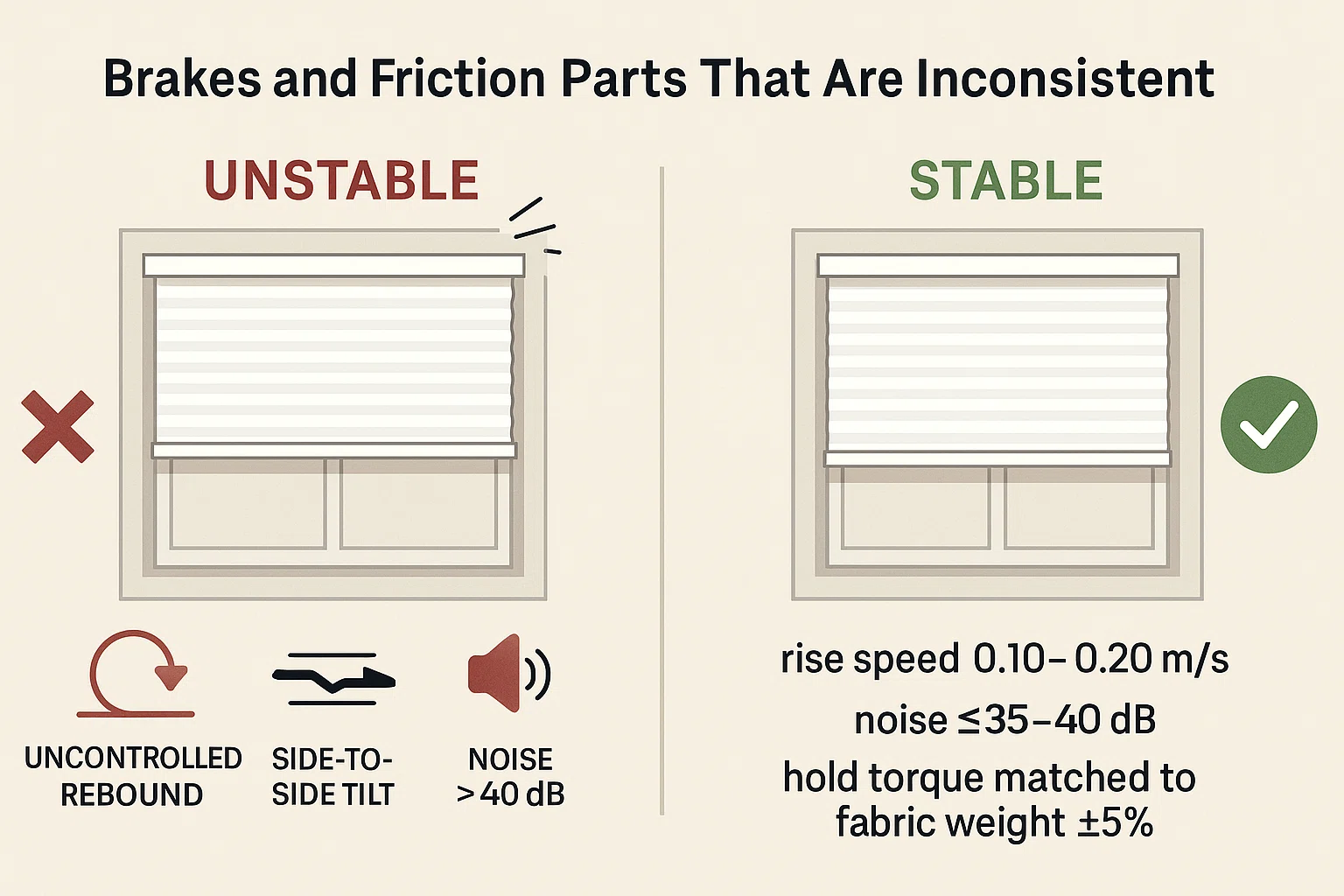
- Controlled motion so the blind cannot snap up or free-fall when released.
- Stable hold-at-any-position so the shade stays where the user leaves it.
Each of these depends on component design and manufacturing quality: the torque curve of the spring,
the friction in the brake, the strength of the plastic housings, and the way all parts are assembled and
tested. A weak link anywhere in that chain eventually shows up as a safety incident on site.
:contentReference[oaicite:0]{index=0}

3. How Component Choice Connects to Global Child-Safety Standards
Global regulations and voluntary standards do not only target finished blinds; they implicitly assume
that internal components are engineered to behave within controlled ranges over their lifetime.
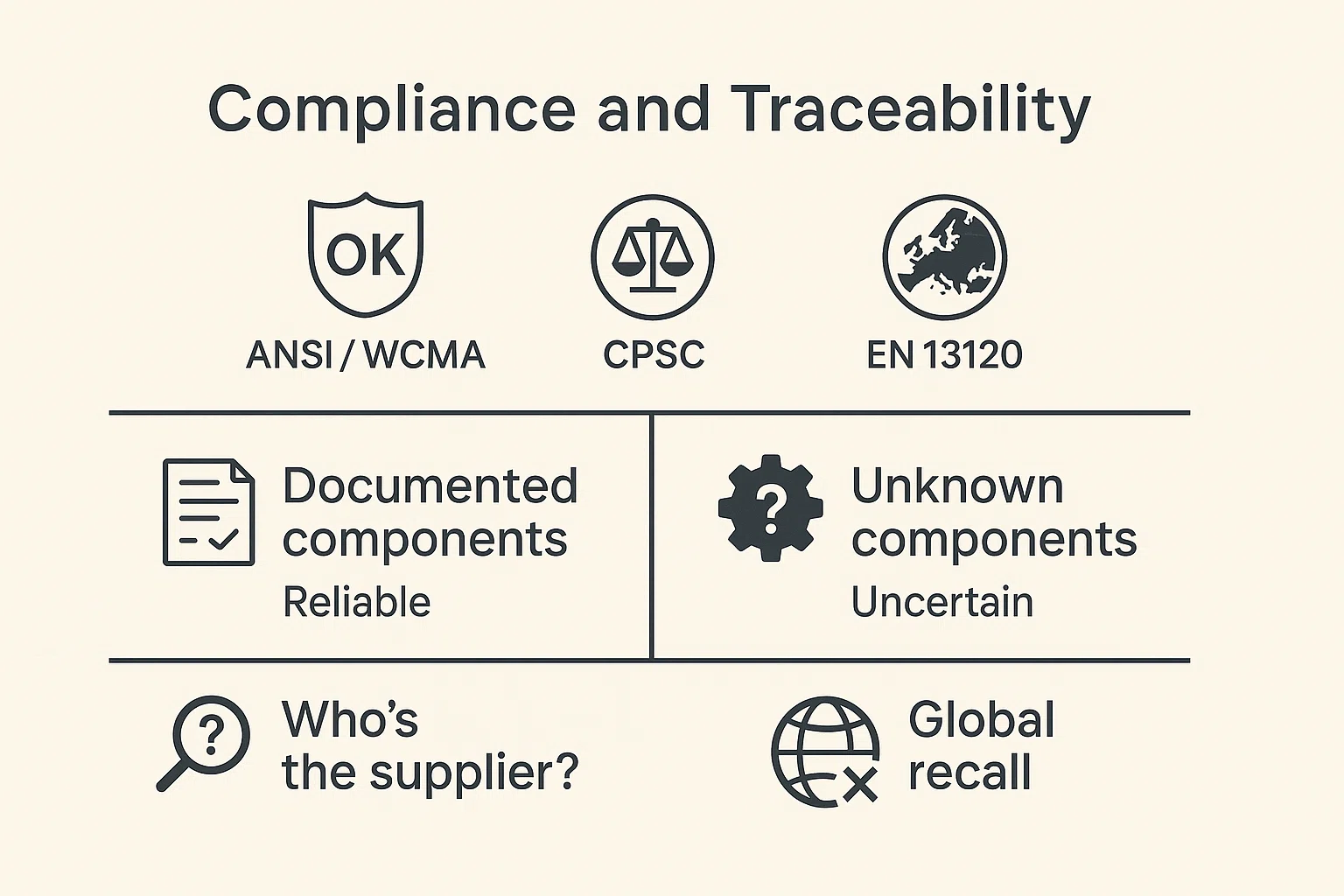
- ANSI/WCMA A100.1-2018 & CPSC 16 CFR 1260 (U.S.) — push the market toward
cordless or inaccessible-cord designs for stock products. - EN 13120 and related EU norms — specify safety requirements, testing and information for
internal blinds. - Retailer and marketplace policies (large DIY chains, online platforms) — often go beyond the legal
minimum, requiring documented testing and recall-prevention measures.
If springs, brakes and housings are sourced from suppliers without documented cycle-life, force stability,
material traceability and chemical compliance, it becomes extremely difficult to prove that the finished blind
truly meets these frameworks over time.
In a recall or incident investigation, auditors will eventually ask:
“Who designed the mechanism? Who produced the spring? Where is the evidence?”
Being able to point to a safety-focused component supplier, with test reports and traceable batches, can
be the difference between a limited correction and a brand-damaging global recall.
4. What to Ask Your Component Supplier Before You Trust Them with Child Safety
Price, lead time and MOQ are not enough. For pet & child safety, procurement teams should treat
component suppliers almost like system co-engineers.
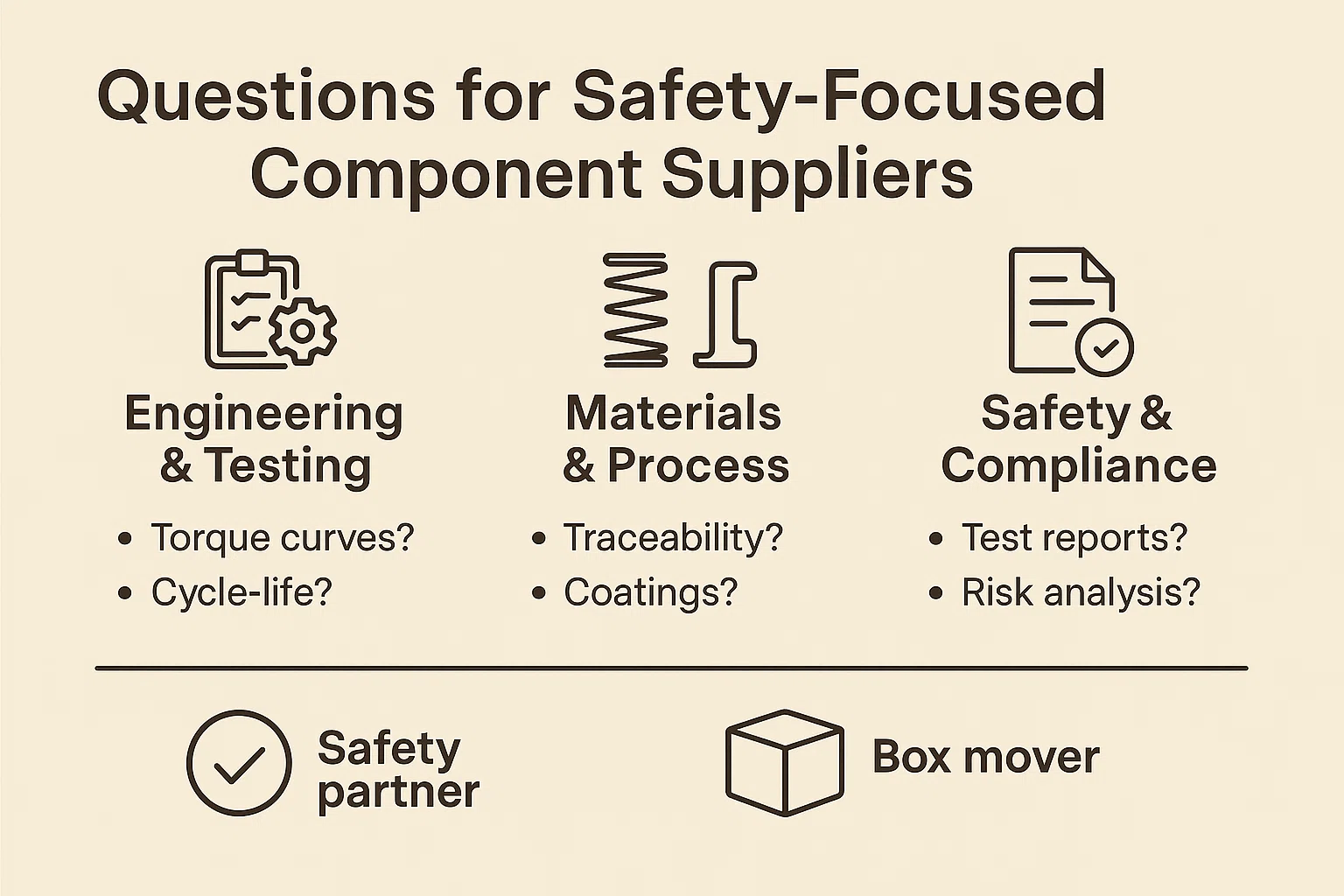
4.1 Engineering & Test Capabilities
- Do you provide torque / force curves for springs and mechanisms
over the full stroke, with tolerance bands? - What is the validated cycle-life? (e.g., ≥10,000 / 20,000 / 30,000 cycles at defined fabric loads.)
- How do you test hold-at-position performance and maximum rebound speed?
- Can you simulate different fabric densities and widths, not just “standard” cases?
4.2 Material & Process Control
- Which materials are used for springs, gears, housings and brackets?
Are they spring steel / 301 or 304 stainless, POM, PA6/PA66 with UV stabilizers, etc.? - Is there batch-level traceability for heat treatment, surface coating and assembly?
- What surface treatments are used to control friction, corrosion and noise?
- Which quality system is in place (e.g., ISO 9001) and how often are process audits performed?
4.3 Safety & Compliance Documentation
- Can you provide test reports aligned with ANSI/WCMA, CPSC, EN 13120 or major retailer protocols?
- Do you offer risk analyses and FMEA at component or mechanism level?
- What is your field-failure feedback loop? How do you react if a customer reports an incident?
A genuine safety partner will welcome these questions and often bring their own checklist.
A “box mover” will try to change the subject back to price.
5. Example Specifications that Matter for Pet & Child Safety
The exact numbers will vary by product type (roller, zebra, honeycomb, faux-wood blinds), but a typical
cordless lift mechanism for family environments should sit in ranges similar to the table below.
Use it as a reference when reviewing datasheets and supplier proposals.
| Parameter | Recommended Safety-Focused Range | Why It Matters for Children & Pets |
| Cycle life (full up/down) | ≥ 10,000–30,000 cycles | Ensures stable behavior over years of daily use, not just in lab samples. |
| Force attenuation | ≤ 10% loss after rated cycles | Prevents stalled blinds and unexpected changes in handling force. |
| Rise speed (full height) | 0.10–0.20 m/s | Fast enough for convenience, slow enough to avoid “whip” and impact at the headrail. |
| Max pull force | ≤ 30 N at design width | Children and elderly can operate the blind without excessive effort. |
| Noise level | ≤ 35–40 dB | Comfortable for nurseries and bedrooms; excessive noise hints at friction or misalignment. |
| Operating temperature | -20 °C to +60 °C | Covers typical home and light-commercial environments without material brittleness. |
| Key materials | Spring steel / 301/304 SS, POM, PA, UV-stabilized plastics | Reduces risk of corrosion, cracking and small-part breakage around children and pets. |
When a supplier can discuss and document these values, you are no longer buying “parts” — you are buying
safety performance.
6. Building a Safety-First Component Supply Chain
Moving beyond the part means restructuring how your organization thinks about components, from RFQ to
after-sales.
6.1 Integrate Component Engineers into Product Planning
Involve the cordless mechanism supplier early, when you define target sizes, fabrics and markets:
- Share width × drop ranges, fabric densities and targeted markets (U.S., EU, others).
- Ask for pre-tension recommendations, torque bands and compatibility notes.
- Lock safety-critical parameters into specifications before marketing promises reach the public.
6.2 Align Quality, Legal and Marketing Around the Same Safety Story
Component suppliers sit in the middle of your internal stakeholders:
- Engineering needs validated force curves and drawings.
- Quality & legal need test reports, traceability and incident procedures.
- Marketing wants to promise “cordless,” “child-safe” and “pet-friendly” with confidence.
A mature supplier can provide documentation that serves all three groups, reducing friction and
speeding up launches without compromising safety.
6.3 Create Feedback Loops from the Field
No test lab can fully replicate real homes. Encourage installers, retailers and end-users to log
field feedback:
- Blinds that slow down, jam or tilt after months of use.
- Incidents involving children, pets or unusual environments (e.g., coastal humidity).
- Patterns of failure tied to specific sizes or fabrics.
Then share anonymized data with your component supplier. A partner that cares about safety will treat
this as design input, not as blame.
FAQ — Component Suppliers & Pet & Child Safety
Q1. We already design cordless blinds. Why does the component supplier still matter so much?
Design intent and real-world behavior are not the same thing. The supplier turns drawings into springs,
brakes and housings with real tolerances, heat treatment, coatings and assembly processes.
If those are poorly controlled, the blind may start safe and gradually drift into unsafe behavior
(jamming, tilting, uncontrolled motion) long before your expected lifetime.
Q2. What minimum documentation should I request from a safety-critical component supplier?
At a minimum: force / torque curves with tolerances, cycle-life test reports, material datasheets,
basic FMEA or risk analysis, and evidence of alignment with relevant standards (ANSI/WCMA,
CPSC, EN 13120, or retailer protocols if applicable). For large programs, batch-level
traceability and corrective-action procedures are equally important.
Q3. How do I know if a spring or mechanism is suitable for child-facing rooms?
Look at three things together: design (cordless architecture, no accessible loops),
performance data (rise speed, hold-at-position, max pull force, noise, cycle-life) and
field feedback. If the supplier can demonstrate stable behavior over the intended
lifetime with realistic fabric loads, and you have no negative incident history, the mechanism
is a stronger candidate for nurseries and children’s rooms.
Q4. Are “low-cost” components always unsafe?
Not necessarily, but unexplained low prices are a red flag. A supplier that can still show full test data,
traceability and compliance at a competitive price has likely optimized their processes.
A supplier that offers only price and lead time may be saving money on materials, heat treatment,
inspection or documentation — all of which surface later as field failures or safety incidents.
Q5. How often should we re-qualify components for safety?
Any significant change — new fabric types, wider blinds, new markets, new coatings or material substitutions —
justifies re-qualification with your component supplier. In addition, many brands run
periodic surveillance tests (e.g., yearly or per batch) on random samples to confirm that performance
remains within the original safety envelope.
Q6. What is the role of pets in safety design?
Pets pull, chew and jump in ways standards do not always fully model. Cordless architecture removes the
most serious entanglement risks, but component quality still matters: a panicked pet should not be able to
rip out an end cap or bottom rail and create sharp edges or loose fragments. That is why material choice,
fastener design and housing strength are part of the safety conversation, not just cord removal.
Field Insight — Turning Component Choices into Real-World Safety
Ask ten parents why they chose cordless blinds, and you will hear the same answer: “for the kids and pets.”
In the background, your component supplier is either supporting that promise — or quietly eroding it.
- Safety is engineered, not assumed. Springs, brakes, plastics and housings define how a blind behaves
on day one and day 2,000. - Data beats slogans. Force curves, cycle-life reports and material traceability are more valuable
than generic “high quality” statements. - Suppliers are partners, not catalogues. Treat critical component makers as part of your safety and
compliance team, not just price points. - Field feedback closes the loop. Installers and users see issues long before spreadsheets do —
bring their experience back into the next design cycle.
When you go beyond the part and choose suppliers who share your commitment to pet & child safety,
every blind you ship becomes more than a product — it becomes a quiet, daily layer of protection in the
homes you serve.