Cordless RV Roller Blinds, Quiet Space on Wheels
Published by DOSRON ·
·
Updated
Quick Summary
Quick Summary
Built for tight van platforms (Iveco, Maxus, Transit), Cordless RV Roller Blinds reclaim aisle space and remove cord hazards. DOSRON pairs a 38 mm patented spring core with an optional 5 V tubular motor to deliver hold-at-any-position, quiet travel, and clean installs. This guide covers RV layout tips, model selection, and spec matrices to help you partition berths, galleys, and wet baths with confidence while keeping kids and pets safe on the move.
- Cordless RV Roller Blinds
- patented roller spring system
- tubular motor option
- child & pet safety
- hold-at-any-position
- retrofit-friendly
- low maintenance
- DOSRON
1. Why Cordless RV Roller Blinds Matter
If you travel in a compact camper van, you already know the daily choreography: slide a box, pivot a seat, lift a hatch, squeeze past the galley. Any solution that removes swing arcs, dangling cords, and hard edges buys back precious centimeters and peace. That’s exactly what Cordless RV Roller Blinds do. Instead of hinged doors or noisy accordion partitions, a spring-balanced blind glides along the opening, parking flush without monopolizing the aisle. The result is a cabin that feels bigger, operates quieter, and adapts from “mobile living room” to “private sleeping nook” in seconds.
Unlike residential shades, RV partitions live with vibration, grade changes, abrupt braking, and the occasional gravel road. A corded product adds nuisance and risk: cords snag backpacks, tempt pets, and dangle within toddler reach. By moving the lift function inside the tube and using a precision spring to counterbalance panel weight, the DOSRON approach removes the cord entirely and lets you control the blind via the bottom rail—or via a small 5 V tubular motor if you want hands-free convenience.
1.1 RV-Focused Design Pillars
- Cordless by design: No dangling cords near bunks or pet zones. Nothing to catch on jackets, camera straps, or cookware. Nothing to rattle.
- Hold-at-any-position: Set the blind to ventilate steam after showers, block cabin light for naps, or just hide the galley clutter. The spring’s torque profile and friction guidance keep it steady without drift.
- Smooth & quiet: Damped travel and tuned rebound reduce “bounce-back” when you pull down quickly. Night arrivals and pre-dawn departures stay discreet.
- Retrofit-friendly: Manual builds require no wiring. Motorized builds run on 5 V USB power, a common rail in most vans, or a power bank/solar charger for off-grid independence.
- Service-light: No belts, clutches, or wall switches to chase. Periodic dusting of guides and seals keeps motion smooth.
 |
 |
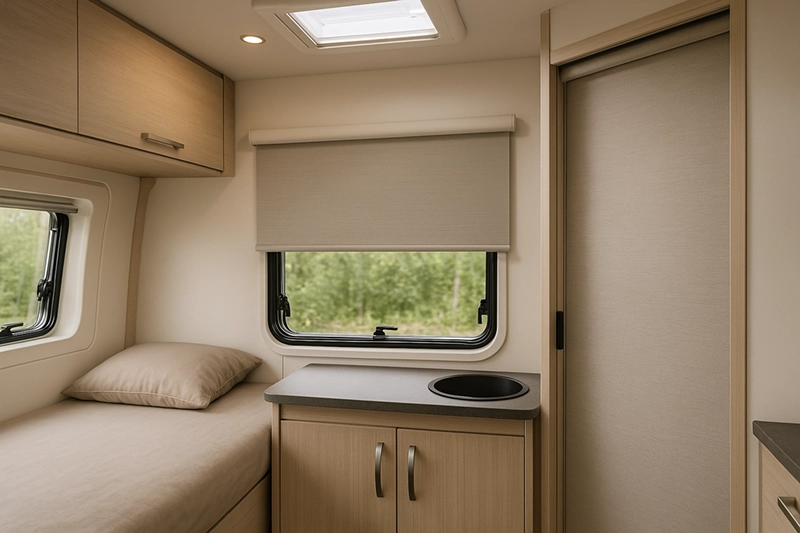
Cordless partitions that save aisle space and cut noise in motion
2. System Architecture: Spring Core, Optional Motor Assist
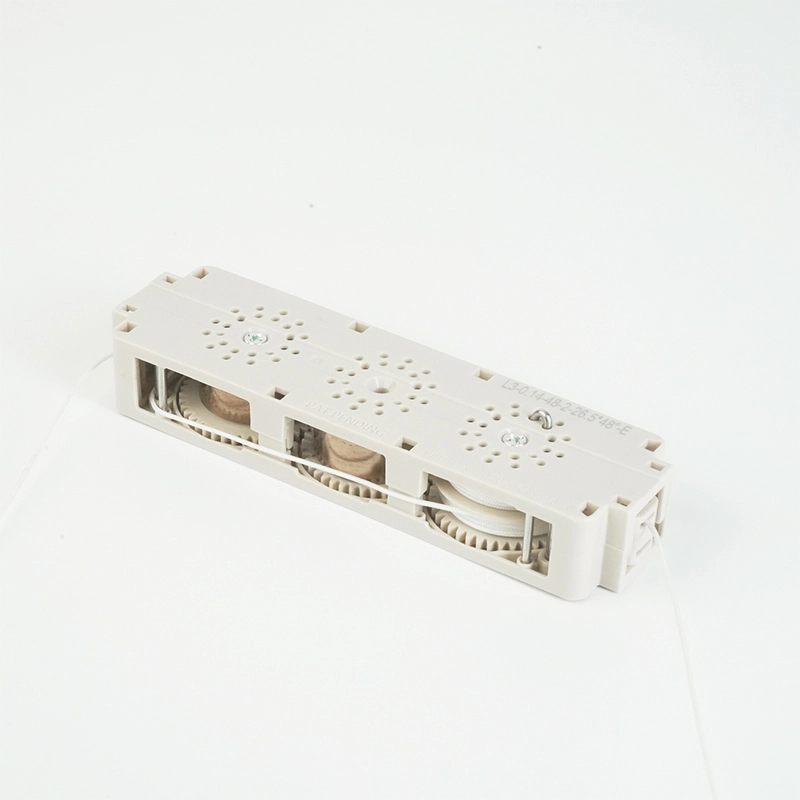
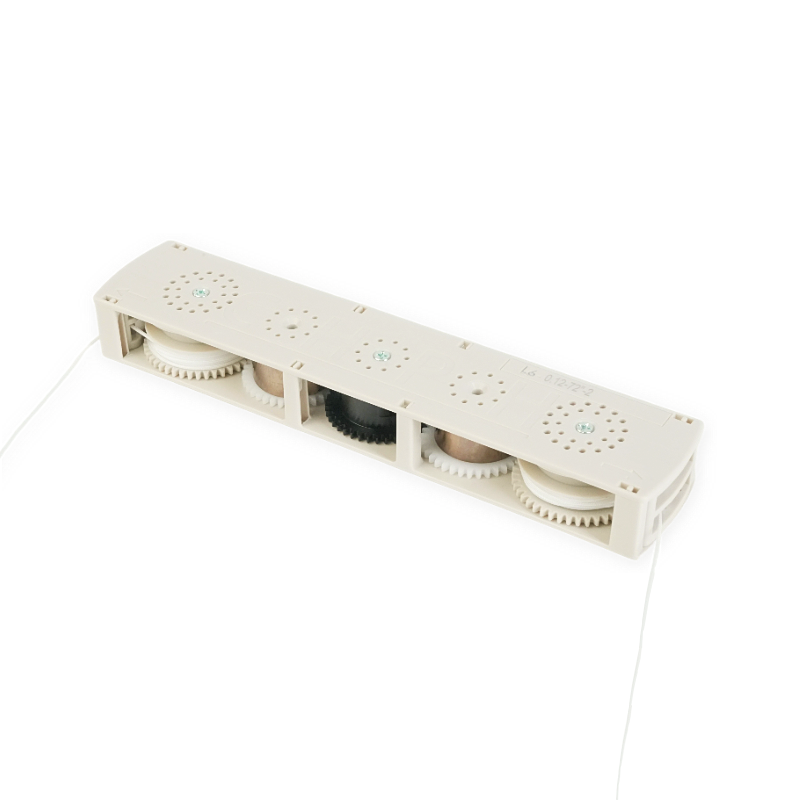
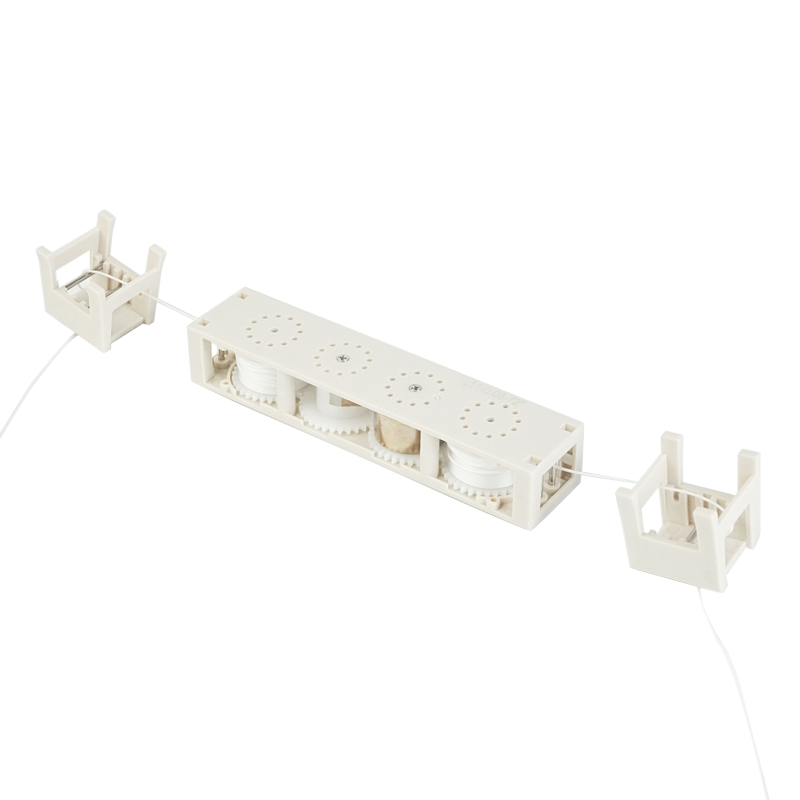
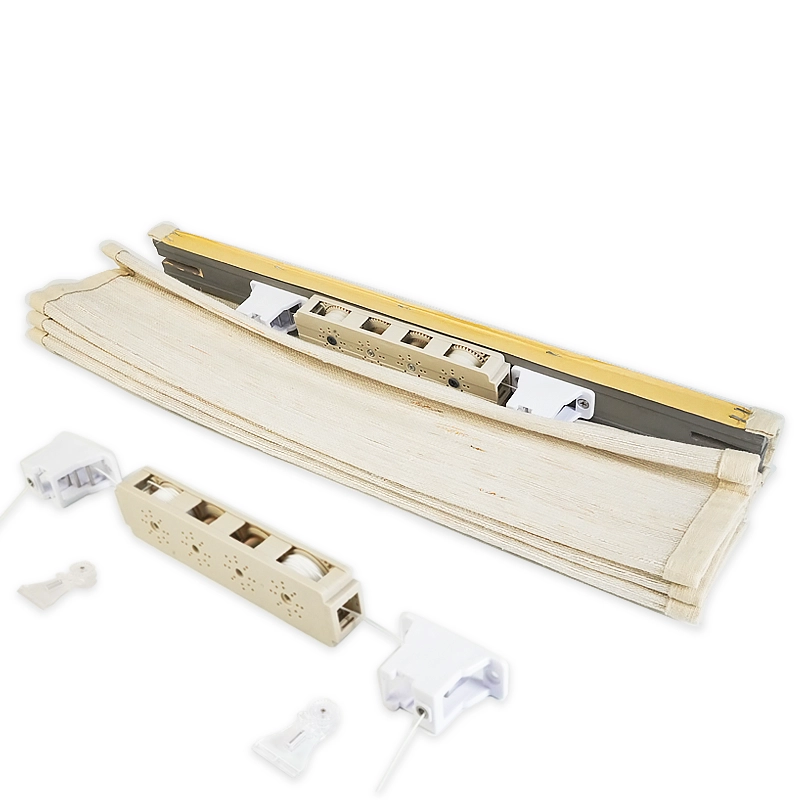
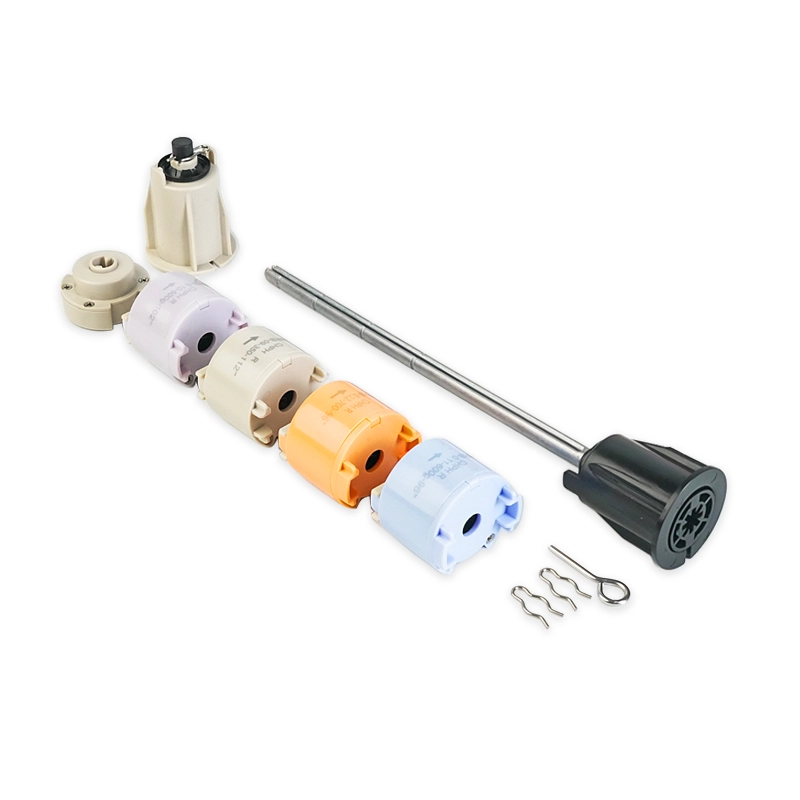
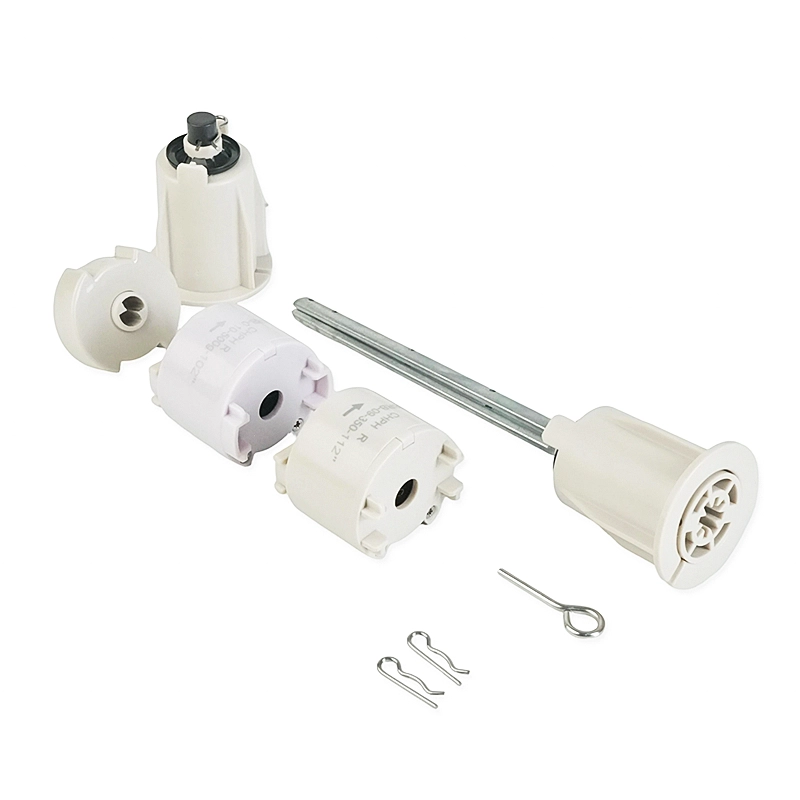
At the heart of DOSRON’s RV solution is a 38 mm patented spring architecture that stores energy as the blind lowers and releases that energy during lift. Because the spring’s torque varies through its travel, our geometry and internal friction guidance are tuned to counter the mass of common RV partition fabrics or panels. The result is an intuitive “push up / pull down” experience: even a child can position the blind and it stays put—no click-stops, no cords, no hard slams.
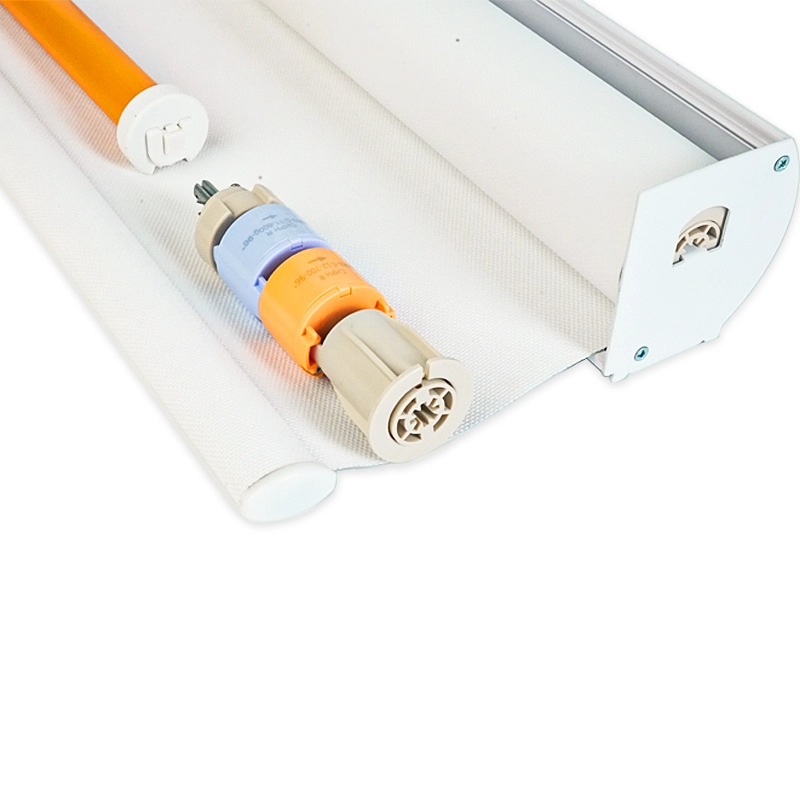
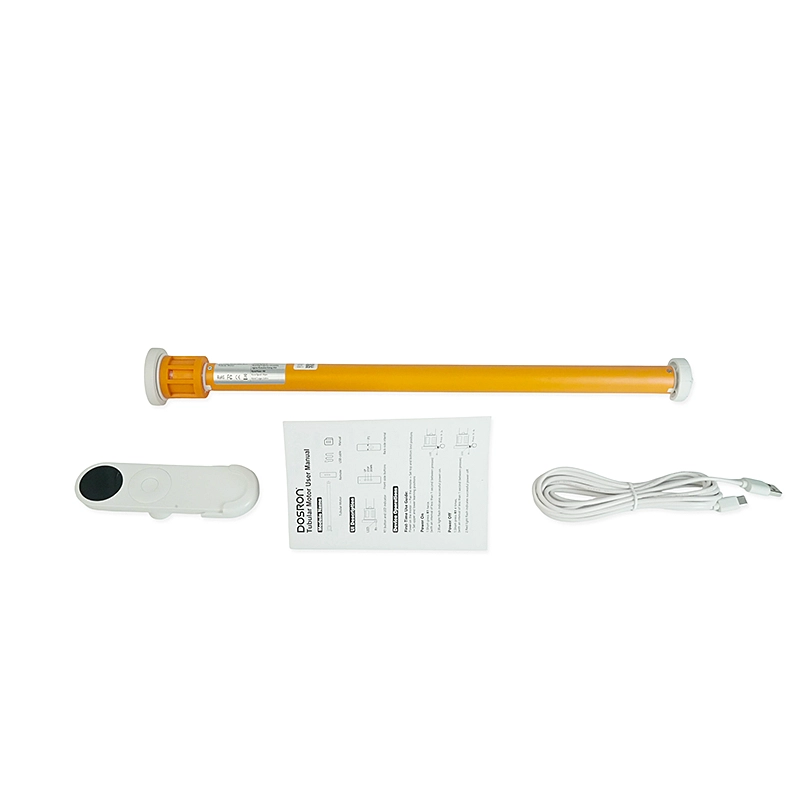
For layouts that demand remote or hands-free use—think wet-bath door when your hands are occupied or late-night privacy without crossing the cabin—an integrated 25 rpm tubular motor adds a quiet assist. Unlike 12 V automotive accessories that require wiring runs and fuse taps, this motor is a 5 V device: it charges from a USB port, a power bank, or a small solar panel. It keeps standby for months, and a brief top-up restores full operation. Because the spring still carries the bulk of the weight, the motor uses minimal power and benefits from long battery life.
2.1 Balance, Damping & Fine-Tuning
- Pre-tension: During installation, set spring turns so the blind holds at mid-drop with the intended panel material (PVC, frosted acrylic, privacy fabric). A quick bench test before mounting saves rework.
- Guidance: Keep the tube and brackets coaxial. Even slight skew increases side-friction and noise over washboard roads. In tight shells, a 1–2 mm spacer behind one bracket often perfects alignment.
- Damping: Our guided-friction approach controls rebound at the top stop and prevents creeping at rest—useful on sloped campsites where gravity would otherwise tug the blind.
- Seals & brushes: Add brush or rubber seals at the edge for privacy and dust reduction. They double as noise absorbers and improve the “solid door” feel.
- Latching: In transit, pair the bottom rail with a discreet magnetic catch or hook stop. It releases with a gentle pull and prevents rattle on rough tracks.
 |
 |
3. Specification — Integrated Manual & Motorized Option
The table below summarizes the integrated manual/motorized tubular-motor option commonly paired with DOSRON’s spring systems in RV builds. This hybrid approach keeps the system usable even when power is low: you can still lift and lower manually because the spring carries the mechanical workload.
| Specification | |
|---|---|
| Product name | Integrated Manual and Motorized Tubular Motor For Roller Shades |
| Motor material | Metal+Nylon |
| Spring material | POM+zinc alloy die-castings+301 stainless steel spring |
| Battery | 2pcs 2500mAh 18650 Lithium batteries |
| Charging methods | power adapter, power bank, solar panel |
| Run time | 240 days turn on/off twice per day |
| Standby time | 450 days |
| Tube Size | 32mm 38mm 40mm 45mm 50mm |
| Installation Type | Built-in |
| Torque | 0.6nm |
| Rotational speed | 25rpm |
| Rated power (W) | 1.5w |
| Voltage | 5V 2A |
| Protection class | IP44 |
| Control | Manual and remote control, dual functions |
| Customized Service | Yes |
| Place of origin | Xiamen, China |
| Applicable curtain | Roller Shades, Zebra blinds, Shangri-La Blinds |
| Warranty | 5 years |
3.1 38 mm Spring Selection (RV Reference)
Use the matrix to pre-match series, maximum tension, and itinerary (drop) reference for common camper-van doors and partitions. For wet-bath doors with heavier splash-resistant panels, choose the higher-tension models. For berth privacy or galley screening, mid-band tension with soft seals provides the best feel.
| 38 pipe system parameters | |||
|---|---|---|---|
| Series | Spring Model | Maximum Tension | Itinerary reference |
| Roller Blinds A Series | 38RB-09-350 | 350 | 112″-2800mm |
| 38RB-10-500 | 500 | 102″-2600mm | |
| 38RB-11-600 | 600 | 96″-2400mm | |
| 38RB-12-700 | 700 | 96″-2400mm | |
| Zebra Blinds B Series | 38ZB-07-350 | 250 | 96″-2400mm |
| 38ZB-08-350 | 350 | 84″-2130mm | |
| 38ZB-09-400 | 400 | 72″-1830mm | |
| 38ZB-10-450 | 450 | 64″-1620mm | |
| 38ZB-11-550 | 550 | 60″-1524mm | |
| 38ZB-12-700 | 700 | 54″-1370mm | |
4. Everyday Use in RVs
Once installed, operation becomes second nature. For manual blinds, place a hand on the bottom rail: lift to raise, pull to lower. The rail can be customized with a low-profile grip or a soft bumper edge to match your cabinetry. For motorized variants, a small remote or wall pod issues up/down/stop commands; you can also hold the rail and “help” the blind when stealth is needed—the system tolerates manual nudge without complaint.
In family vans, Cordless RV Roller Blinds stabilize routines. Parents can partition a bunk for naps without shutting down the whole cabin. In bad weather, a blind at the galley shields from spray while someone cooks. Late at night, a wet-bath door closes softly without waking everyone. Because there is no cord loop, there is nothing for pets to chew or for toddlers to tug.
| Task | What to Check | Outcome |
|---|---|---|
| Pre-tension | Turns vs. panel height | Stable hold without slip on grades |
| Coaxiality | Tube ↔ bracket alignment | Lower noise, less wear |
| Seals & friction | Brush/rubber strips, rail clearance | Quiet travel, better privacy |
| Latch strategy | Mag-catch or stop-hook | No rattle while driving |
| Motor power (if used) | USB routing / solar top-up | Months-long standby, easy charging |
5. Safety, Installation & Maintenance
Safety in a moving home is a system property—it comes from dozens of little design choices. Cordless RV Roller Blinds contribute by eliminating a hazard vector and by making everyday actions easy enough that you actually use the partition. Below are the field-proven practices that keep builds solid and service-light.
5.1 Built-In Safety Advantages
- No exposed cords: Removes a common entanglement risk. In close quarters, fewer loose items means fewer surprises.
- Predictable stops: Hold-at-any-position stability curbs unintended drops that can startle kids or pinch fingers.
- Low noise: Quiet travel preserves rest and reduces driver fatigue during long days.
- Manual failover: Even in a power hiccup, the spring lets you operate the blind by hand—useful in emergencies.
5.2 Installation Guidance
- Structure first: Anchor brackets to metal frames or properly backed cabinetry. On thin skins, use rivnuts or expansion inserts, not just sheet-metal screws.
- Measure twice, shim once: If the van shell flexes, use shims to maintain alignment across seasons. A 1–2 mm misalignment is audible on rough roads.
- Edge seals: Brush seals tame light leaks and add a professional finish around the blind. In wet-baths, rubber lips stop splash and help with odor control.
- Power routing: Keep USB leads away from slide paths and latches. Where possible, use a right-angle connector with strain relief.
- Bottom-rail safety: For families with toddlers, specify a rounded rail profile. It’s friendlier to knees and elbows in cramped spaces.
5.3 Routine Maintenance
- Quarterly function check: Raise, lower, and hold at mid-drop. Confirm latching and listen for new noises that hint at bracket shift.
- Dust control: Wipe guides and seals with a damp cloth. A little silicone-safe dry lube on seals reduces squeak in dry climates.
- Battery care (motorized): Top up every six months; verify LED status on the controller. Because the spring does the heavy lifting, charge intervals are long.
6. Where Cordless RV Roller Blinds Shine
 |
 |
7. Layout Planning for Iveco, Maxus, and Transit Platforms
Each shell has quirks—rib spacing, window recesses, sliding door geometry—that influence where a blind fits best. Here’s a practical starting template you can adapt to your floor plan:
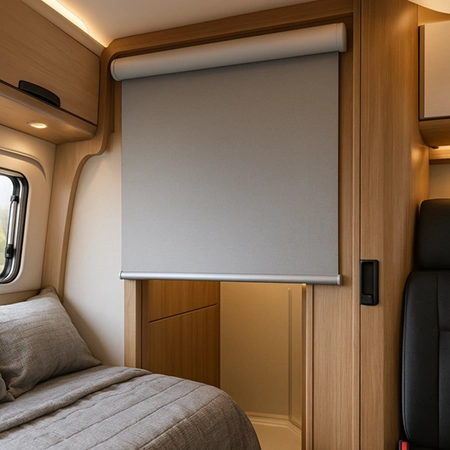
- Forward zone (galley): Place an L-shaped counter behind the driver. Use a mid-tension spring blind to shield the galley from the lounge at night. Seal gaps to reduce food odors drifting to the bunk.
- Mid zone (berth): For a side-sleeper or drop-down bed, use a soft-touch fabric blind with brush seals. A magnetic catch at the bottom rail holds position while driving.
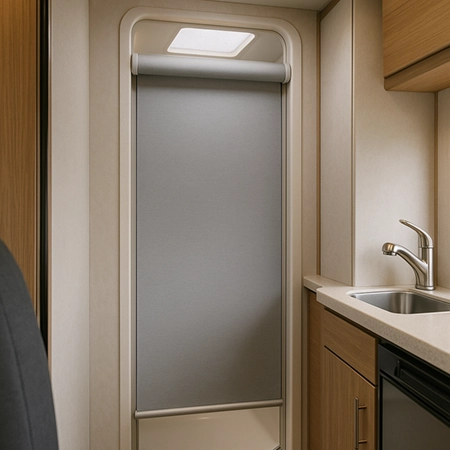
- Aft zone (wet-bath): Select higher-tension models and splash-friendly panels. Install a drain-friendly threshold and an exhaust fan; the blind helps contain steam and reduces mirror fogging.
- Storage nooks: Narrow blinds can hide utility panels, inverter bays, or litter boxes for traveling pets—without requiring full cabinet doors.
The payoff is measurable: fewer swing conflicts, a calmer soundscape, and a cabin that switches roles—even with kids or pets roaming—without arguments about who has to “move that door again.”
8. Cost, Weight, and ROI Considerations
A frequent question in DIY and professional upfits is whether Cordless RV Roller Blinds are “worth it” compared to curtains or sliding doors. Evaluate on three axes:
- Space & weight: A spring system plus lightweight panel weighs far less than framed doors and eliminates the floor track. In a 3.5-ton limit build, every kilogram you save is payload reclaimed.
- Complexity: No hinges to adjust or misaligned locks after winter-summer shell movement. The mechanism is fully inside the tube and protected from bumps.
- Habits: The easier a partition is to use, the more often you’ll use it—meaning better sleep, less clutter, and fewer “family negotiations.” That’s real ROI over years of travel.
For motorized variants, the low-voltage 5 V design avoids tapping the 12 V vehicle bus. Charging by USB or a power bank simplifies warranty concerns on newer vans and keeps the electrical audit trail clean.
9. Field Notes: Common Mistakes and Easy Wins
- Mistake: mounting to thin ply alone. Fix: add hidden aluminum angle behind the ply or use rivnuts in factory ribs. You’ll hear the difference the first time you hit a pothole.
- Mistake: chasing squeaks with oil. Fix: squeaks usually mean misalignment or dry seals. Realign first; then apply a small amount of dry, silicone-safe lube to seals only.
- Mistake: “universal” rails. Fix: specify a bottom rail profile suited to your users. A rounded rail is kid-friendly; a flat rail with a finger recess feels premium in adult-only rigs.
- Win: pre-wire a single USB port near the blind. Even if you install manual today, that port makes a future motor upgrade trivial.
- Win: add a micro night-light near the blind. Precision matters at 2 AM. A sub-0.5 W LED makes the cabin feel thoughtful and reduces fumbling.
10. Conclusion: Quiet Privacy, Minimal Footprint
With a tuned spring core and optional 5 V motor, DOSRON’s Cordless RV Roller Blinds reclaim space, reduce rattle, and remove cord hazards—delivering cleaner layouts and calmer nights from city street-parking to off-grid camps. They are the rare upgrade that improves safety, aesthetics, and everyday usability in equal measure. Plan your zones, pick the right tension band, seal the edges, and enjoy a cabin that acts bigger than its wheelbase.
Internal Links
Related FAQ
1) Will Cordless RV Roller Blinds hold on steep campsites?
Yes. Proper pre-tension and alignment allow mid-drop hold even on grades. For very steep sites, add a magnetic catch at the bottom rail as a secondary stop during travel.
2) Can I power the motor without tapping the van’s 12 V system?
Absolutely. The integrated motor is a 5 V device. It runs off a USB port, power bank, or compact solar charger. Because the spring carries most of the load, energy demand is low.
3) What materials work best for wet-bath partitions?
Aluminum frames with PVC or frosted acrylic panels are dependable. Combine with brush or rubber seals to reduce splash and improve privacy. Specify higher-tension springs for heavier panels.
4) How do I stop rattling while driving?
Use a magnetic catch or hook stop to park the bottom rail. Confirm bracket torque and check for even seal contact along the edge; correct slight misalignments with 1–2 mm shims.
5) Are these safe around kids and pets?
Yes. There are no exposed cords to tempt chewing or entangle small hands. A rounded bottom-rail profile further reduces bumps and scuffs in tight quarters.
6) Can I customize sizes for Iveco/Maxus/Transit?
Yes—DOSRON supports custom tube lengths, torque bands, adapter interfaces, and rail profiles to suit common van shells and aftermarket cabinetry.
7) How do these compare to sliding doors or accordion partitions?
They weigh less, occupy no swing or floor track space, and operate quieter. They’re also easier to service: the mechanism is protected inside the tube and needs only occasional dusting.
8) Will the motor drain my auxiliary battery?
No. Standby draw is tiny, and cycles are short because the spring assists the lift. Most users top up every few months; frequent travelers often piggyback on solar or a USB port.
9) Can I retrofit existing curtain rods?
Usually, yes—provided the opening can accept a tube and brackets. Replace the rod with the tube assembly, add edge seals, and position a discreet latch point for travel days.
10) What if I change the partition panel later?
You can adjust pre-tension or swap to a different spring model from the matrix to accommodate the new mass. The tube and brackets remain in place, protecting cabinetry finishes.