Quick Summary — For Faux Wood Blind Brands & Buyers
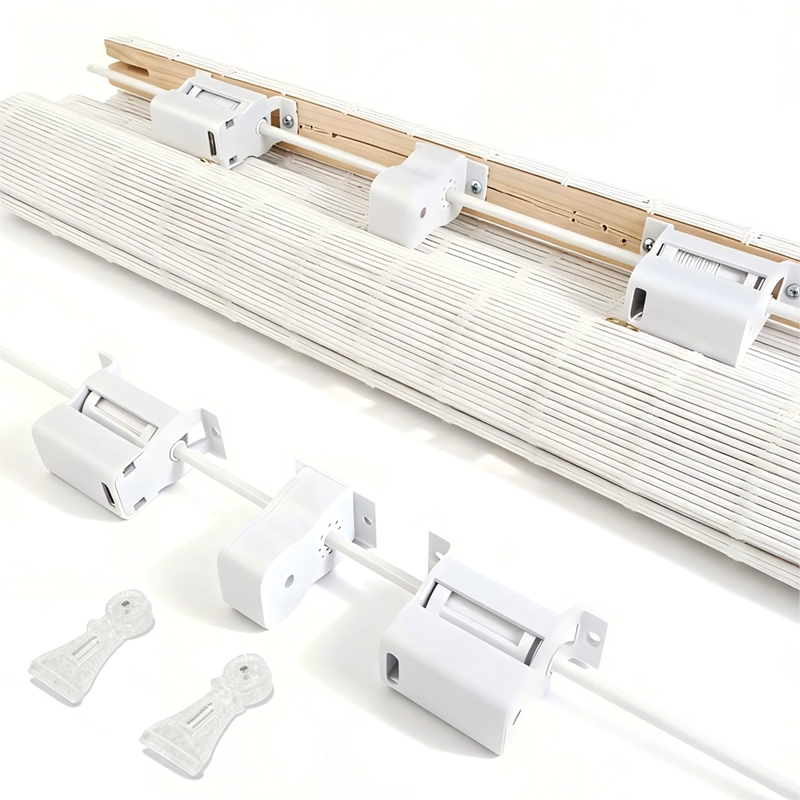
The Cordless Spring Box hidden inside the headrail, combined with a precision Handle rod and neat ladder cord system, is replacing exposed pull cords as the dominant control solution for faux wood and PVC blinds. This architecture cuts strangulation risks, supports child-safe compliance, keeps façades clean, and delivers intuitive, low-maintenance operation. In this field guide, we explain why high-quality Cordless Spring Box and Handle rod components have become a must-have, how material choices like POM housing and 301 stainless steel springs shape performance, and how the right dual-component pairing helps you raise prices, reduce complaints, and win projects in regulated markets.

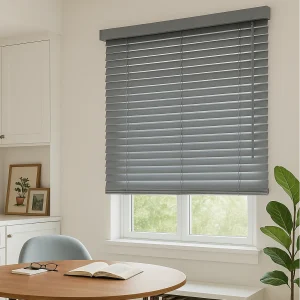
No one wants this quiet moment to be shattered by the hidden danger of an exposed cord, and few designers want a bundle of ropes hanging beside a carefully curated window.This is exactly why the Cordless Spring Box plus Handle rod combination is rising as the default solution in faux wood and PVC blinds.
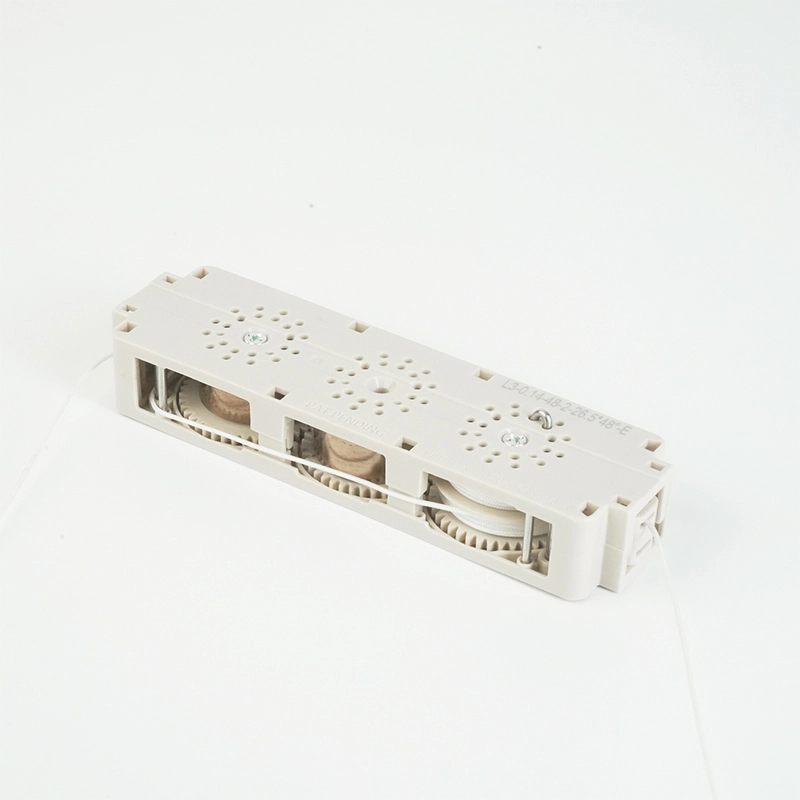
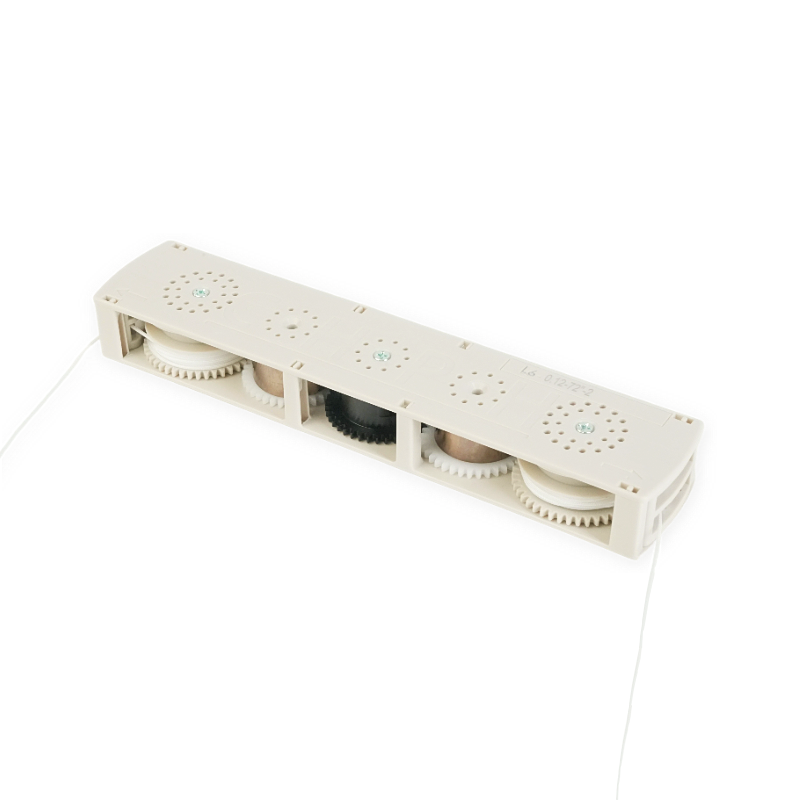
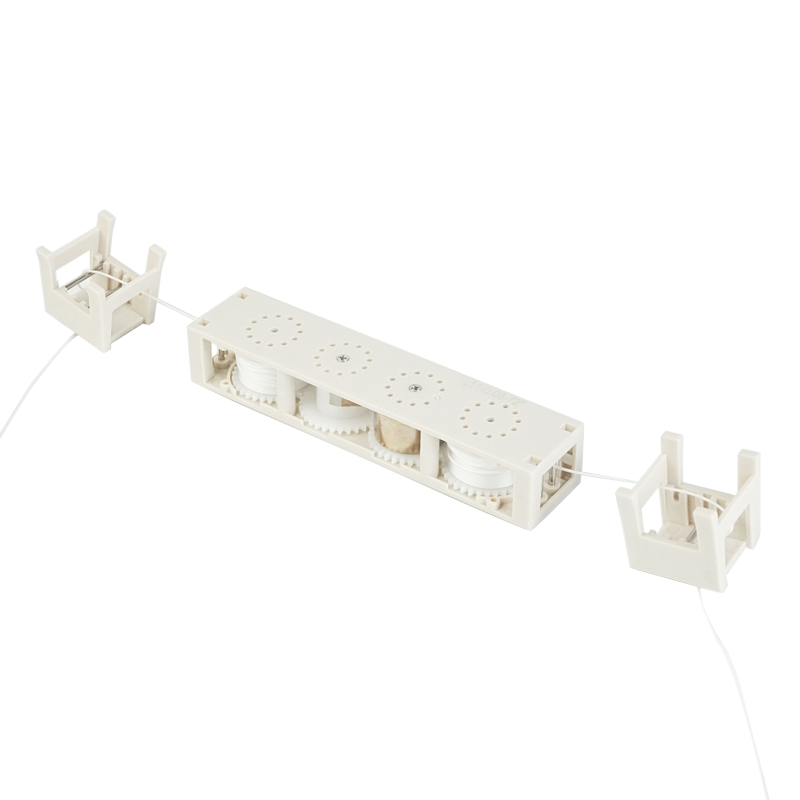
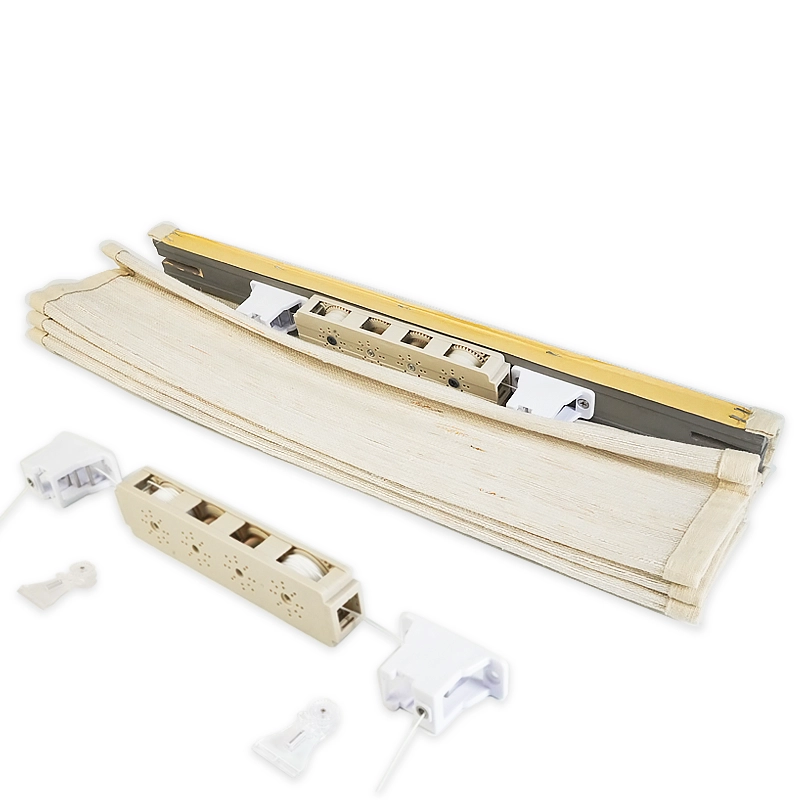
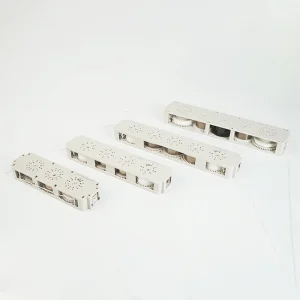
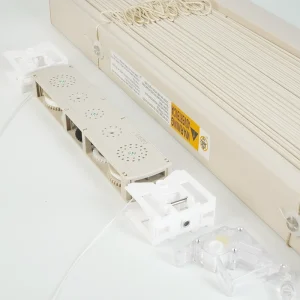
Instead of relying on an external cord loop for lifting, the headrail hides a Cordless Spring Box that delivers controlled lifting torque.
The Handle rod translates a simple twist into precise angle adjustment for every slat, while the ladder cords keep slats aligned and clean.The result is a control system that removes strangulation risks, respects child safety regulations, supports clean aesthetics, and retains intuitive operation.
For manufacturers and buyers focused on faux wood or PVC blinds, the Cordless Spring Box is no longer a “premium upgrade”—it is quickly becoming a basic requirement.
Core Architecture: Cordless Spring Box + Handle Rod in the Headrail
Global market signals are clear. Child safety standards in major regions such as the EU and the US are rapidly turning into hard thresholds for window covering products.
Regulations and voluntary standards are tightening around the use of accessible cords and loops.
In design practice, specifications for higher-end residential and commercial projects now routinely require child-safe, cordless or cord-limited systems.
Within that context, faux wood and PVC blinds equipped with a Cordless Spring Box and a matching Handle rod are taking the lead.
Design firm data shows that this internalized “spring in the headrail + handle at the side” structure has replaced traditional corded products in a large share of high-end project schedules.
For these buyers, the Cordless Spring Box is not a marketing gimmick but a structural answer to safety, control, and visual order.
For brands that primarily sell faux wood or PVC blinds, this architectural shift has a direct implication: a Cordless Spring Box + Handle rod pairing is now treated as a must-have specification rather than an optional add-on.
The material itself already combines the warm look of wood with moisture resistance and durability.
When supported by a Cordless Spring Box hidden in the headrail, a slim Handle rod, and neatly managed ladder cords, the product sheds old labels like “unsafe,” “rough to operate,” and “visually messy,” and steps into the premium segment.
 |
 |
1. Safety & Brand Responsibility with a Cordless Spring Box
Stories of children or pets being entangled in external cords are unfortunately not rare.
Each incident is not only a household tragedy; it can also expose manufacturers to reputational damage and legal risk.
The Cordless Spring Box directly addresses this core hazard. Instead of leaving a looped cord within reach,
the lifting energy is stored and released inside the headrail.
The user simply pulls or lifts the bottom rail slightly, while the internal Cordless Spring Box balances the weight of the slats and holds the blind at any desired height.
At the same time, a separate Handle rod manages tilting.
Rotating the Handle rod changes the slat angle without involving any external cords.
Ladder cords stay between the slats to keep alignment, but do not form accessible loops at the front.
In other words, the risk-carrying elements are removed from the user’s reach, and the visible parts are simple, rigid components that do not wrap around a child’s neck or a pet’s body.
For your brand, this means:
- Lower risk exposure when markets tighten child safety requirements.
- Clear, evidence-based messaging such as “designed for homes with children and pets” in your catalogs and listings.
- Better competitiveness in public tenders, hospitality projects, and retail programs where safety documentation is mandatory.
2. Minimalist Aesthetics: How Cordless Spring Box Systems Support Modern Design
Contemporary interiors follow a “subtraction” approach: remove unnecessary elements, and let light, material, and proportion speak for themselves.
Traditional corded blinds fight against that logic. A cluster of dangling cords beside the window may be acceptable in a low-budget rental, but it looks out of place in a Nordic, wabi-sabi, or high-minimalism space.
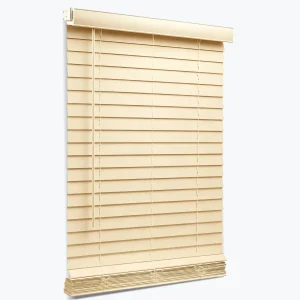
With a Cordless Spring Box hidden in the headrail, the façade becomes much cleaner.
There is no need for a cord lock mechanism at eye level, and the headrail seen from the room is a single, tidy profile.
The Handle rod is narrow and visually light, available in finishes that quietly match the frame or hardware.
Ladder cords, meanwhile, live between the slats and align them without disturbing the front view.
From a distance, observers primarily notice the layered pattern of faux wood slats rather than any control hardware.
Designers like the Cordless Spring Box concept because it delivers both order and flexibility:
- A clean headrail profile that respects the geometry of the window opening.
- A small, discrete Handle rod that the end user can quickly understand.
- Freedom to pair the blind with minimalist, Scandinavian, or Japandi-style furniture without visual noise.
From a commercial standpoint, this visual upgrade directly increases perceived value.
Faux wood blinds with a Cordless Spring Box and Handle rod architecture regularly command a 20–30% higher selling price than corded equivalents in the same material category, yet enjoy faster growth because they match both safety and design expectations.
 |
 |
3. Intuitive Operation: Cordless Spring Box Systems Reduce After-Sales Complaints
“Hard to operate,” “cords got tangled,” and “light is never quite right” are typical complaints with traditional corded blinds.
The path from cord tension to lift or tilt can be non-linear and stiff, and any imbalance in ladder tension can quickly lead to crooked slats.
With a Cordless Spring Box system, each component has a clear, intuitive role:
- Cordless Spring Box: provides lifting and balancing torque inside the headrail. A light upward or downward motion on the bottom rail is enough to raise or lower the blind, which then holds at height without further effort.
- Handle rod: is dedicated to angle adjustment. The user rotates the Handle rod to fine-tune light levels, with the mechanical ratio calibrated to turn slats gradually rather than in jerky jumps.
- Ladder cords: synchronize the movement of slats to avoid one side lagging or drooping.
When the Cordless Spring Box has a stable torque curve and the Handle rod is manufactured with tight tolerances, the system can keep slat angle error within a few degrees, even after years of daily use.
Many manufacturers report that once they switch to well-engineered Cordless Spring Box and Handle rod sets, their after-sales complaint rates drop dramatically, often by more than half.
4. Low-Maintenance Design: Cordless Spring Box Solutions Match Modern Lifestyles
| Parameter | Cordless Spring Box + Handle rod | Traditional corded blind | Business impact |
|---|---|---|---|
| Child-safety risk (accessible cords) | Very low — no exposed lift cord, Handle rod only | High — exposed pull cords / loops | Lower liability risk, easier to pass child-safe specs |
| Control architecture | Cordless Spring Box in headrail + Handle rod tilt | External lift cord + cord or wand tilt | Clear upgrade story for specs and marketing |
| Lift / stop positioning accuracy | Approx. ±2–3 mm (with tuned spring torque) | Approx. ±8–10 mm, affected by cord stretch | Straighter bottom rails, fewer “uneven” complaints |
| Tilt angle deviation | ≤ 5° across the width (Handle rod calibrated) | ≥ 10° possible, especially on wider spans | More precise light & privacy control |
| Typical cycle life of lift system | 30,000–100,000+ cycles (Cordless Spring Box with 301 SS spring) | 10,000–20,000 cycles (basic cord & lock) | Longer service life, better for projects and warranties |
| Visual cleanliness around window | Clean headrail, no hanging cords, slim Handle rod | Visible cord bundle and cord lock hardware | Supports minimalist / high-end interior design |
| Cleaning time per blind | Short — smooth headrail, few dust traps | Long — cords, knots and locks catch dust | Lower maintenance cost in hotels & offices |
| Price premium vs. basic faux wood blind | About +20–30% (Cordless Spring Box feature) | Baseline (no premium) | Higher ASP and margin per set |
| After-sales complaint rate* | Often reduced by 50–60% vs. previous corded line* | Baseline; more lift / tilt related issues | Lower service cost, stronger word-of-mouth |
*Values are indicative and depend on specific Cordless Spring Box design, Handle rod quality, and installation practices.
External cords collect dust and are notoriously difficult to clean.
The friction points where cords rub against cord locks can fray or discolor, shifting attention from the blind itself to its aging hardware.
A Cordless Spring Box eliminates most of these contact points.
The spring and main drive path are sealed inside the headrail.
The user-facing surface is a smooth profile that can be wiped quickly with a cloth.
The Handle rod is slim, rigid, and typically coated or anodized to resist stains and corrosion.
There are no spools or knotted terminations to trap grime.
Slats can be dusted or wiped in place without worrying about disturbing cord alignment.
In commercial settings such as hotels and offices, this difference is particularly valuable.
Cleaning staff can work faster, maintenance managers see fewer breakage reports, and the look of the blind stays consistent across hundreds of rooms or workstations.
Engineering the Core: Inside a High-Performance Cordless Spring Box
Almost everyone in the industry now understands that a Cordless Spring Box and a dedicated Handle rod deliver better safety and appearance.
Yet real-world performance varies widely. Some blinds run smoothly for years, while others begin to jam, slip, or lose position accuracy within a season.
The difference lies in the details:
- The material and fatigue resistance of the spiral spring inside the Cordless Spring Box.
- The precision of the POM or other engineering-plastic housing that guides the spring and shaft.
- The torque curve matching between Cordless Spring Box, panel weight, and ladder cord layout.
- The dimensional accuracy of the Handle rod interface and internal gears.
In a robust design, the Cordless Spring Box uses a 301 stainless steel spiral spring tested for tens of thousands of lift cycles.
Even after heavy use, the torque output remains stable, ensuring that the blind does not suddenly drop or shoot upward.
Panel stop position can be kept within a small tolerance, giving the Handle rod an equally stable foundation for tilt control.
POM Housing: The Structural Shield Around the Cordless Spring Box
Faux wood and PVC slats are lighter than real wood, but they still place continuous torque on the lifting system over years of service.
If the housing of the Cordless Spring Box is made from low-grade plastic, it may warp or develop internal play.
That movement translates into noise, friction, or step-wise jamming as the system ages.
A housing made from rigid POM engineering plastic offers much better long-term stability.
Its strength and dimensional stability are significantly higher than those of basic ABS.
When the internal tracks and gear guides are molded as a single structure, there is less cumulative error than in multi-part, screw-fastened designs.
For blinds carrying heavier faux wood profiles or wider spans, this housing quality becomes a make-or-break factor.
A well-designed POM-based Cordless Spring Box can maintain smooth motion and consistent torque delivery even as the panel approaches the upper bound of its weight range.
Handle Rod Precision: The Control Interface for Light and Privacy
While the Cordless Spring Box does the invisible lifting work, the Handle rod is the part users touch every day.
Its feel and behavior largely define whether the blind “feels premium” or not.
A well-engineered Handle rod typically:
- Uses an aluminum alloy or other high-strength material for the shaft, with surface treatments that resist wear and discoloration.
- Integrates a fine-toothed gear path inside the headrail, keeping backlash small and rotation smooth.
- Translates Handle rod rotation into equally spaced slat-angle steps, avoiding sudden jumps or dead zones in the tilt range.
Because the Handle rod and Cordless Spring Box work together, mismatched torque or poor tolerance in either component will show up as stiff rotation, audible scraping, or inconsistent tilt response.
When both components are correctly specified and manufactured, users can repeatedly adjust between full-open, privacy, and blackout positions with fine control and minimal effort.
 |
 |
Dual Matching: Cordless Spring Box & Handle Rod for Efficient Manufacturing
From a production perspective, the value of a Cordless Spring Box is not only in performance but also in how easily it fits existing headrail programs and ladder systems.
A good design adopts standardized mounting points and shaft interfaces so that factories can switch from corded systems to Cordless Spring Box systems without rebuilding their entire line.
When Cordless Spring Box and Handle rod are designed as a coordinated pair, manufacturers can:
- Use a common set of headrail profiles for multiple panel widths and slat weights.
- Reduce assembly time by minimizing shimming, manual adjustments, and rework.
- Maintain uniform lift and tilt behavior across SKUs, simplifying quality checks.
In addition, batch testing of torque curves for the Cordless Spring Box and rotational resistance for the Handle rod helps keep variation under control.
For serious players in the faux wood blind segment, this process discipline is now part of how they defend their brand against low-cost, low-reliability competitors.
Field Insight — Turning Cordless Spring Box Architecture into Market Advantage
As child safety standards tighten and design expectations rise, the debate is no longer “corded versus cordless.”
For faux wood and PVC blinds, the industry has largely accepted that a Cordless Spring Box with a dedicated Handle rod is the most balanced way to combine safety, control, and aesthetics.
What separates leaders from followers is how deeply they understand and specify the components behind that architecture.
- Define Cordless Spring Box as a core spec, not an option. Make it part of your baseline for regulated markets and child-focused applications instead of a premium upgrade.
- Invest in materials and fatigue-tested design. Choose POM housings and 301 stainless steel springs, or equivalent, to keep torque and alignment stable over years of operation.
- Treat the Handle rod as a user-experience product. The touch, rotation feel, and angle accuracy will decide if your blind is perceived as “cheap” or “refined.”
- Match Cordless Spring Box, Handle rod, and ladder system as a trio. Don’t optimize one component in isolation; calibrate them together for each panel size and slat material.
- Use the architecture in your marketing story. Translate the technical advantages of the Cordless Spring Box into simple claims: safer for children, quieter in daily use, easier to clean, and visually cleaner around the window.
Brands that systematically integrate a high-quality Cordless Spring Box and a well-engineered Handle rod into their faux wood blind programs will not only pass safety checks;
they will also set a new benchmark for how comfortable, precise, and refined a classic horizontal blind can feel in the modern home.