Is Cordless Now Mandatory Under ANSI/WCMA A100.1-2022? Engineering Compliance and Cordless Innovation in Modern Window Coverings
1. The New Era of Child-Safe Design
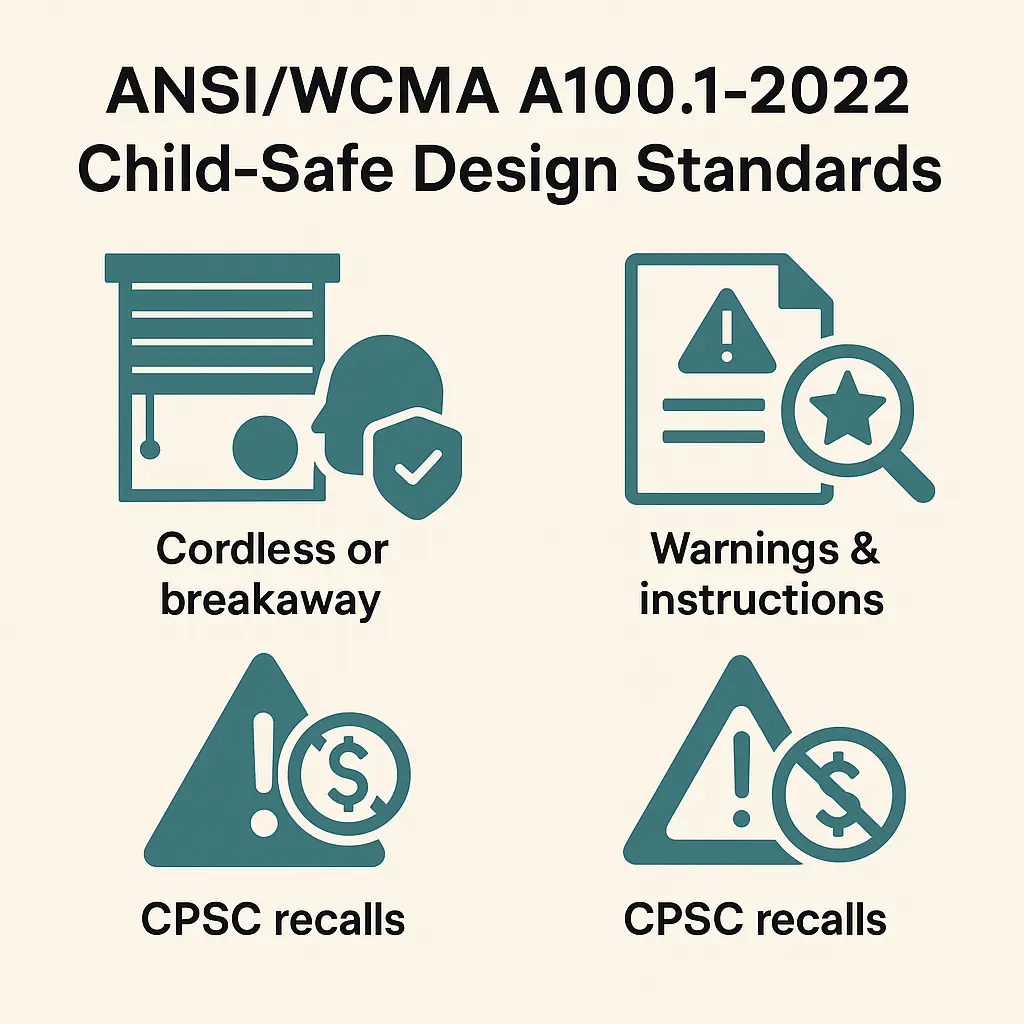
The U.S. Consumer Product Safety Commission (CPSC) has consistently highlighted strangulation hazards from corded window coverings. Under A100.1-2022, the safest baseline is assumed at design time, not at retail discretion. For engineering teams, that means eliminating hazards upstream and proving safety through repeatable tests and documented traceability.
2. From 2018 to 2022: What Changed and Why It Matters
- Scope: Applies to interior window coverings sold in the U.S. (roller, zebra, honeycomb, Roman, Venetian, etc.).
- Classification: Stock products vs. Custom products—with stock moving to cordless-only by default.
- Default-safe design: No continuous loops for stock SKUs; custom configurations must enforce loop prevention or breakaway.
- Labeling & instructions: Unified warnings and installation guidance to remove ambiguity at point-of-use.
- Verification: Greater reliance on third-party labs and written quality records.
3. Technical Core Requirements & Engineering Implications
The design objective is to remove accessible hazardous loops. Where a cord or chain is technically necessary (certain custom cases), a breakaway device must disengage under prescribed loads. Engineers should treat every potential loop as a failure mode requiring preventive design, not a retail accessory decision.
3.2 Operating Force
Operating force targets must keep the system usable by a wide population while avoiding unsafe accelerations. Practically, balanced torque is achieved by pairing fabric weight and roll dynamics with a spring assist or by precise motor control. Excessive peak forces or insufficient holding torque both signal unsafe or unstable tuning.
3.3 Durability & Stability
- Cycle life: ≥ 10,000 full cycles is a sane floor for residential duty; light commercial scenarios should target higher (e.g., 20,000+).
- Torque stability: Keep drift within tight tolerance (e.g., ±5 %) across the operating range to prevent creep, slip, or rebound.
- Noise & vibration: Friction management in guides and bearings, and damping to minimize structure-borne noise.
3.4 Labeling & Instructions
Labels must be visible, specific, and durable. Instructions should specify mounting height, child-free reach zones, and maintenance checks. A consistent template across SKUs prevents production drift and retail confusion.
4. Compliance Testing & Verification Procedures
A defensible program aligns pre-compliance prototypes, verification builds, and production sampling. Use accredited labs recognized by industry bodies for cord accessibility, breakaway loads, cycle life, and label permanence. Keep a paper trail—drawings, BOMs, change logs, test reports, and supplier attestations.
| Test Category | Purpose | Typical Criteria | Practical Notes |
|---|---|---|---|
| Loop/Accessibility | Eliminate hazardous loops | No accessible continuous loop in stock; breakaway for custom | Design out the loop; otherwise certify the breakaway component |
| Operating Force | User safety & usability | Stable, low peak; no sudden acceleration | Balance fabric mass, inertia, and spring/motor characteristics |
| Cycle Life | Durability & stability | ≥10,000 cycles (residential baseline) | Light commercial targets higher; monitor torque drift |
| Label/Instruction | Clarity & permanence | Adhesion, readability, consistent warnings | Unify templates across SKUs and languages |
5. Impact on Manufacturers and Importers
5.1 Production Implications
- Re-architect to cordless or certified breakaway mechanisms.
- Re-spec materials (POM for low friction, 301 stainless steel for springs) and validate suppliers.
- Update routings: add testing, in-line inspections, and label/instruction kitting.
5.2 Certification & Records
Utilize third-party labs; maintain lot-traceable reports, device serials (for motors), and controlled documents for audits and retailer listings.
5.3 Market & Retail Gatekeeping
Big box and e-commerce platforms increasingly audit for child-safe defaults. Failure to show proof—test reports, labeling photos, instructions—translates to listing removal and penalties.
5.4 Legal & Recall Risk
Non-compliance triggers CPSC recalls, public notices, and civil liabilities. The financial impact is not just recall logistics; it is lost time-to-market and long-term brand erosion.
6. DOSRON Engineering Solutions for Cordless Safety
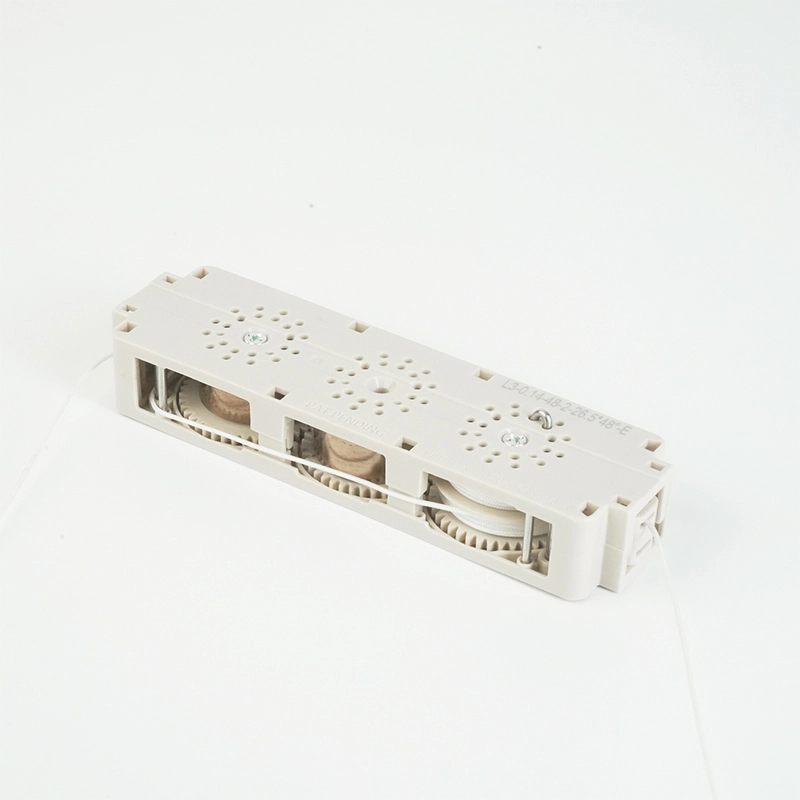
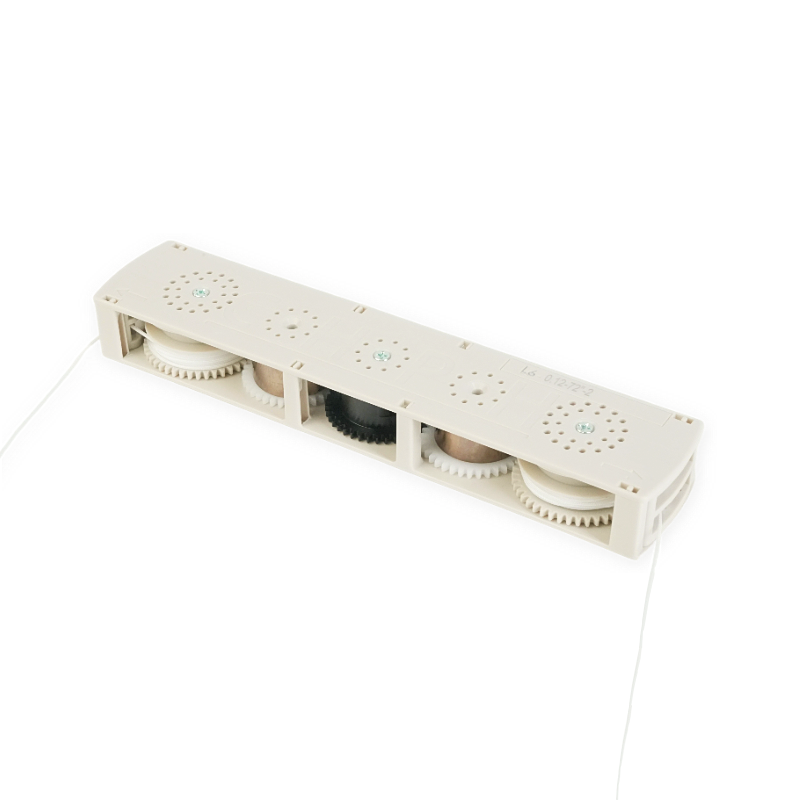
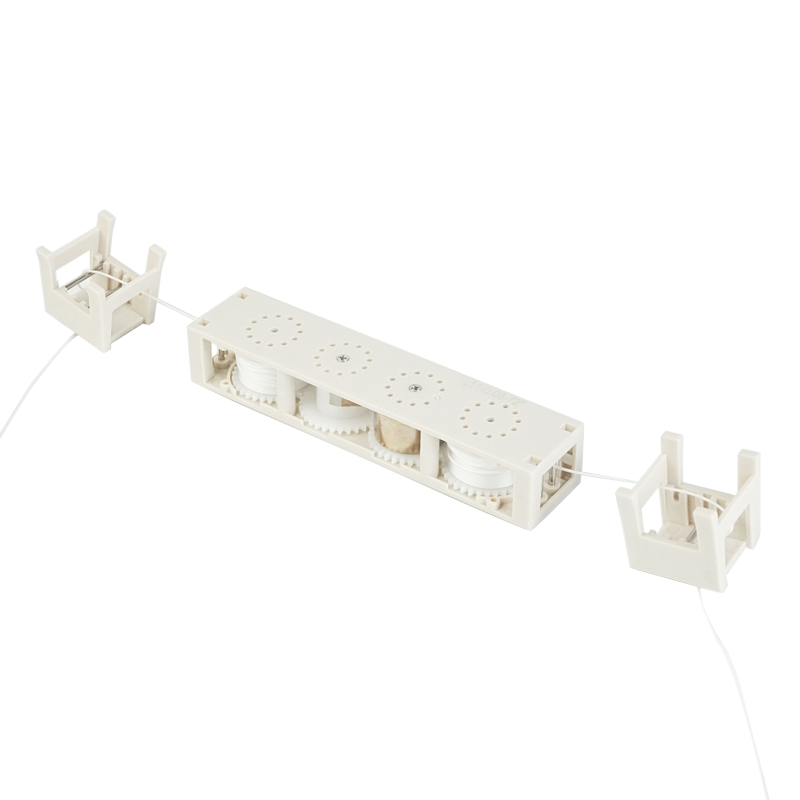
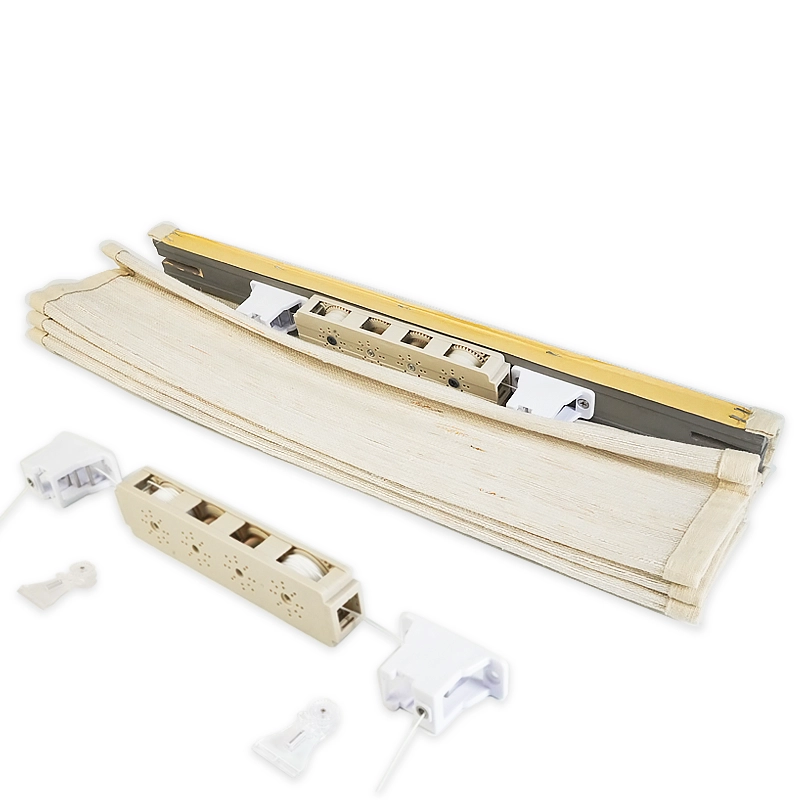
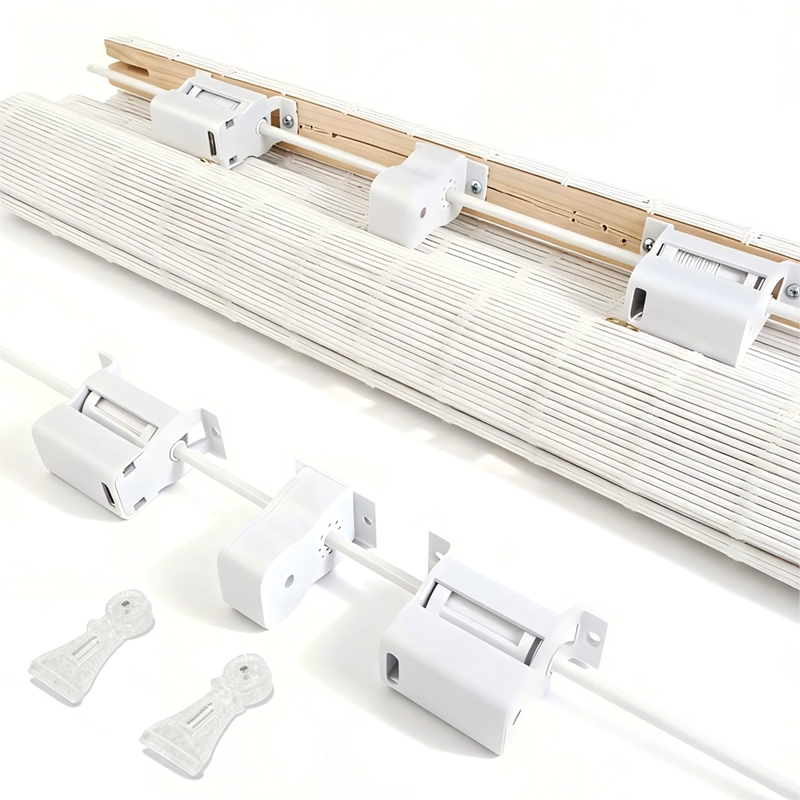
DOSRON approaches A100.1-2022 as an engineering problem, not a sticker exercise. Our cordless architecture is built around spiral spring balance, POM precision housings, and, when needed, quiet tubular motors with precise end-limit control.
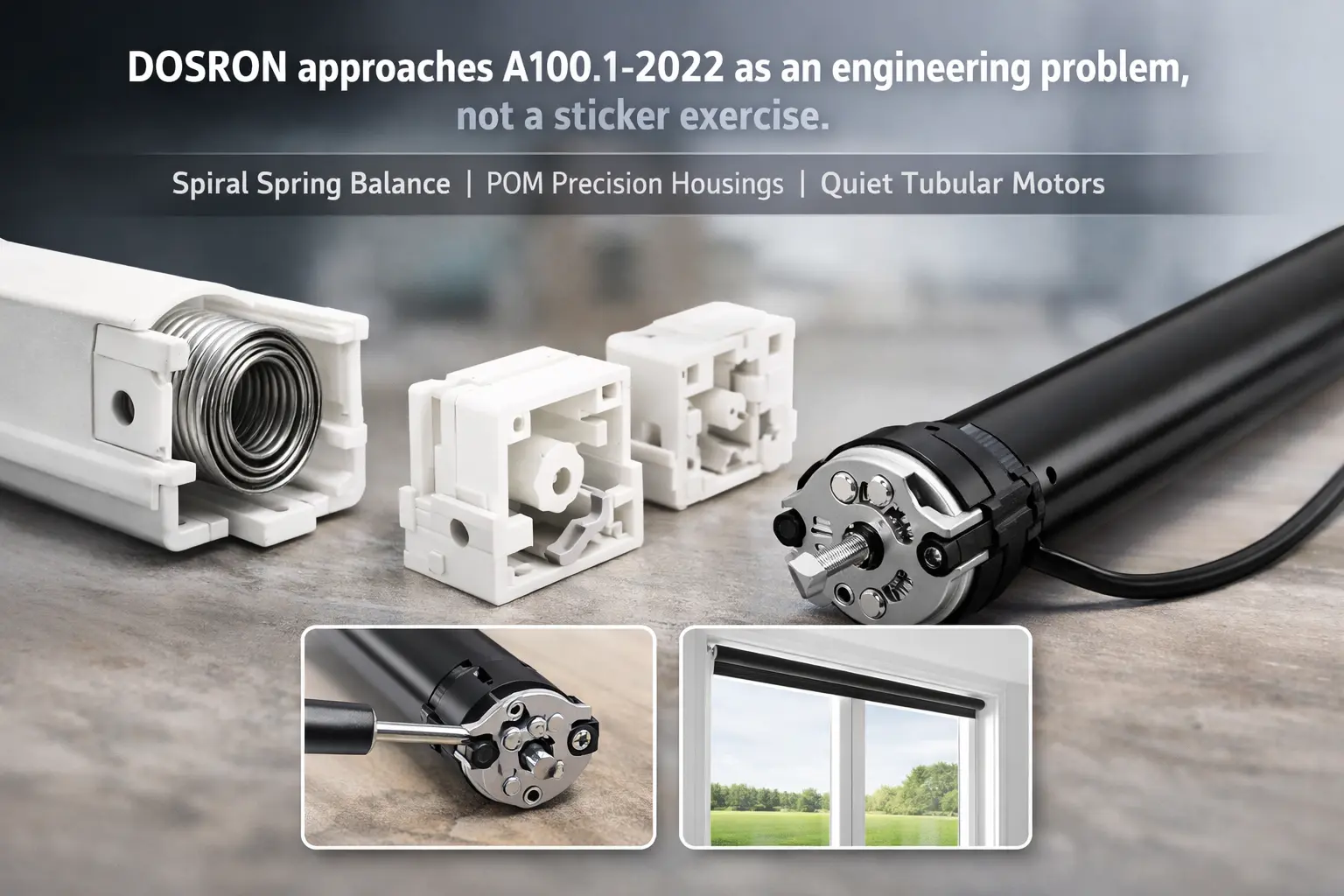
6.1 Cordless Spring Systems (R Series / L Series)
- Spiral Spring balance with controlled torque curve for smooth lift/lower.
- POM housings act as low-friction guides to suppress noise and wear.
- Holding torque stability targeted within tight bounds (e.g., ±5 %).
- Cycle life engineering targets ≥10,000 cycles for residential; higher for light commercial.
6.2 Hybrid “Hand-Electric” Systems
When projects require both manual convenience and powered control, the DOSRON hand-electric hybrid design allows manual nudge to initiate motion while motor control manages travel and limits. This reduces cord presence entirely while improving usability in larger/ heavier shades.
6.3 Quiet Tubular Motors (32 mm / 38 mm)
- 32 mm and 38 mm motors with low-noise gearing and stable limit control.
- Optional safety logic: anti-pinch, stall detection, and soft-start/stop.
- Integration with cordless spring assist to minimize load spikes and extend life.
7. CPSC Recalls & Industry Lessons (2021–2024)
Recent recalls consistently involve loop hazards, inadequate breakaway, or poor instructions. Engineering takeaways: design out loops, validate breakaways with tolerance studies, and standardize warnings across SKUs.
8. Global Alignment: EN 13120 & CCPSA
The trend is convergent: Europe’s EN 13120 and Canada’s CCPSA frameworks prioritize child-safe outcomes similar to A100.1-2022. Global OEMs should standardize on cordless defaults and maintain regional documentation packages (labels, instructions, test dossiers) per market.
| Framework | Baseline Expectation | Notes for OEMs |
|---|---|---|
| ANSI/WCMA A100.1-2022 (U.S.) | Cordless stock; breakaway/custom constraints | Unified labels/instructions, third-party testing |
| EN 13120 (EU) | Child-safe operation; loop restriction | CE documentation, durability cycles |
| CCPSA (Canada) | Hazard mitigation, recalls enforcement | Align with U.S./EU files; bilingual instructions |
9. Future Trends: Cordless as Default, Smart as Next
- Cordless default across stock and most custom SKUs.
- Smart control layered on safe mechanics (not replacing them).
- Lifecycle transparency: published cycle life, torque stability, acoustic data.
- Supply-chain proof: test reports, labels, and instructions traceable to lot.
10. Conclusion & Action Checklist
Conclusion
A100.1-2022 is a design doctrine. Treat it as a set of engineering requirements—not a brochure line. Default to cordless, validate with third-party tests, and document everything. That is how child safety becomes a property of your product, not a claim on your packaging.
A100.1-2022 is a design doctrine. Treat it as a set of engineering requirements—not a brochure line. Default to cordless, validate with third-party tests, and document everything. That is how child safety becomes a property of your product, not a claim on your packaging.
Action Checklist
- Eliminate accessible loops; certify required breakaways.
- Balance operating force; verify holding torque and drift.
- Design for ≥10,000 cycles (residential) with monitoring for drift.
- Standardize labels/instructions; photograph placements per SKU.
- Use accredited labs; keep traceable records for audits and retail listings.
- Adopt cordless spring or hybrid architectures where feasible.
Appendix: Engineering Notes & Data Placeholders
Table A1. Example Torque Stability & Cycle Endurance (Placeholder)
| System | Tube Size | Fabric Mass Range | Target Holding Torque | Torque Drift (After 10k) | Cycle Life Tested |
|---|---|---|---|---|---|
| DOSRON R Series Spring | Ø 38 mm | 0.25–0.6 kg/m² | As engineered | ≤ ±5 % | ≥ 10,000 |
| DOSRON 32 mm Motor + Spring Assist | Ø 32 mm | 0.3–0.9 kg/m² | Motor-controlled | Actively compensated | ≥ 10,000 |
| DOSRON 38 mm Motor | Ø 38 mm | 0.5–1.2 kg/m² | Motor-controlled | Actively compensated | ≥ 10,000 |
Table A2. Label & Instruction Package (Template)
| SKU Type | Warning Text | Placement | Instruction Notes | Language |
|---|---|---|---|---|
| Stock Cordless | Child-safe, no accessible loops | Headrail & manual | Mounting height, maintenance checks | EN + target market |
| Custom (Breakaway) | Breakaway device required | Device & manual | Test breakaway at install; replace on wear | EN + local |
FAQ
What is ANSI/WCMA A100.1-2022 and why is it important?
This standard defines the latest U.S. child-safety requirements for interior window coverings. It mandates that stock products must be cordless or use breakaway mechanisms, ensuring compliance with CPSC child-protection regulations.
What products are covered under ANSI/WCMA A100.1-2022?
All interior window coverings—such as roller blinds, zebra shades, honeycomb blinds, Roman blinds, and Venetian blinds—sold in the U.S. are subject to this standard.
What are the main differences between the 2018 and 2022 versions?
The 2022 version makes cordless designs mandatory for stock products, adds stricter limits on loop length, updates labeling requirements, and reinforces third-party testing for certification.
What is considered a “cordless” system under the standard?
A cordless system operates without any accessible pull cords or loops. It typically relies on an internal spiral spring balance or motorized mechanism to control the shade’s movement.
How does DOSRON’s spring balance system meet ANSI/WCMA A100.1-2022?
DOSRON’s cordless spring mechanism uses 301 stainless-steel spiral springs and POM housings to ensure stable torque (±5%) and long life (10,000+ cycles), fully compliant with child-safety requirements.
What is the difference between a stock and a custom window-covering product?
Stock products are pre-manufactured and must be cordless by default. Custom products can include breakaway devices or limited-length cords but must still pass accessibility and safety tests.
What are the testing and verification requirements?
Manufacturers must perform third-party lab tests on loop accessibility, operating force, durability, torque stability, and label adhesion to validate compliance.
How does DOSRON’s hybrid hand-electric system enhance safety and usability?
It allows manual operation by lightly pushing the bottom rail, while the integrated motor handles automated lifting and limit control—achieving a cordless, user-friendly, and energy-efficient solution.
What is the expected service life and performance target for compliant systems?
Compliant cordless or hybrid systems should achieve ≥10,000 cycles, maintain ±5% torque stability, and operate quietly below 40 dB, ensuring safe and durable performance.
How can manufacturers and importers prepare for compliance audits?
Keep traceable testing records, labeling photos, instruction templates, and supplier certifications. Regularly verify third-party reports to ensure ongoing compliance with CPSC and ANSI/WCMA requirements.
Contact us for sharing
References
- ANSI/WCMA A100.1-2022: American National Standard for Safety of Corded Window Covering Products.
- CPSC – Related rulemaking and recall archives on window covering hazards.
- ASTM W100-2022 – Relevant testing methods referenced in industry practice.
- EN 13120:2009+A1:2014 – Internal blinds. Performance requirements including safety.
- WCMA Safety Guidelines (latest edition).