Cordless Top Down Bottom Up Spring Lift Mechanism for Honeycomb & Fabric Shades
Quick Summary
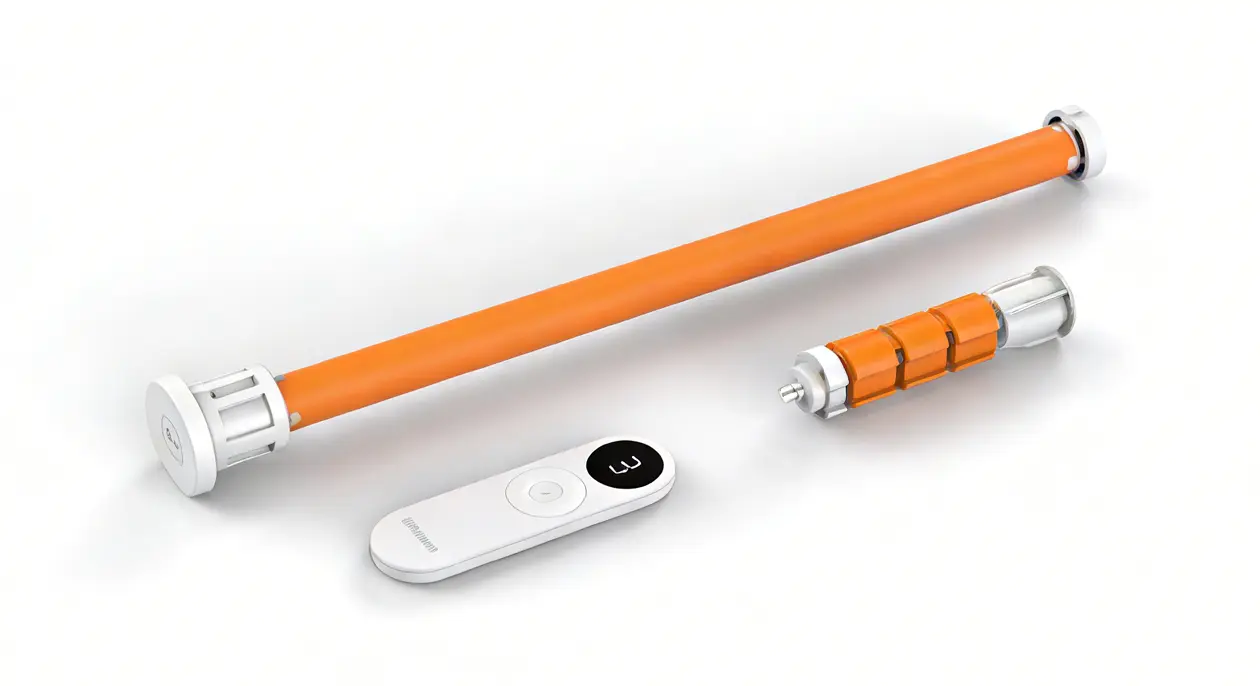
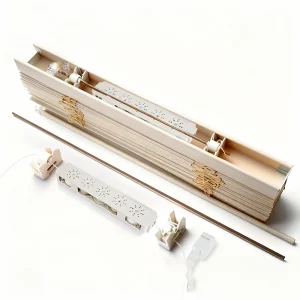
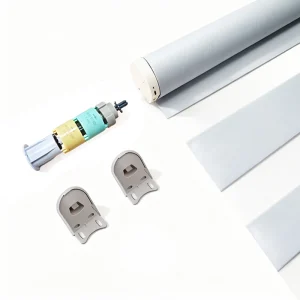
The Cordless Top Down Bottom Up Spring Lift Mechanism is an in-headrail lifting core for modern cordless honeycomb and fabric shades.
Using a precision-engineered spring balance, it allows users to lower the shade from the top, raise it from the bottom, and hold the panel at any height—without exposed lift cords.
The module is tuned for child safety, smooth motion, and stable hover, giving OEM brands a compact, easy-to-integrate solution that supports North American and European cord-safety requirements.
Product Overview
 |
 |
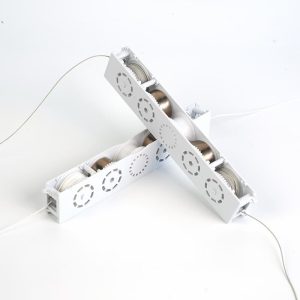
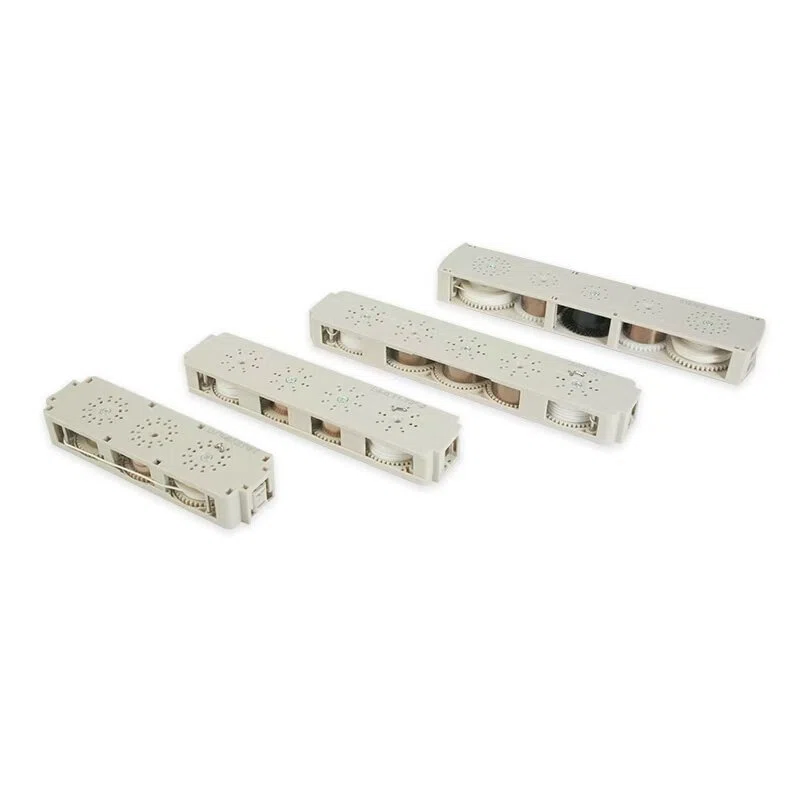
The Cordless Top Down Bottom Up Spring Lift Mechanism is a mechanical lift system that sits fully concealed inside the headrail.
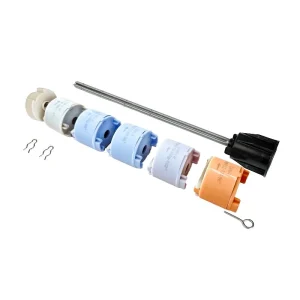
A spiral spring and guided friction assembly counterbalance the shade weight, enabling top-down and bottom-up movement with a stable hover and low operating force.
Designed for OEM honeycomb and fabric shade programs, the mechanism supports typical residential widths, helps eliminate accessible pull cords, and offers a repeatable way to meet child-safety expectations in key markets.
Each configuration is tuned to fabric mass and rail geometry, with documented pre-tension and balance windows for reliable mass production.
Technical Specifications
| Item | Property Name | Parameter | Description |
|---|---|---|---|
| 1 | Rated Spring Torque | 0.6 – 1.8 N·m | Spring curve optimized for top down bottom up shade balance |
| 2 | Recommended Panel Width | 450 – 1,800 mm | Standard design window for residential openings |
| 3 | Recommended Fabric Mass | 80 – 220 g/m² | Single / double-cell honeycomb and light fabric shades |
| 4 | Hover Stability | < ±30 mm drift | Measured over full drop after correct pre-tensioning |
| 5 | Cycle Life | ≥ 10,000 cycles | Lab-tested open/close cycles at room temperature |
| 6 | Operating Temperature | 0 – 40 °C | For indoor residential and light-commercial use |
| 7 | Headrail Compatibility | 30 – 45 mm rails | Adapts to common aluminum or steel headrail profiles |
| 8 | Safety Compliance Support | ANSI/WCMA & EN 13120 | Cordless design supports global cord-safety standards* |
*Final compliance depends on the finished shade system, installation and local regulations.
Key Advantages & Features
True Cordless Safety Architecture
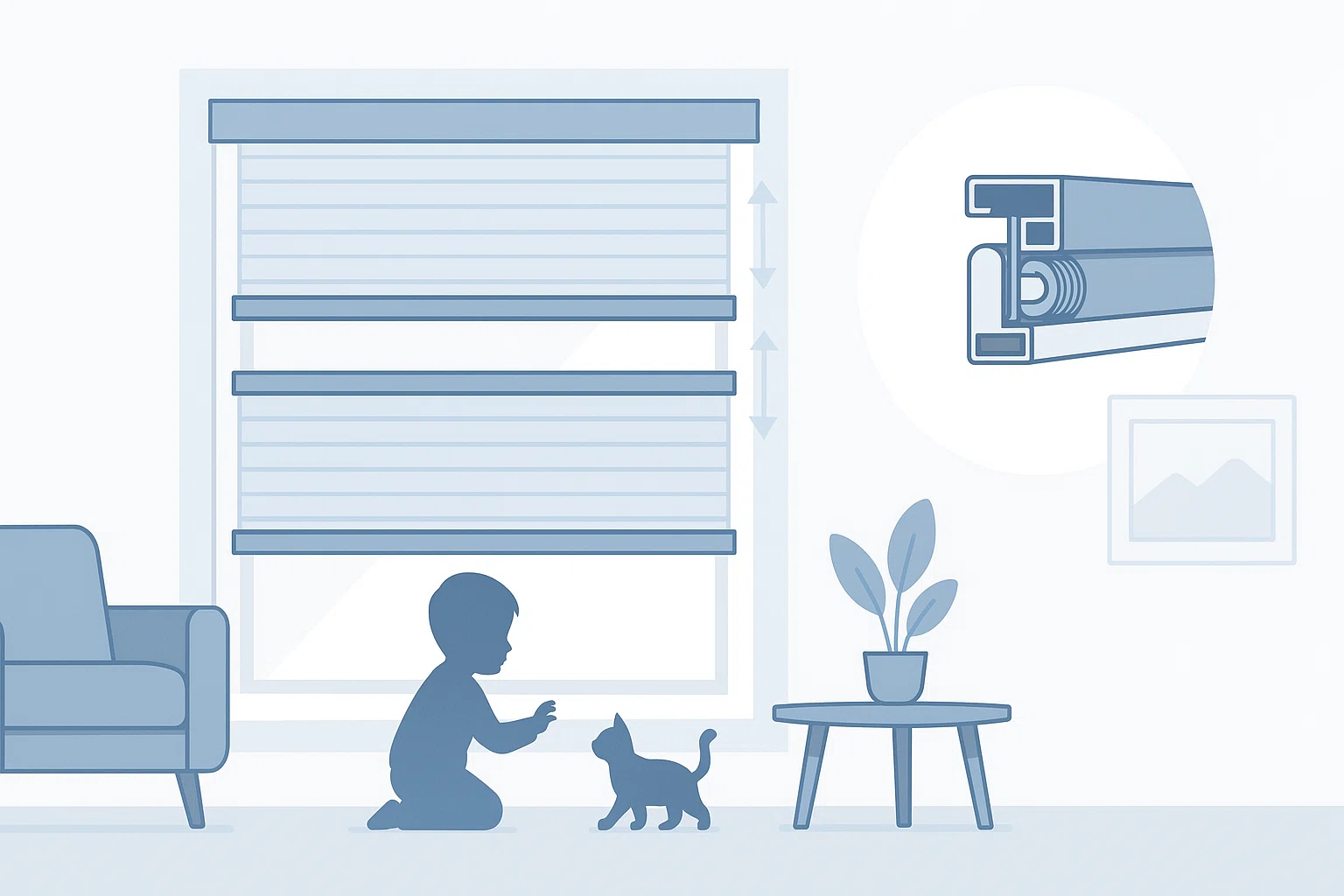
The Cordless Top Down Bottom Up Spring Lift Mechanism removes exposed lift cords and internalizes the lifting and balance functions inside the headrail.
This helps brands reduce entanglement hazards around children and pets while delivering clean, minimal window façades.
Top-Down & Bottom-Up in One Core
The mechanism supports both top-down and bottom-up operation through coordinated rails and internal linkages.
Users can bring daylight from the top while protecting privacy at eye level, or operate the shade in a conventional bottom-up way—all from the same cordless system.
Stable Hover-at-Any-Position
A tuned combination of spring torque and guided friction allows the shade to hold at intermediate heights.
Hover stability is validated across the recommended width and fabric range, minimizing drift and avoiding sudden snap-up behavior.
Compact In-Headrail Design
The spring module and guides are packaged in a compact housing that fits standard aluminum or steel headrails.
This enables retrofit into existing shade programs with minimal re-tooling, while leaving visual design freedom for top and bottom rails.
OEM-Ready, Documented Engineering
For OEM partners, the system is supplied with recommended pre-tension turns, load windows, and basic assembly checkpoints.
This shortens ramp-up time and improves consistency between lines and factories when deploying cordless top down bottom up shades at scale.
Engineering That Stays Quiet and Balanced
Spring Core & Torque Curve
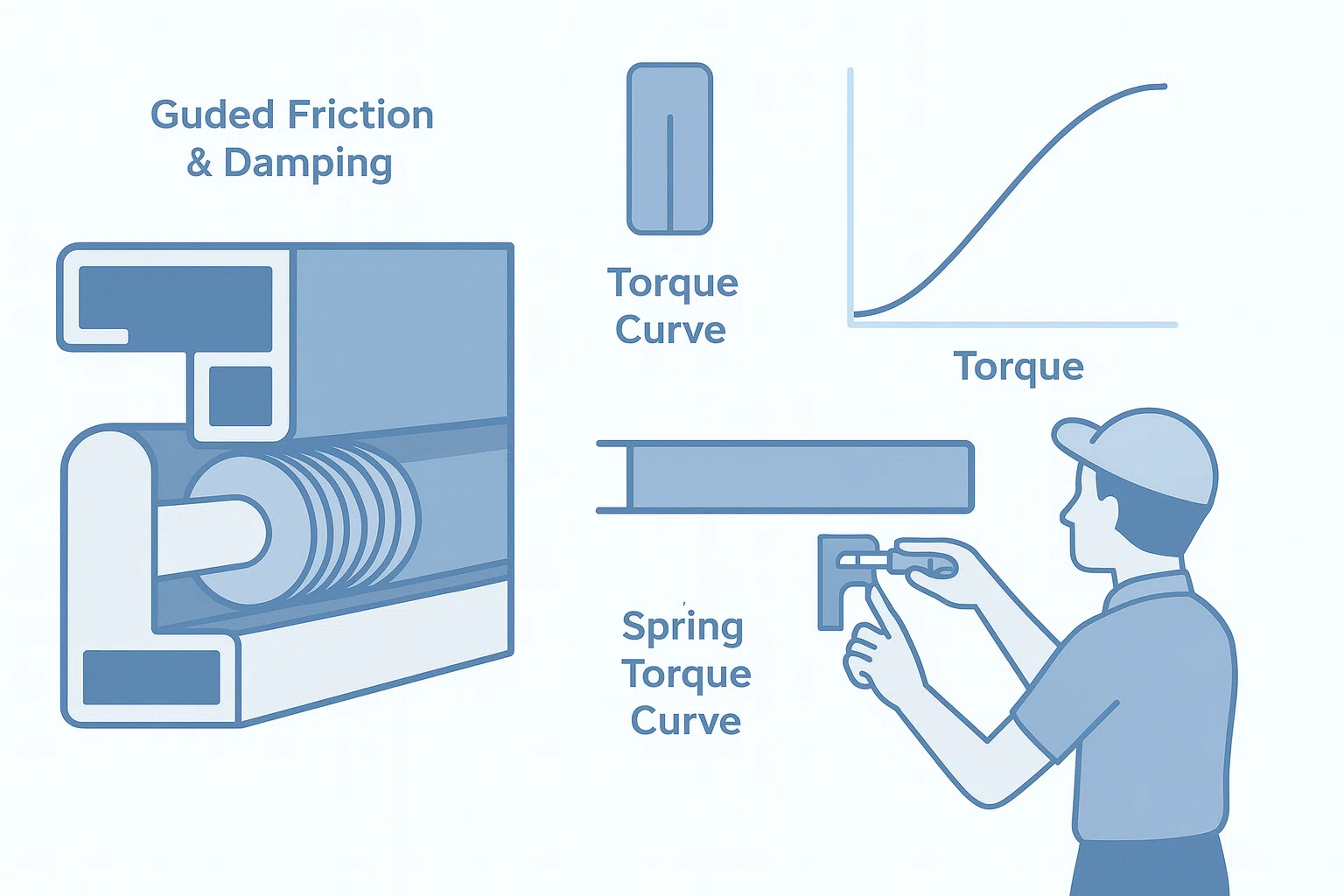
The heart of the mechanism is a spiral spring set inside a low-friction housing.
The torque curve is defined to match common honeycomb and fabric shade weights so that operating force remains light while hover remains stable.
Guided Friction & Damping
Internal guides linearize spring behavior and add controlled friction to prevent bounce at full open or full close.
This keeps movement quiet and reduces impact loads on brackets and rails.
Top / Bottom Rail Interface
Mechanical interfaces to top and bottom rails are designed to minimize backlash.
This improves positional repeatability and reduces the risk of skew or racking when the shade is moved repeatedly during daily use.
Pre-Tension & Fine-Tuning
The Cordless Top Down Bottom Up Spring Lift Mechanism supports on-site fine-tuning via adjustable pre-tension.
Installers can add or remove turns to optimize balance for local fabric choices and window sizes, then lock the setting for long-term stability.
Durability & Safety Protections
- Cycle Testing: Mechanism structure validated to ≥ 10,000 top-down and bottom-up cycles under standard lab conditions.
- Material Selection: POM engineering plastics and spring steels chosen for fatigue resistance, low friction, and dimensional stability.
- Anti-Snap Design: Spring anchoring geometry and housing limits are designed to reduce the risk of sudden release under normal use.
- Child-Safety Oriented: Cordless architecture supports alignment with ANSI/WCMA A100.1-2018 and EN 13120 for window covering safety.
Operation & Integration
Cordless Push / Pull Operation
Users operate the shade by gently moving the top rail and bottom rail by hand.
The Cordless Top Down Bottom Up Spring Lift Mechanism keeps required force low and movement smooth, with no chains or cords to pull.
On-Site Adjustment for OEM Programs
For OEM partners, the mechanism can be supplied with standard pre-tension values and adjustment windows.
Installers can balance the panel on-site and standardize procedures across regions, fabrics, and rail geometries.
Applications
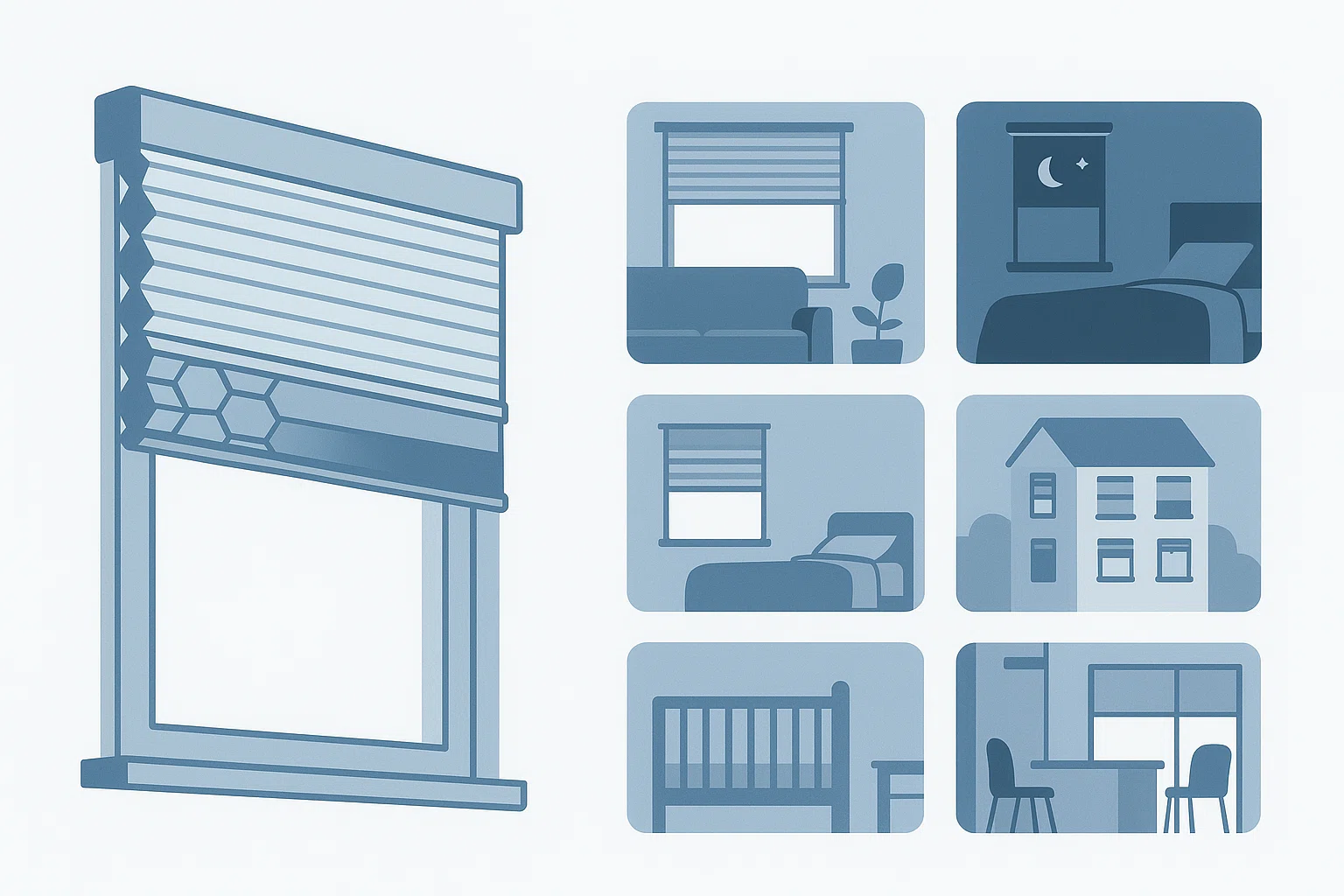
Top Down Bottom Up Honeycomb Shades
- Light-Filtering and Blackout Fabric Shades
- Street-Facing Windows Requiring Privacy and Daylight
- Bedrooms, Nurseries, and Kids’ Rooms
- Apartments, Townhouses, and Condominiums
- Small Offices, Clinics, and Boutique Hospitality
OEM & ODM Services
DOSRON provides OEM & ODM support around the Cordless Top Down Bottom Up Spring Lift Mechanism, including:
- Private labeling on rails, headrails, and packaging
- Custom color matching for visible plastic parts and rail interfaces
- Torque curve and pre-tension tuning to match fabric mass and window sizes
- Interface adaptation for different headrail geometries and bracket systems
- Engineering documentation, assembly checkpoints, and remote training
Field Performance Feedback
In pilot deployments with North American OEM partners, end-user satisfaction scores for cordless top down bottom up shades increased by over 15%,
while service tickets related to shade drift and balance dropped significantly.
Customers highlighted the smooth operation, stable intermediate positions, and the reassurance of a fully cordless system in kids’ rooms and street-facing bedrooms.
Field Insight: How DOSRON Refines the Cordless Top Down Bottom Up Spring Lift Mechanism for Safer, Smarter Shades
The Cordless Top Down Bottom Up Spring Lift Mechanism by DOSRON is built for brands that need repeatable child-safe performance and a premium tactile feel at the window.
Every design choice—from spring geometry and friction guides to rail interfaces—aims to keep motion smooth, predictable, and quiet over years of daily use.
With documented pre-tension windows, cycle-life testing, and clear integration guidelines, DOSRON helps OEMs shorten development time while maintaining quality control across factories and regions.
What Makes It Stand Out:
• Cordless top down bottom up architecture that supports global cord-safety trends.
• Stable hover and light operating force across typical residential sizes.
• Compact in-headrail design ready for existing honeycomb and fabric shade programs.
• OEM/ODM engineering support to align torque, width, and fabric mass for your market.
Designed and manufactured in China with a focus on spring-based shading systems, each DOSRON mechanism reflects a simple belief:
“Safe cordless shades begin with a reliable spring core and end with a calm, predictable user experience.”
FAQ
Q1: What is the MOQ for the Cordless Top Down Bottom Up Spring Lift Mechanism?
Standard minimum order quantity is 100 sets per configuration. Sample sets can be provided for testing and validation.
Q2: Which shade types are compatible?
The mechanism is optimized for honeycomb / cellular shades and light-to-medium fabric shades in top down bottom up configurations.
Other constructions can be reviewed case by case.
Q3: How do I choose the right configuration?
Send your width × drop, fabric mass (g/m²), and headrail profile.
DOSRON engineers will recommend a spring specification, pre-tension range, and interface kit.
Q4: Can the balance be fine-tuned on site?
Yes. Installers can adjust pre-tension within the recommended window to fine-tune hover behavior, then lock the setting once balance is confirmed.
Q5: Does the mechanism help with child-safety compliance?
The Cordless Top Down Bottom Up Spring Lift Mechanism removes accessible lift cords and is engineered to support compliance with major cord-safety standards.
Final compliance depends on the complete shade design and installation.