Quick Summary
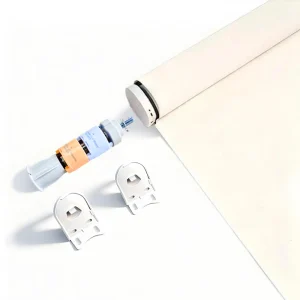
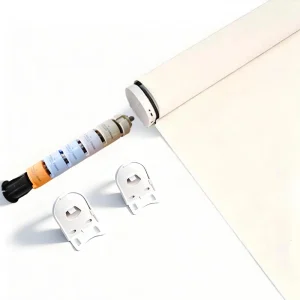
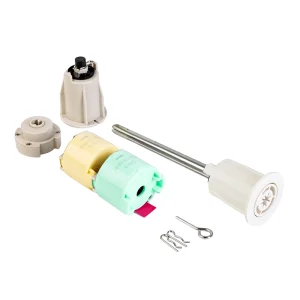
This cordless Spring System for Roman blinds is built around a T1 Spring Box with a constant-force spring,
synchronized by a Fiber glass Hexagonal rod and managed via Cord Reel + Cord Bundle.
The result is smooth travel, immediate stop-at-any-height behavior, and clean cordless aesthetics for OEM Roman blind platforms.
Spring System Overview for Cordless Roman Blinds
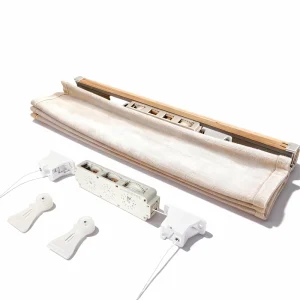
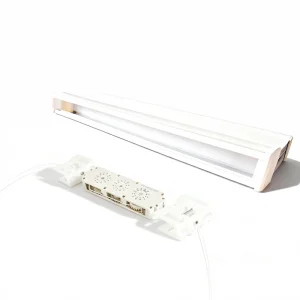
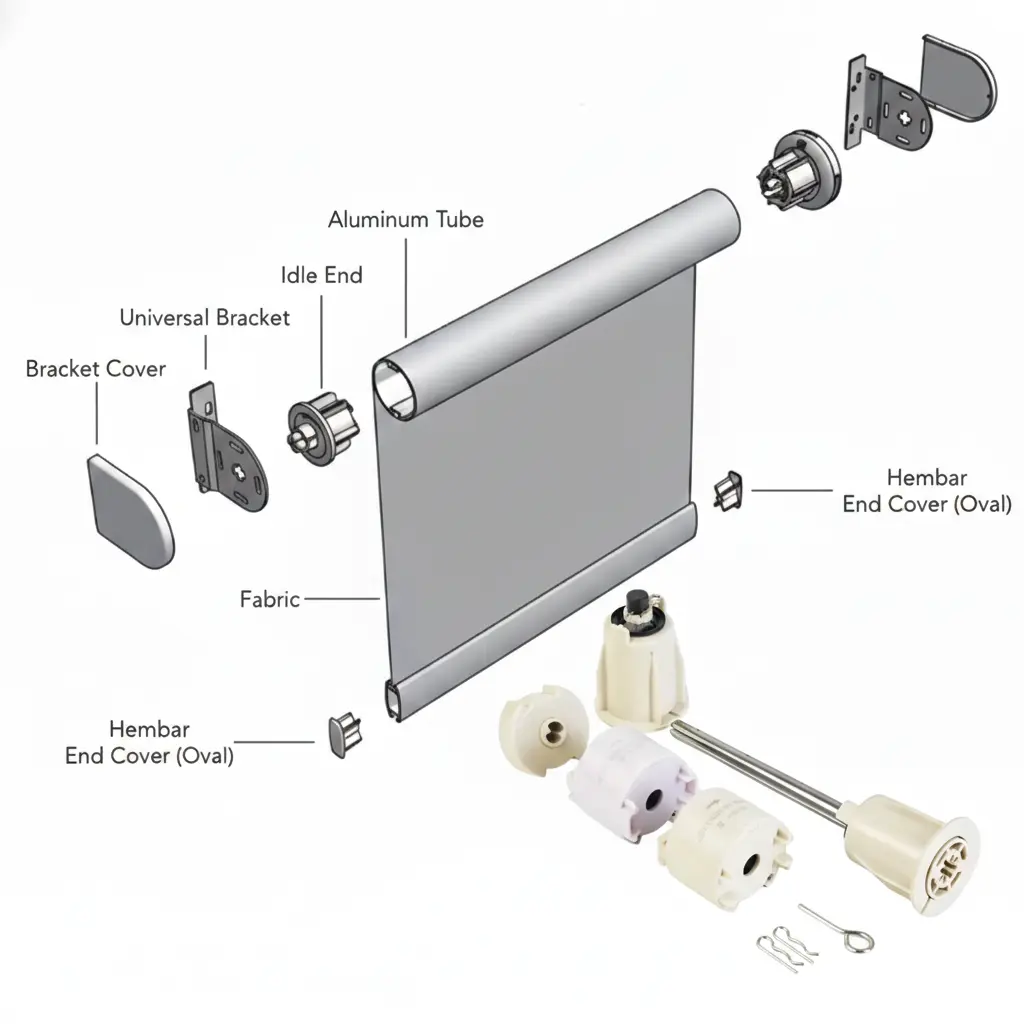
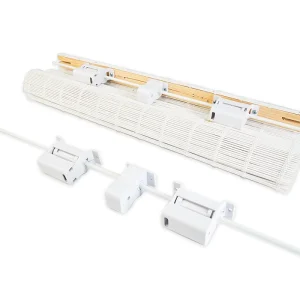
This Spring System integrates four key components inside the headrail to keep the lift cords fully internal
while maintaining controlled, repeatable motion:
 |
 |
- T1 Spring Box — constant-force spring module defining the system force band
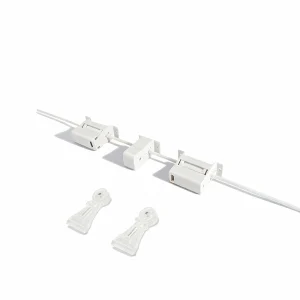
- Cord Reel — manages cord winding/unwinding as shade travel changes
- Cord Bundle — secures cords at the bottom rail and allows tension adjustment
- Fiber glass Hexagonal rod — mechanical coupling shaft that synchronizes rotation
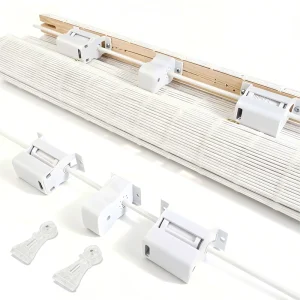
A common layout uses one centrally mounted T1 Spring Box with Cord Reels on both sides.
The Fiber glass Hexagonal rod passes through all rotating parts, linking them into one coherent Spring System.
Spring System Installation & Cord Winding Demonstration
This video walks through the installation process of the Spring System used in cordless bamboo Roman blinds,
from headrail mounting to final cord routing.
The video focuses on three critical installation stages:
- Mounting the T1 Spring Box at the center of the wooden headrail
- Installing and aligning the Cord Reel and Fiber glass Hexagonal rod
- Final cord routing through the bamboo slats and tension setting at the Cord Bundle
At the end of the video, the cord winding behavior on the Cord Reel is shown in detail,
helping OEM customers verify correct wrap direction, wrap count, and rotation synchronization during lift.
Spring System Configuration Overview
The following table outlines typical configuration elements of the Spring System.
Final selection depends on Roman blind size, material weight, and OEM design requirements.
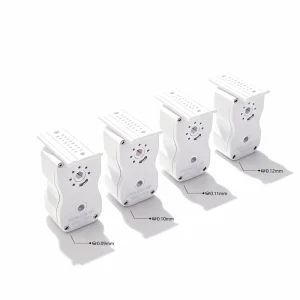
| Test base on 96″ 2.4M | ||||||
| 2 cord reel without resistance | 2 cord reel with full resistance | adjustable incremental bearing capacity range | ||||
| Spring Spec. | Initiative Capacity/g | End Capacity/g | Initiative Capacity/g | End Capacity/g | Initially adjustable bearing capacity/g | End adjustable bearing capacity/g |
| 0.09-16-3000 | 720 | 320 | 1220 | 150 | 720~1200 | 320~150 |
| 0.10-16-3000 | 870 | 480 | 1550 | 200 | 870~1550 | 480~200 |
| 0.11-16-3000 | 1070 | 580 | 1820 | 270 | 1070~1820 | 580~270 |
| 0.12-16-3000 | 1270 | 780 | 2270 | 370 | 1270~2270 | 780~370 |
Note: For wide or heavy Roman blinds, Spring System force matching should be validated through sample testing.
T1 Spring Box: The Force Source of the Spring System
The T1 Spring Box is the core of this Spring System. Inside it, a constant-force spring
provides stable lifting assistance across travel, reducing sensitivity to fabric stacking changes and minimizing position drift.
In practical terms, the T1-based Spring System is engineered to keep the user experience consistent:
smooth lift, predictable lowering, and reliable stop-at-any-height behavior.
Cord Management Inside the Spring System
 |
 |
Cord Reel + Cord Bundle: Controlled Winding and Tension
In this Spring System, lift cords are anchored inside the Cord Reel and wound around its spool.
The cords then route through the bamboo/fabric structure (slats or lift passages) and terminate at the bottom rail where the
Cord Bundle locks and fine-tunes cord tension.
When the blind is fully lowered, most of the cord length is extended through the shade body, leaving fewer wraps on the Cord Reel.
As the blind is raised, cord wraps increase on the Cord Reel, and the rotation is transferred through the Fiber glass Hexagonal rod.
Fiber glass Hexagonal rod: Rotation Synchronization
The Fiber glass Hexagonal rod ensures synchronized rotation across the entire Spring System.
This rigid coupling helps prevent phase drift, uneven winding, or left–right imbalance during travel—especially valuable for OEM builds
where repeatability matters.
How the Cordless Spring System Operates
This is an externally cordless Spring System: no exposed pull cords or chains. Users operate the Roman blind by
pulling the bottom rail up or down. Releasing the rail causes the Spring System to stop immediately, enabling
“pull-and-stop” positioning.
During motion, cord wrap count changes on the Cord Reel, and the Fiber glass Hexagonal rod rotates accordingly.
This rotation coordination keeps the system behavior smooth and predictable across the full stroke.
Applications of the Spring System
 |
 |
This Spring System is designed for OEM Roman blind programs requiring clean aesthetics, internal cord routing,
and controlled manual operation. Typical applications include:
- Bamboo Roman blinds
- Fabric Roman blinds
- Residential cordless window coverings
- OEM private-label Roman blind platforms
FAQ: Spring System for Cordless Roman Blinds
These FAQs focus on how a cordless Spring System behaves in real OEM production and field use—stability, repeatability,
and installation control.

Q1: What makes this Spring System different from traditional Roman blind mechanisms?
Traditional Roman blind setups often rely on variable cord friction or manual locking behavior. This cordless
Spring System is built around a T1 Spring Box with constant-force output, helping the lift feel
more consistent across the full travel, not only at mid-height.
Q2: Is the Spring System completely cordless?
Yes. This is an externally cordless Spring System with no exposed pull cords or chains. Lift cords are routed internally
through the shade body and managed by the Cord Reel and Cord Bundle.
Q3: How does the Spring System stop at any position?
The Spring System combines stable constant-force assistance with controlled cord winding. Users operate the blind by pulling
the bottom rail; releasing it allows the system to stabilize quickly for reliable pull-and-stop operation.
Q4: What role does the T1 Spring Box play in Spring System stability?
The T1 Spring Box defines the force band of the entire Spring System. If spring output is unstable, downstream cord
adjustments cannot fully correct the platform behavior. That’s why the spring box is the core decision point in Roman blind programs.
Q5: Why use a Fiber glass Hexagonal rod instead of a round shaft?
The Fiber glass Hexagonal rod provides positive mechanical engagement and synchronized rotation across components. In a
Spring System, this helps reduce phase drift, uneven winding, and left–right mismatch risk during repeated cycling.
Q6: Can cord tension be adjusted during installation?
Yes. The Cord Bundle at the bottom rail supports fine tension tuning to level the shade and compensate for small assembly or
material tolerances, without changing the internal Spring System architecture.
Q7: Is this Spring System suitable for bamboo Roman blinds?
Yes. This Spring System is suitable for bamboo Roman blinds and fabric Roman blinds, where internal cord routing, clean
appearance, and stable manual control are required.
Q8: Is this Spring System designed for OEM production?
Yes. The design emphasis is on repeatability and synchronized rotation, helping the Spring System behave consistently across
production batches and real-world use—key requirements for OEM private-label Roman blind platforms.
Q9: What components should OEMs verify first when debugging performance?
Start with the force source and synchronization: the T1 Spring Box (output consistency), the Cord Reel (winding
smoothness), and the Fiber glass Hexagonal rod (rotation coupling). Then verify internal cord routing and bottom rail
termination at the Cord Bundle.
Q10: What installation factors most affect Spring System repeatability?
Consistent center mounting of the T1 Spring Box, correct alignment of Cord Reels, and stable engagement of the
Fiber glass Hexagonal rod are the biggest drivers. Final tuning is typically handled at the Cord Bundle to ensure
balanced cord tension and level operation.
Field Insight
A cordless Roman blind “feeling smooth” is easy to demonstrate. A Spring System staying stable across full travel,
production variation, and long-term cycling is what protects your OEM platform in the field.
- T1 Spring Box defines the force band; the rest of the Spring System must stay synchronized inside it.
- Cord Reel wrap changes are normal—what matters is controlled rotation without drift or uneven winding.
- Fiber glass Hexagonal rod acts as the mechanical “synchronizer” that reduces left–right mismatch risk.
- Cord Bundle provides practical tension tuning at the bottom rail for cleaner leveling and repeatability.
- A well-built Spring System is a platform decision, not a cosmetic feature—choose it like an engineer.